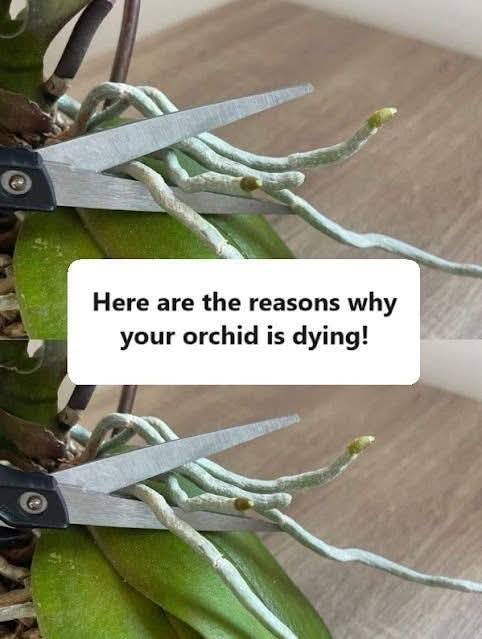
If your orchid is struggling, don’t worry — most problems are fixable once you identify the cause. Here are the most common reasons orchids decline and how to fix them:
🌊 1. Overwatering (Most Common Cause)
Symptoms:
- Yellow, limp leaves
- Mushy, brown or black roots
- Sour smell from potting mix
Why it happens:
Orchids (especially Phalaenopsis / moth orchids) are epiphytes — in nature, they grow on trees and dry out quickly.
Fix:
- Let the potting mix dry before watering again
- Trim rotted roots
- Repot in fresh orchid bark (not regular potting soil)
🏜 2. Underwatering
Symptoms:
- Wrinkled, shriveled leaves
- Silvery, dry roots
- Dropping buds
Fix:
- Water thoroughly once roots turn silvery
- Soak pot for 10–15 minutes, then drain completely
☀️ 3. Too Much Direct Sunlight
Symptoms:
- Yellow patches
- White or brown burn spots
- Crispy leaves
Orchids prefer bright, indirect light, not harsh afternoon sun.
Fix:
- Move to an east-facing window
- Use sheer curtains for filtered light
🌑 4. Not Enough Light
Symptoms:
- Healthy leaves but no blooms
- Dark green foliage
- Slow growth
Fix:
- Move closer to a bright window
- Consider a grow light in darker homes
🌡 5. Temperature Stress
Most common house orchids prefer:
- 65–80°F (18–27°C)
- Slight nighttime drop to trigger blooming
Cold drafts or heater vents can shock them.
🪴 6. Wrong Potting Medium
Regular soil suffocates roots.
Correct medium:
- Orchid bark
- Sphagnum moss
- Chunky, well-draining mix
🐛 7. Pests
Look for:
- Sticky residue (aphids)
- Cottony white spots (mealybugs)
- Tiny webs (spider mites)
Fix:
- Wipe leaves with diluted alcohol
- Use insecticidal soap weekly until clear
🌸 8. Natural Dormancy
If flowers are falling but leaves look healthy, your orchid may just be resting.
This is normal — especially for Phalaenopsis — and blooms can return in a few months with proper care.
If you’d like, tell me:
- What your leaves look like
- What the roots look like
- How often you water
I can help you diagnose it more precisely 🌿
