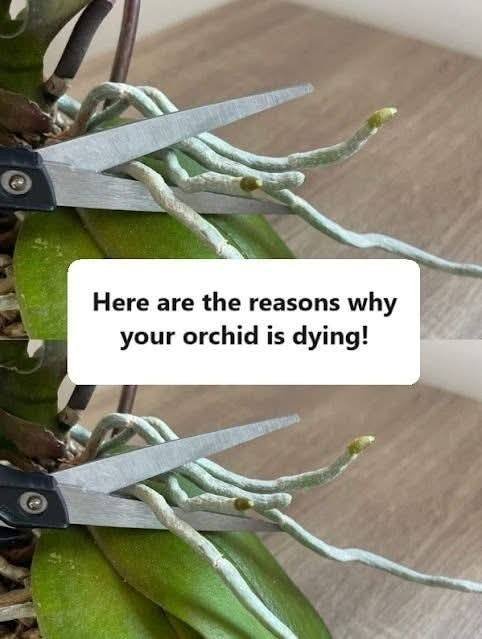
🌸 Here Are the Reasons Why Your Orchid Is Dying
A complete guide to identifying the problem and saving your plant
Orchids are beautiful but misunderstood plants. When they start wilting, turning yellow, or losing flowers, it usually comes down to care issues — not bad luck.
If your orchid looks like it’s dying, here are the most common reasons why — and what to do about each one.
1️⃣ Overwatering (The #1 Killer)
Most orchids die from too much water.
Unlike typical houseplants, orchids (especially common grocery-store varieties like Phalaenopsis) grow on trees in nature. Their roots need air.
Signs:
- Yellowing leaves
- Mushy, brown roots
- Foul smell
- Droopy plant despite wet soil
Fix:
- Remove the plant from the pot
- Trim mushy roots
- Repot in fresh orchid bark mix
- Water only when roots turn silvery-gray (usually every 7–10 days)
2️⃣ Underwatering
Too little water can also stress orchids.
Signs:
- Wrinkled, limp leaves
- Dry, brittle roots
- Very lightweight pot
Fix:
- Soak the pot in water for 10–15 minutes
- Allow full drainage
- Maintain a consistent watering schedule
3️⃣ Poor Drainage
Orchids should never sit in water.
If your pot doesn’t have drainage holes, roots will rot quickly.
Fix:
Use a pot with multiple drainage holes and a chunky orchid bark mix — never regular potting soil.
4️⃣ Wrong Light Conditions
Orchids need bright, indirect light.
Too little light:
- No blooms
- Dark green leaves
- Slow growth
Too much light:
- Yellow or scorched leaves
- White or brown burn spots
Best spot:
Near an east- or south-facing window with filtered light.
5️⃣ Temperature Stress
Most common household orchids prefer:
- 65–80°F (18–27°C)
Cold drafts or heat vents can shock the plant.
Sudden temperature drops may also cause bud blast (buds fall off before opening).
6️⃣ Low Humidity
Orchids prefer 40–70% humidity.
Dry indoor air can cause:
- Shriveling roots
- Bud drop
- Crispy leaf edges
Fix:
- Use a humidity tray
- Place near other plants
- Use a room humidifier
7️⃣ Root Bound or Old Potting Medium
Orchid bark breaks down over time and becomes compacted.
When this happens:
- Roots suffocate
- Water retention increases
- Plant declines
Fix:
Repot every 1–2 years in fresh orchid bark mix.
8️⃣ Natural Flower Cycle (It’s Not Dying!)
Many people think their orchid is dying when blooms fall off.
This is normal.
After blooming:
- Flowers drop
- Stem may dry
- Plant rests
Leaves should stay firm and green. If they do, your orchid is healthy.
🚨 When It’s Truly Serious
Your orchid may be beyond recovery if:
- All roots are mushy
- Crown (center of plant) is rotting
- Leaves are falling off from the base
Even then, sometimes healthy roots can regrow if repotted quickly.
🌿 Quick Rescue Checklist
✔ Check the roots
✔ Remove rotten parts
✔ Repot in fresh bark
✔ Adjust watering
✔ Ensure bright, indirect light
✔ Keep away from drafts
🌸 Final Thoughts
Orchids don’t usually “just die.” They decline because their growing conditions don’t match what they need. Once you identify the issue, they are surprisingly resilient.
If you’d like, tell me:
- What color are the leaves?
- What do the roots look like?
- How often are you watering?
I can help you diagnose it more precisely.
