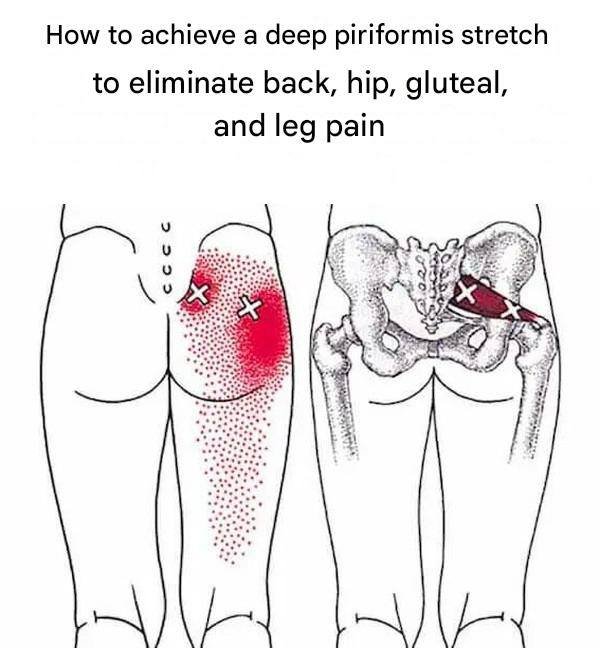
A deep piriformis stretch can be really effective for alleviating pain in the back, hips, glutes, and legs, particularly if the piriformis muscle is tight or irritated. This muscle can also compress the sciatic nerve in some cases, leading to sciatic pain, which is often felt as discomfort or pain running down the leg.
Here’s how you can achieve a deep piriformis stretch:
1. Supine Piriformis Stretch (Lying on Your Back)
This is one of the most accessible stretches and great for targeting the piriformis muscle.
How to do it:
- Lie on your back with both knees bent and feet flat on the floor.
- Cross your right ankle over your left knee, creating a figure-four shape.
- Grasp the back of your left thigh (or behind the left knee) with both hands.
- Gently pull your left thigh toward your chest, keeping the right knee pushed out to the side.
- You should feel a deep stretch in your right glute, hip, and possibly the lower back.
- Hold for 30 seconds to 1 minute and repeat on the other side.
Tip: Keep your lower back relaxed and avoid arching your spine. If you feel any discomfort in your knee, make sure your leg is not being pulled too aggressively.
2. Seated Piriformis Stretch (Seated Figure Four)
This stretch is great to do sitting down and can also help target tightness in the hips and lower back.
How to do it:
- Sit on a chair with your feet flat on the floor and your knees bent at 90 degrees.
- Place your right ankle on top of your left knee, forming a figure-four shape.
- Sit tall and, with your back straight, gently lean forward from the hips.
- You should feel a deep stretch in your right hip and glute.
- Hold for 30 seconds to 1 minute and repeat on the other side.
Tip: Avoid rounding your back; focus on hinging from the hips to deepen the stretch.
3. Pigeon Pose (From Yoga)
Pigeon pose is a deeper stretch that works the piriformis, glutes, and hips. It can also help release tension along the entire hip region.
How to do it:
- Start in a hands-and-knees position (tabletop).
- Bring your right knee forward and place it behind your right wrist while extending your left leg straight back behind you.
- Lower your hips toward the floor (keeping your hips squared to the front).
- For a deeper stretch, you can lower your torso to the ground or lean forward, reaching your arms out in front of you.
- You should feel a deep stretch in your right hip, glute, and possibly the lower back.
- Hold for 30 seconds to 1 minute, then switch sides.
Tip: If your hip doesn’t reach the ground, you can place a cushion or yoga block under your hip for support.
4. Lying Piriformis Stretch with a Foam Roller
Using a foam roller can intensify the stretch and provide more focus on the piriformis muscle. This method also helps with myofascial release, which can alleviate tightness.
How to do it:
- Lie on your back with both knees bent and feet flat on the floor.
- Place a foam roller underneath your hips, slightly to the right or left (depending on which leg you’re stretching).
- Cross your right ankle over your left knee.
- Gently roll your hips back and forth over the foam roller, focusing on the area where you feel tightness in the right glute.
- Continue for 1-2 minutes, then switch sides.
Tip: Go slowly and avoid rolling too fast to allow the muscles to release tension effectively.
5. Standing Piriformis Stretch
This is an excellent stretch for those who prefer standing or want a more active stretch.
How to do it:
- Stand tall with your feet hip-width apart.
- Place your right ankle on your left knee (similar to the figure-four position).
- Sit back into your hips as if you’re trying to sit in a chair, keeping your chest lifted.
- You should feel a stretch in your right glute and hip.
- Hold for 30 seconds to 1 minute and repeat on the other side.
Tip: Keep your knees in line with each other (don’t let the knee collapse inward) for better alignment.
General Tips for Piriformis Stretching:
- Warm up before stretching: Gentle movement (walking, light cardio) can help loosen the muscles.
- Don’t force the stretch: The piriformis is a small muscle, so you don’t need extreme flexibility to feel the benefits. A moderate stretch is usually enough.
- Consistency is key: Stretch regularly—several times a day if possible—for the best results.
- Listen to your body: If you feel any sharp pain (especially in the back or leg), stop and reassess your form.
These stretches should help alleviate pain in the back, hips, glutes, and legs by releasing tension in the piriformis muscle. If you’re dealing with severe pain or persistent symptoms, it may be a good idea to consult a healthcare professional for further guidance.
