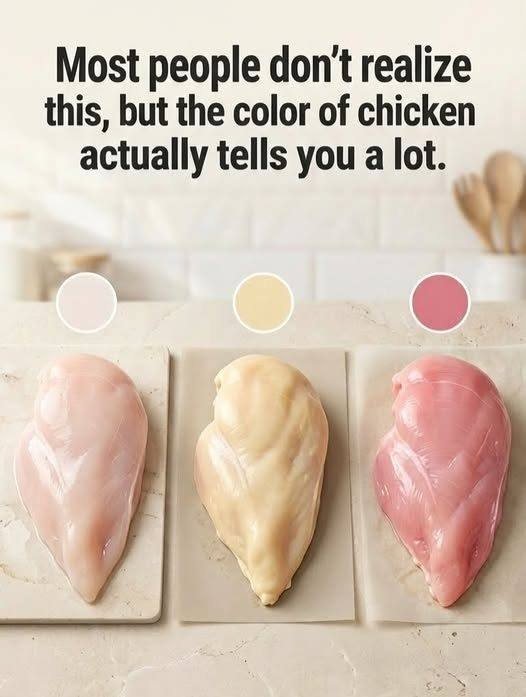
The statement “It’s surprising that the connection between chicken color and quality is still unclear to some” refers to a common misunderstanding: people often judge chicken quality by its color, even though color alone usually does not indicate quality or safety.
Here’s the key idea explained simply.
1. Chicken color varies naturally
Raw chicken can range from bluish-white to yellow, and all of these can be normal. The color mainly depends on factors such as:
- Diet (e.g., corn or marigold pigments)
- Breed/genetics
- Age of the bird
- Muscle type (breast vs thigh)
- Storage conditions
For example, pigments like carotenoids from corn or marigolds in feed can accumulate in the fat and skin, giving chicken a yellow tint. (en.petitchef.com)
2. White vs dark meat is about muscle biology
Different parts of the same chicken can look different:
- Breast meat (white meat) – lower myoglobin, lighter color
- Thigh/leg meat (dark meat) – more myoglobin and blood pigments
Myoglobin is a protein that stores oxygen in muscles and is a major factor in meat color. (pjosr.com)
3. Color doesn’t reliably indicate quality or freshness
Many consumers assume certain colors mean “better” or “worse” chicken, but that’s not usually true.
- A yellow chicken isn’t necessarily healthier or more natural—it may just have a different diet.
- A pale chicken isn’t necessarily low quality—it may simply come from birds fed a different feed mix.
- Color changes during storage can happen even when meat is still safe. (fsis.usda.gov)
Quality is better judged by:
- smell
- texture (not slimy)
- proper storage and cooking temperature
✅ Bottom line:
Chicken color is influenced by diet, genetics, muscle type, and storage, not necessarily by quality. The visual appearance can be misleading, which is why experts say the link between color and quality is weak or misunderstood.
If you want, I can also explain 3 chicken color myths most people still believe when buying chicken in markets (some are really surprising). 🍗
