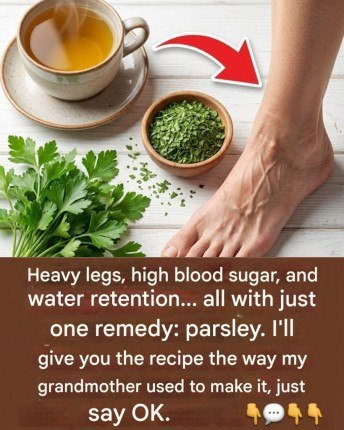
Parsley: the simple remedy our grandmothers used for heavy legs and water retention 🌿
Long before supplements and detox teas filled pharmacy shelves, our grandmothers turned to parsley—a humble kitchen herb—as a natural way to ease heavy legs, bloating, and water retention. And it turns out, this old-school remedy actually has some science behind it.
Why parsley was a household staple
Parsley isn’t just a garnish. Traditional medicine across Europe and the Mediterranean used it for centuries as a natural diuretic, meaning it helps the body eliminate excess fluids. That made it especially popular for people dealing with swollen ankles, tired legs, or that uncomfortable “puffy” feeling.
How parsley helps with heavy legs
Heavy legs are often linked to poor circulation and fluid buildup, especially after long days of standing, sitting, or during warm weather. Parsley supports relief in several ways:
- Natural diuretic effect
Parsley encourages the kidneys to flush out excess water and sodium, helping reduce swelling in the legs and feet. - Rich in potassium
Unlike many diuretics, parsley provides potassium, which helps maintain electrolyte balance and prevents cramps. - Supports circulation
Its antioxidants and vitamin C help protect blood vessels and support healthier circulation, which can ease that “dragging” leg sensation. - Anti-inflammatory properties
Flavonoids in parsley may help calm mild inflammation that contributes to fluid retention.
Water retention: why it happens
Water retention can be triggered by:
- Hormonal changes
- Excess salt intake
- Hot weather
- Sedentary lifestyle
- Circulation issues
Our grandmothers didn’t always know the terminology—but they knew parsley helped them feel lighter and less swollen.
The classic parsley tea (grandma-approved)
This is the most traditional preparation and still widely used today.
You’ll need:
- 1 small bunch of fresh parsley (washed and chopped)
- 2 cups of water
How to prepare:
- Bring the water to a boil
- Add the parsley and simmer for 5–10 minutes
- Remove from heat, cover, and steep for another 5 minutes
- Strain and drink warm
How to use:
Drink 1 cup per day, preferably in the morning. Many people notice less bloating and lighter legs within a few days.
Other easy ways to use parsley
- Add generous amounts to salads, soups, and sauces
- Blend into green smoothies
- Sprinkle fresh parsley over cooked vegetables and fish
Fresh parsley works best, but dried parsley can be used if needed (use about 1 teaspoon dried per cup of tea).
A few important cautions
Our grandmothers also knew moderation mattered.
- Do not overconsume parsley tea—it’s meant as a short-term support, not a daily long-term treatment
- Avoid medicinal amounts if you are pregnant, have kidney problems, or take diuretic medications, unless your doctor says it’s okay
- Persistent or severe swelling should always be medically evaluated
The takeaway
Parsley is a simple, affordable, and time-tested ally for heavy legs and mild water retention. While it’s not a miracle cure, it’s a gentle reminder that sometimes the most effective remedies are the ones passed down through generations—quietly working from the inside out.
If you’d like, I can:
- Adapt this for women over 50
- Turn it into a short viral health post
- Or add doctor commentary + scientific references
