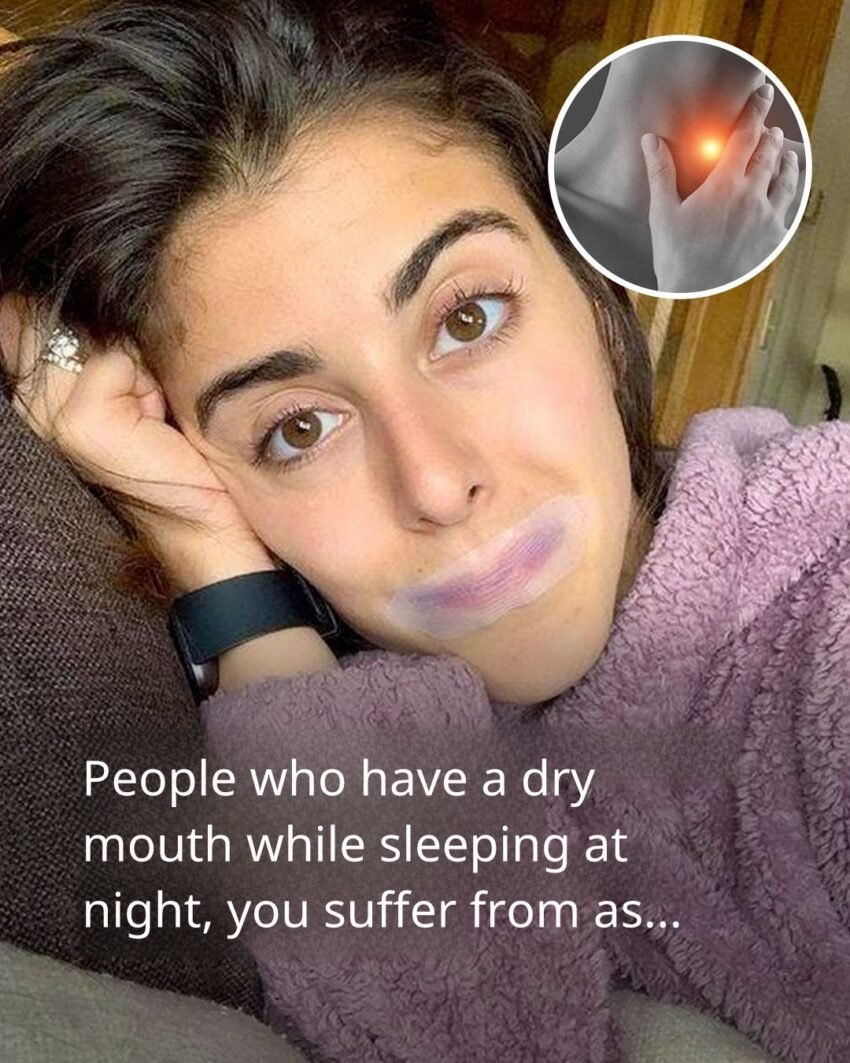
Here’s a full, clear article-style explanation of what doctors and sleep specialists say about dry mouth at night, what it may indicate, and what you can do about it.
😮💨 People Who Experience a Dry Mouth While Sleeping at Night May Be Suffering From These Underlying Issues
Waking up with a dry, sticky mouth isn’t just uncomfortable — for many people, it’s a sign that something deeper is going on during sleep. Doctors refer to this condition as xerostomia, and while it can be temporary, frequent nighttime dry mouth may point to an underlying cause that deserves attention.
🩺 Most Common Causes of Dry Mouth at Night
1. Mouth Breathing During Sleep
One of the most common causes is breathing through your mouth instead of your nose while sleeping.
This often happens due to:
- Nasal congestion (allergies, colds, sinus issues)
- Deviated septum
- Chronic nasal blockage
When air flows directly through the mouth for hours, it dries out saliva, leading to that parched feeling in the morning.
2. Sleep Apnea
Doctors frequently associate nighttime dry mouth with obstructive sleep apnea, a sleep disorder where breathing repeatedly stops and starts during sleep.
Signs that may accompany dry mouth:
- Loud snoring
- Gasping or choking at night
- Morning headaches
- Daytime fatigue
People with sleep apnea often sleep with their mouths open, reducing saliva production and causing severe dryness.
3. Dehydration
Going to bed not well hydrated can absolutely contribute to dry mouth at night.
Common dehydration triggers include:
- Not drinking enough water during the day
- Alcohol or caffeine intake before bed
- Excessive sweating
If your body lacks fluids, saliva production drops — especially overnight.
4. Medication Side Effects
Dry mouth is a very common side effect of many medications, including:
- Antihistamines
- Antidepressants
- Blood pressure medications
- Anxiety and sleep medications
- Decongestants
Doctors often see xerostomia worsen at night because saliva production naturally slows during sleep.
5. Acid Reflux (GERD)
Nighttime acid reflux can irritate the mouth and throat and interfere with saliva flow.
Possible clues:
- Sour or bitter taste in the morning
- Burning sensation in chest or throat
- Hoarseness
Reflux episodes during sleep can disrupt the body’s ability to keep the mouth moist.
6. Diabetes or Blood Sugar Imbalances
Persistent dry mouth can be an early sign of diabetes, especially when combined with:
- Increased thirst
- Frequent urination
- Fatigue
High blood sugar causes the body to pull fluid from tissues, including the mouth.
7. Salivary Gland Issues
In some cases, dry mouth may result from:
- Infections
- Autoimmune disorders (such as Sjögren’s syndrome)
- Nerve damage
These conditions reduce saliva production directly and often cause dryness both day and night.
⚠️ Why Nighttime Dry Mouth Shouldn’t Be Ignored
Chronic dry mouth can lead to:
- Tooth decay and cavities
- Gum disease
- Bad breath
- Oral infections
- Difficulty swallowing or speaking
Saliva plays a crucial role in protecting teeth and oral tissues, especially overnight.
💡 What Doctors Recommend to Reduce Dry Mouth at Night
✔ Drink water consistently throughout the day
✔ Avoid alcohol and caffeine in the evening
✔ Use a humidifier in your bedroom
✔ Treat nasal congestion before bed
✔ Try saliva-stimulating lozenges or mouth sprays
✔ Practice nasal breathing (mouth taping only under guidance)
✔ Review medications with your doctor or dentist
If symptoms persist, a medical or dental evaluation is important to rule out sleep apnea, diabetes, or other systemic conditions.
🧠 The Bottom Line
If you frequently wake up with a dry mouth, it may be more than just thirst. Doctors say it’s often linked to mouth breathing, sleep apnea, medication side effects, dehydration, or underlying health conditions. Paying attention to this symptom can help protect both your sleep quality and long-term oral health.
If you want, I can also explain how to tell if dry mouth is from sleep apnea, the best nighttime remedies, or when it’s time to see a doctor — just tell me.
