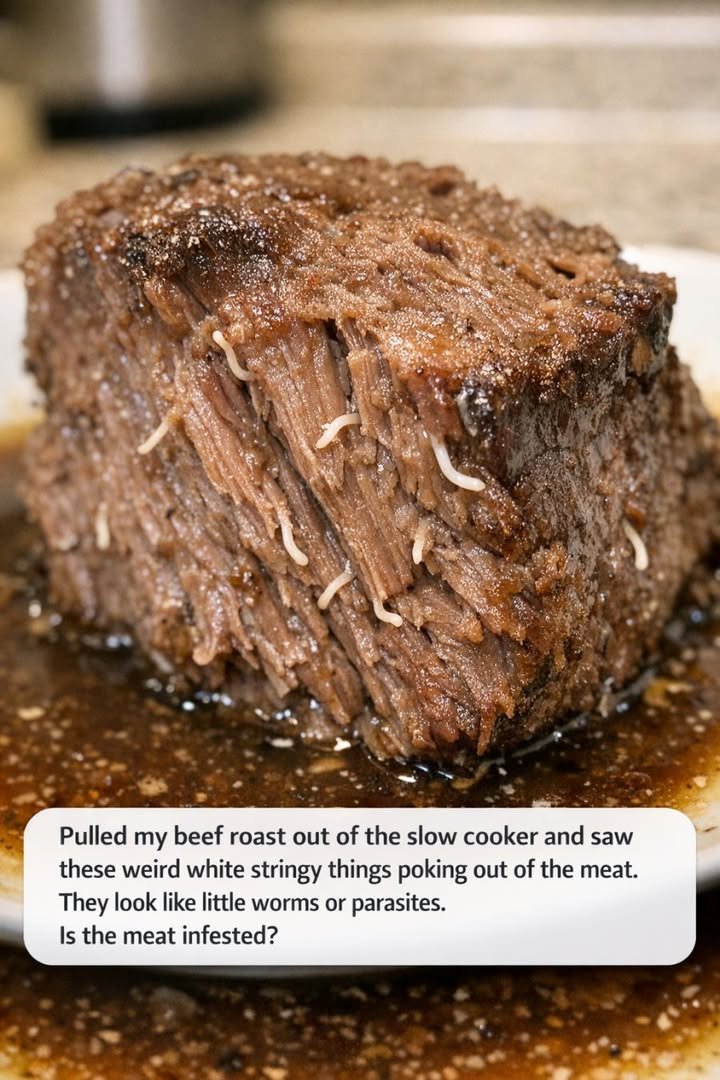
That’s definitely unsettling to see—but in almost all cases, those “white stringy things” in a cooked beef roast are not parasites.
What you’re most likely looking at are one of these normal parts of meat:
1. Connective tissue (collagen)
- Beef has a lot of collagen, especially in tougher cuts used for slow cooking.
- When cooked low and slow, collagen breaks down into gelatin, but sometimes it shows up as white or slightly translucent strands.
- These can look stringy or worm-like when the meat pulls apart.
2. Tendons or silverskin
- These are tougher connective tissues that don’t fully dissolve.
- After cooking, they can appear as thin, white, stretchy strands.
3. Muscle fibers separating
- Slow cooking causes the meat to shred along its grain, creating string-like textures that can look unusual if you’re not expecting them.
What it’s not (in almost every home-cooked case)
- Common beef parasites (like tapeworm cysts) don’t appear as long stringy worms in cooked meat.
- Proper cooking (like slow cooking to high internal temps) would kill any parasites anyway.
When to be cautious
Consider discarding the meat only if:
- You see clearly defined worm shapes with heads or segmentation
- The meat smells rotten or sulfur-like
- The texture is slimy in a raw/uncooked way, not just gelatinous
Bottom line
It’s almost certainly just normal connective tissue breaking down from slow cooking, even though it looks creepy.
If you want, you can describe exactly what they looked like (length, thickness, color), and I can help confirm more precisely.
