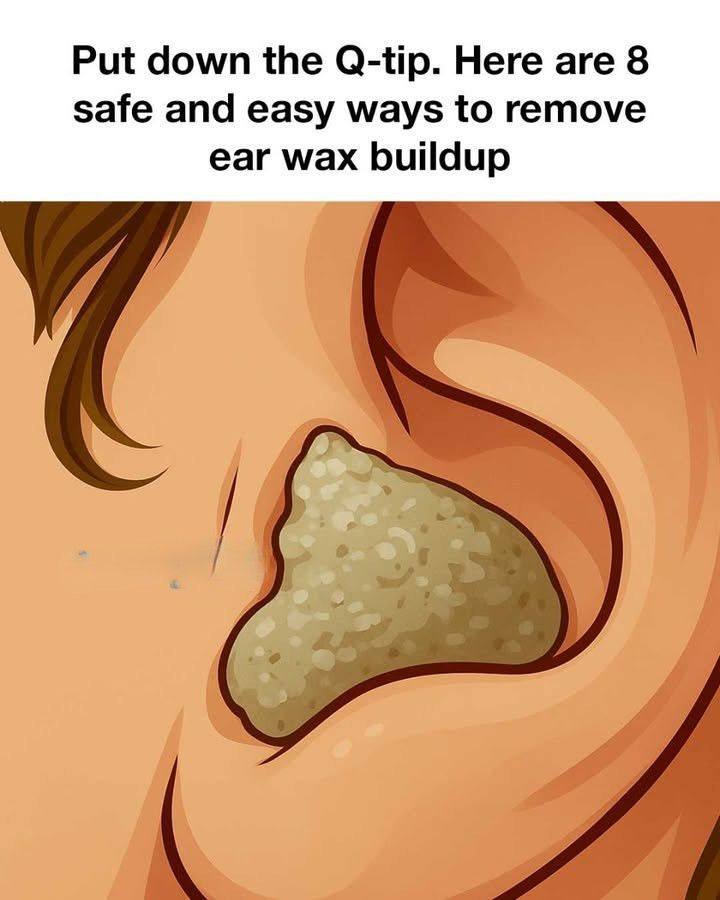
Absolutely! Here’s a full, informative article on safe and easy ways to remove ear wax buildup—without using Q-tips, which can often push wax deeper and cause damage.
Put Down the Q-Tip: 8 Safe and Easy Ways to Remove Ear Wax Buildup
Earwax (cerumen) is a natural substance your body produces to protect your ears from dust, bacteria, and other foreign particles. Normally, it works its way out naturally. But sometimes, it can accumulate, causing discomfort, muffled hearing, or itching. While many people instinctively reach for Q-tips, inserting cotton swabs into the ear canal can push wax deeper, irritate the ear canal, or even damage the eardrum.
Here are 8 safe and effective methods to manage earwax buildup:
1. Use Over-the-Counter Ear Drops
Ear drops designed to soften wax are widely available at pharmacies. Ingredients like carbamide peroxide or glycerin help break down wax so it can come out naturally.
How to use:
- Tilt your head to the side and place a few drops in the affected ear.
- Keep your head tilted for a few minutes.
- Allow the wax to naturally drain or wipe away any excess at the ear opening.
Tip: Avoid using if you have an ear infection or a damaged eardrum.
2. Olive Oil or Mineral Oil
Natural oils can soften hardened earwax, making it easier for the ear to expel on its own.
How to use:
- Warm a small amount of olive or mineral oil slightly (body temperature).
- Place 2–3 drops in the affected ear using a dropper.
- Tilt your head for a few minutes, then sit upright to let it drain.
- Repeat once or twice daily for a few days if needed.
3. Hydrogen Peroxide Solution
A mild 3% hydrogen peroxide solution can help dissolve earwax.
How to use:
- Mix equal parts of 3% hydrogen peroxide and water.
- Using a dropper, place a few drops into the ear.
- You may hear fizzing—this is normal.
- After a few minutes, tilt your head to let it drain, then gently wipe the outer ear.
Warning: Do not use if you have a perforated eardrum or ongoing ear infection.
4. Ear Irrigation (With Caution)
Irrigation flushes out wax using water or saline.
How to use safely at home:
- Use a bulb syringe filled with lukewarm water.
- Gently squirt the water into the ear canal while tilting your head.
- Let the water and wax drain into a bowl or towel.
Tip: Never use forceful water pressure—it can damage your ear.
5. Saline Solution
A gentle saline solution can help soften wax before it comes out naturally.
How to use:
- Mix 1 tsp of salt in ½ cup of warm water.
- Use a dropper to place a few drops in the ear.
- Tilt your head to allow the solution to drain.
6. Earwax Removal Kits
Pharmacies sell complete kits with drops and irrigation tools specifically designed for earwax removal.
Tip: Always follow the instructions carefully and avoid using kits if you have ear tubes, a ruptured eardrum, or chronic ear infections.
7. Manual Removal by a Professional
Sometimes, earwax is impacted and cannot be removed safely at home. An ENT (ear, nose, throat) specialist can remove it using specialized instruments like a curette or suction device.
Why it’s safe: Professionals can remove wax without damaging the eardrum or ear canal.
8. Avoid Q-Tips or Cotton Swabs
While tempting, inserting Q-tips into the ear canal can:
- Push wax deeper
- Cause ear canal irritation or infection
- Risk perforating the eardrum
Instead: Only clean the outer ear with a washcloth or tissue.
When to See a Doctor
Seek professional help if you experience:
- Severe ear pain
- Hearing loss
- Dizziness or vertigo
- Discharge or bleeding from the ear
These could indicate impacted wax or an underlying infection.
Bottom Line
Earwax is normal and usually self-clearing. Using softening drops, gentle irrigation, or professional removal is much safer than Q-tips. Consistent, safe care helps keep your ears clean, comfortable, and healthy.
If you want, I can also make a quick “at-home ear wax care routine” checklist that’s easy to follow every few weeks—so you can avoid buildup without ever touching Q-tips.
Do you want me to make that checklist?
