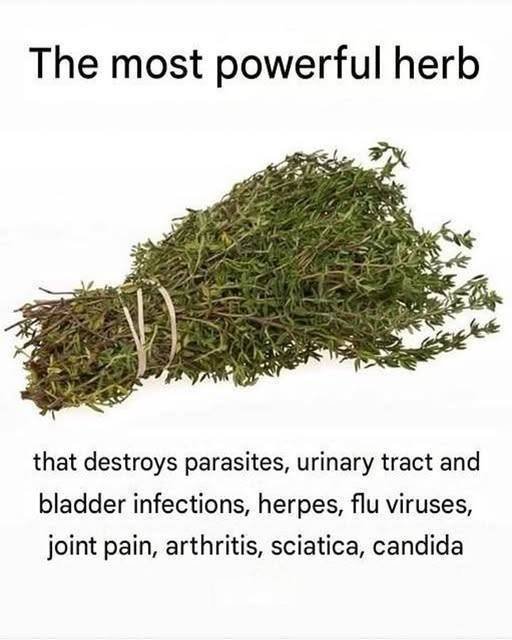
Here’s a full, evidence‑based article about thyme (Thymus vulgaris) — a Mediterranean herb often touted for its antimicrobial, antiviral, antioxidant, and traditional medicinal properties. I’ll cover what research actually supports and where claims go beyond current science.
🪴 Thyme: A Potent Herb With Antimicrobial and Antiviral Properties (But Not a Magic Cure‑All)
Thyme is an aromatic herb long used in cooking and traditional medicine. Its leaves and essential oils contain bioactive compounds — especially thymol and carvacrol — which are responsible for many of its biological effects. (MDPI)
🌿 Key Phytochemicals in Thyme
The most bioactive components include:
- Thymol – a phenolic compound with well‑documented antiseptic and antimicrobial effects.
- Carvacrol – an isomer of thymol also showing broad antimicrobial actions.
- Minor compounds include p‑cymene, γ‑terpinene, and eucalyptol. (PubMed)
These compounds are especially concentrated in thyme essential oil, which is distilled from the plant’s leaves and flowers. (MDPI)
🦠 Antibacterial & Antimicrobial Actions
🧫 Bacteria
Thyme and its essential oil have shown antibacterial effects in laboratory studies:
- Effective against a range of Gram‑positive and Gram‑negative bacteria, including Staphylococcus, E. coli, Salmonella, and other pathogens. (PubMed)
- Thyme oil can reduce bacterial growth and suppress virulence gene expression, potentially lowering pathogenicity. (PubMed)
- It also inhibits biofilm formation, which is a protective mode many bacteria use to resist antibiotics. (PubMed)
Important: Most of this evidence comes from in vitro (lab dish) studies. This doesn’t necessarily translate into consistent effects in the human body when consumed as a herb or tea.
🦠 Antifungal Effects
Research shows that thyme essential oil and thymol can inhibit common fungi:
- Candida albicans and other fungal species show reduced growth and biofilm formation when exposed to thyme compounds. (MDPI)
This suggests potential for topical or sanitizing uses, but again, clinical evidence is limited.
🧬 Antiviral Activity
Some laboratory studies report antiviral effects:
- Thyme extracts have inhibited herpes simplex viruses (HSV‑1 and HSV‑2) in cell culture, especially by interfering with viral attachment to cells. (MDPI)
- There is some evidence of activity against influenza virus in vitro (reducing cytopathic effects). (PMC)
- Thyme extract did not show reliable activity against rhinoviruses (common cold) in these studies. (PMC)
However, these are isolated lab studies. There’s no strong clinical evidence that thyme cures or prevents viral diseases like herpes or the flu in humans when taken orally or otherwise.
🦠 Activity Against Parasites?
Some research suggests that thyme oil or its constituents can affect certain parasites (e.g., Leishmania species in lab studies). (Reddit)
These results are preliminary and do not support thyme as a reliable treatment for human parasitic infections.
🧠 Other Health‑Related Properties
Thyme has been studied for additional effects:
- Antioxidant properties: Very high antioxidant capacity, which may support overall cellular health. (MDPI)
- Anti‑inflammatory properties: Compounds like thymol may reduce inflammation in experimental models. (MDPI)
- Traditional uses include cough relief, digestive support, and soothing respiratory symptoms.
🧪 What Science Doesn’t Support
Despite marketing claims online, there is no reliable clinical evidence that thyme alone
✔ cures urinary tract infections (UTIs)
✔ eradicates bladder infections
✔ reliably treats herpes infections in humans
✔ cures influenza or other viral infections
These claims overstate coriander’s proven effects. Most strong antimicrobial and antiviral activity is seen in controlled laboratory settings with concentrated essential oil, not simply by eating the herb or drinking thyme tea.
🧠 How Thyme Is Typically Used (Safe Practices)
Traditional or complementary methods include:
- Thyme tea: brewed from leaves, often used for cough or mild bronchitis symptoms.
- Steam inhalation: thyme in hot water to ease congestion.
- Topical oil blends: thyme essential oil (diluted with a carrier oil) used for skin cleansing or aromatherapy.
Never apply undiluted essential oil directly to skin or mucous membranes, and don’t ingest essential oil without medical guidance — it can be toxic in high doses.
📌 Bottom Line
Thyme contains compounds with genuine antimicrobial and antiviral activity in lab studies, particularly thymol and carvacrol. These properties help explain its traditional uses and potential as a complementary herbal support. (MDPI)
However, thyme is not a medically proven standalone treatment for parasitic infections, UTIs, bladder infections, herpes, or flu in humans. Clinical research remains limited, and many claims online lack solid scientific backing. (PMC)
If you’d like, I can also explain safe ways to use thyme for immune support or summarize scientifically validated home remedies for UTIs and virus symptoms — just let me know!
