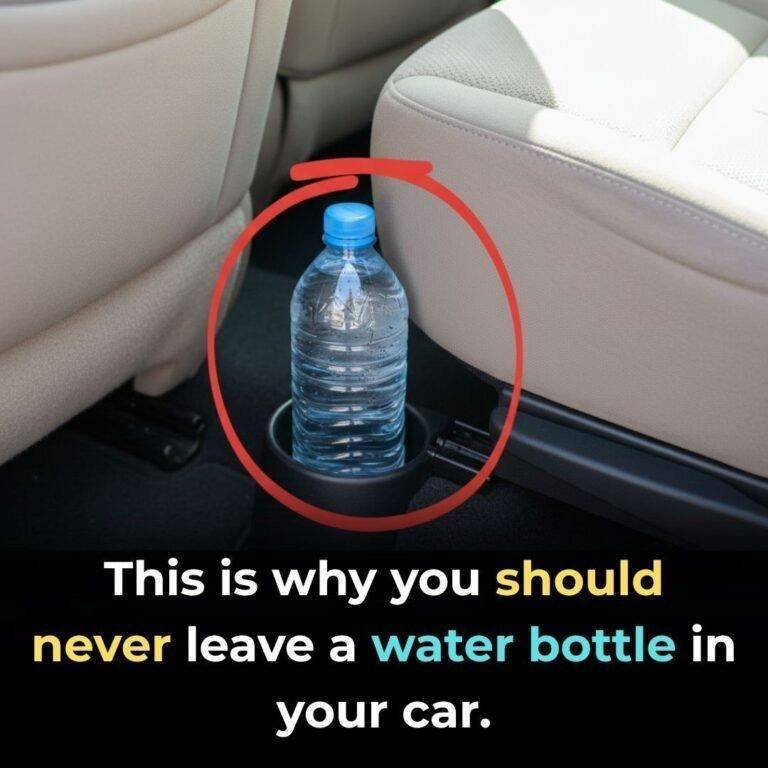
Leaving a water bottle in your car seems harmless—but there are a few real risks behind that warning. Some are overhyped, but others are worth paying attention to.
🔥 1. Heat + Plastic = Chemical Leaching
When a plastic bottle sits in a hot car, temperatures can soar above 50–70°C (122–158°F).
That heat can cause tiny amounts of chemicals (like BPA alternatives or microplastics) to leach into the water. While occasional exposure isn’t likely to cause immediate harm, repeated exposure isn’t ideal for long-term health.
🦠 2. Bacteria Growth (Biggest Practical Risk)
If the bottle has been opened or you’ve drunk from it:
- Bacteria from your mouth enter the bottle
- Heat turns the car into an incubator
- Bacteria multiply quickly
This can lead to unpleasant taste, odor, or even mild illness.
🔆 3. Fire Risk (Rare, but Real)
A clear plastic bottle filled with water can act like a lens under direct sunlight.
In rare cases, it can focus light enough to burn upholstery and potentially start a fire. It’s uncommon—but documented.
🚗 4. Plastic Degradation
Heat weakens the bottle structure over time:
- More microplastics shed into the water
- Bottle may warp or crack
❗ What’s Exaggerated?
- “Instant poisoning” → ❌ Not true
- “One-time exposure is dangerous” → ❌ Very unlikely
This is more about repeated habits, not a one-off mistake.
✅ What You Should Do Instead
- Use a stainless steel or glass bottle
- Don’t reuse single-use plastic bottles for days
- Avoid drinking water left in a hot car for long periods
- Store bottles out of direct sunlight
🧠 Bottom Line
It’s not a dramatic, immediate danger—but over time:
- Heat + plastic + bacteria = something you don’t want to drink regularly
If you want, I can recommend safe, durable bottles that won’t have these issues and are easy to carry daily.
