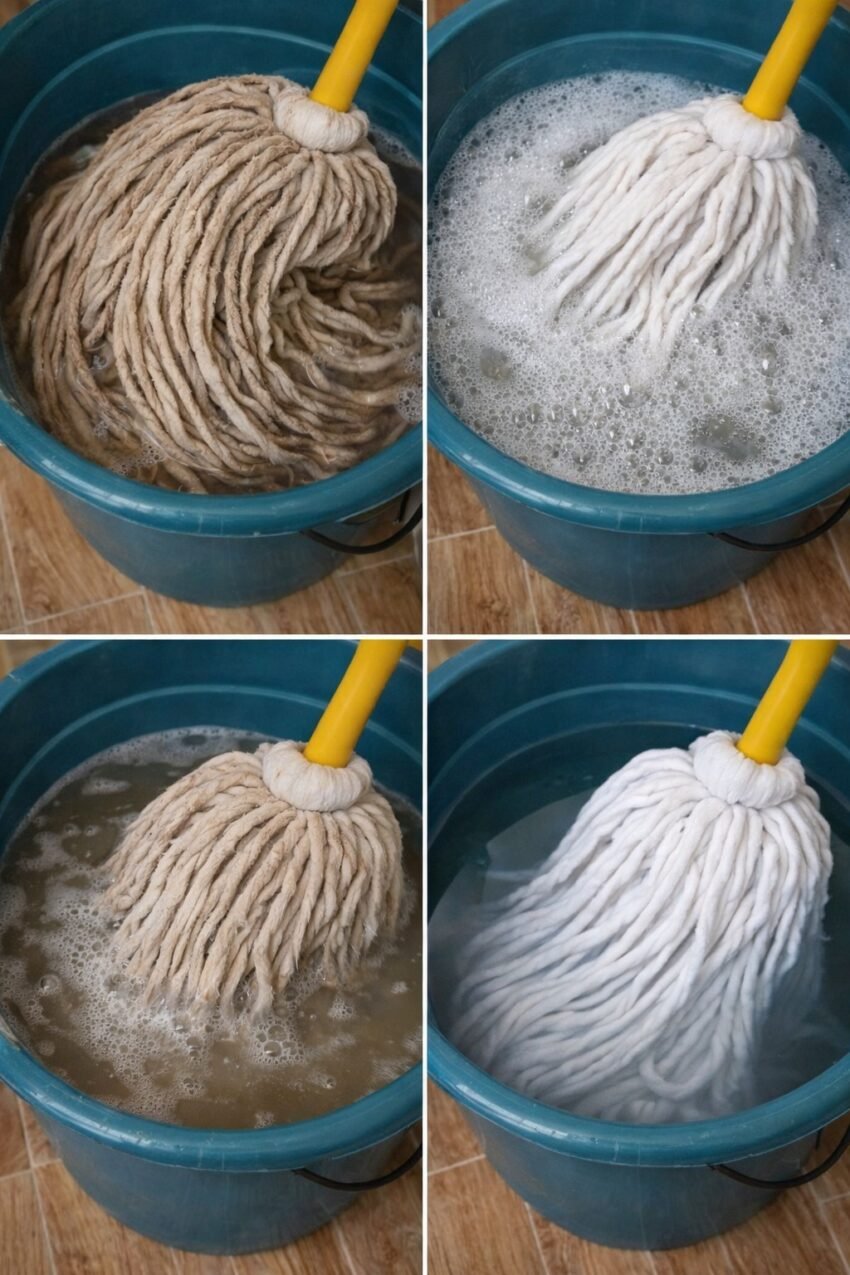
If you have a very dirty mop and want to restore it so it’s as good as new, there is one simple common household ingredient that’s highly effective — and I’ll explain exactly how and why it works plus alternatives and safety tips.
🧼 Best Ingredient to Restore a Dirty Mop
✅ White Vinegar (the key ingredient)
A single drop (actually a bit more than a drop) of white vinegar added to your cleaning process can deep‑clean, deodorize, and disinfect a dirty mop.
👉 Vinegar is acidic (acetic acid) — it breaks down grime, mineral buildup, soap scum, bacteria, and odors that build up on mop fibers.
🧽 Why White Vinegar Works So Well
✔ Breaks Down Dirt & Grime
Vinegar dissolves minerals and residues left by dirty water and cleaning solutions.
✔ Natural Disinfectant
It kills many bacteria and surface microbes — not as strong as bleach but useful for mop cleaning.
✔ Removes Odors
Helps eliminate that “musty mop smell” caused by mildew and sediment.
✔ Safe & Affordable
Non‑toxic, eco‑friendly, inexpensive, and usually already in your kitchen.
🧴 How to Use Vinegar to Restore Your Dirty Mop
Here’s a step‑by‑step method that works best:
🟡 For Regular Cloth / Sponge Mops
- Fill a bucket with warm water (enough to submerge the mop head).
- Add 1 cup of white vinegar to the water.
- If the mop is extremely dirty, use 1–2 cups.
- Let the mop soak for 30–60 minutes.
- Agitate the mop fibers by moving it around in the bucket.
- Rinse thoroughly with clean water.
- Wring dry and air‑dry in sunlight if possible.
👉 Don’t just use a “drop” — use a proper amount to ensure real cleaning power.
🧼 For Microfiber Mops
Microfiber needs slightly different care:
🔹 Do Not Use Fabric Softener — it clogs the fibers.
🔹 Instead, use a soak of:
- Warm water
- ½ to 1 cup white vinegar
- Optional: 1–2 tablespoons baking soda for extra deodorizing
Soak for 30 minutes, rinse, and let air dry.
🧽 For Mops with Metal or Plastic Parts
If your mop has a detachable head:
- Remove the mop head.
- Soak it alone in the vinegar solution.
- While it’s soaking, wipe the handle and attachments with a vinegar cloth to remove residue.
🌿 Optional Boosters (If Needed)
These make cleaning even more powerful:
🟢 Baking Soda
- Neutralizes odors
- Adds gentle scrubbing action when combined with vinegar (fizzing helps lift grime)
⚠ Don’t mix vinegar and baking soda in a sealed container — pressure can build up.
🟢 Hot Water (not boiling)
Heat helps dissolve oils and gunk stuck in fibers.
🟢 Essential Oils (optional)
Add a few drops after cleaning (not during) to scent and freshen. It doesn’t add cleaning power.
🧯 When Vinegar Isn’t Enough
If the mop still looks grimy after vinegar:
- Consider bleach (only on white, bleach‑safe fabrics):
- ¾ cup bleach in a bucket of water
- Soak for 10–15 minutes
- Rinse thoroughly
- Never mix bleach with vinegar (creates chlorine gas)
- Use a commercial mop sanitizing detergent designed for deep cleaning.
🚫 What Not to Do
❌ Don’t use fabric softener — it leaves a coating that repels water
❌ Don’t use hot steam on some microfiber heads — it can damage fibers
❌ Don’t use bleach + vinegar together
🧠 Quick Summary
| Problem | Solution |
|---|---|
| Dirty & smelly mop | Soak in warm water + white vinegar |
| Stains & buildup | Add baking soda |
| Very grimy fibers | Repeat soak or use bleach (safe types) |
| Plastic/metal parts dirty | Wipe with vinegar cloth |
🧹 Final Tip
If your mop still isn’t coming clean after all these steps, it might truly be worn out — and replacing it may save time and improve cleaning results.
If you want, tell me what kind of mop you have (microfiber, sponge, string, etc.), and I’ll tailor a cleaning method specifically for it.
