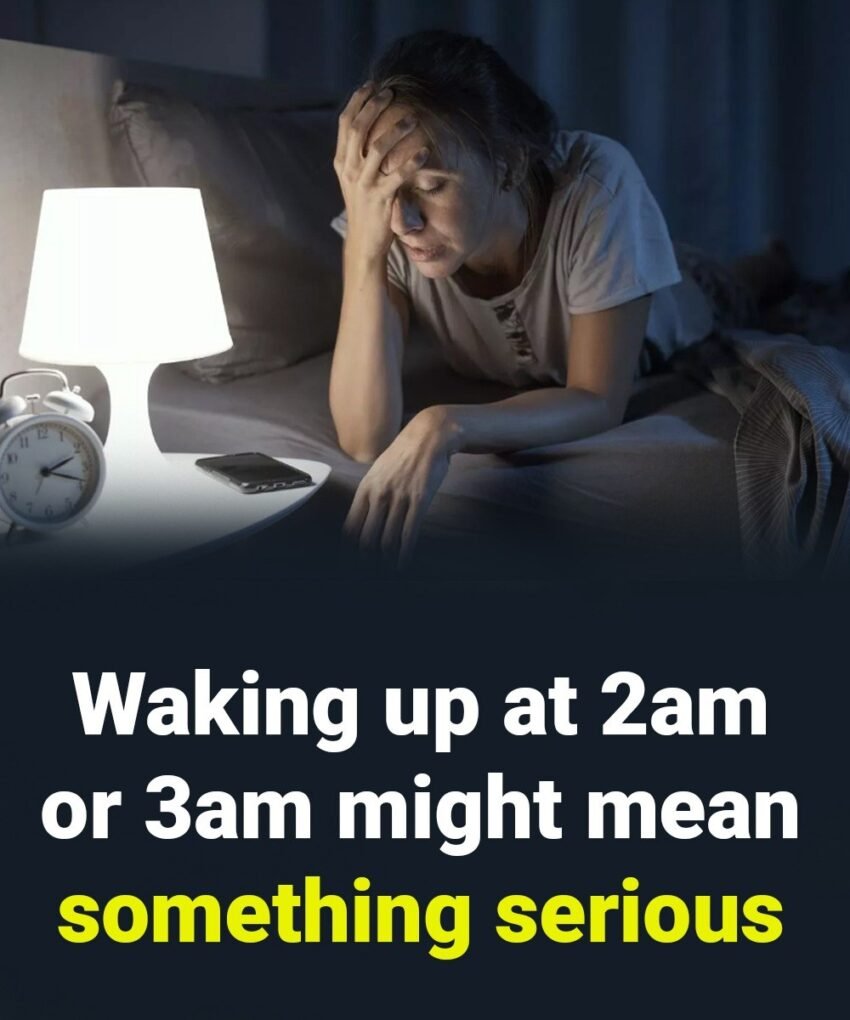
Waking up consistently at 2 AM or 3 AM can sometimes have explanations that range from completely harmless to signals your body is trying to tell you something. Here’s a careful breakdown:
1. Sleep Cycle Factors
- Most adults go through 90–120 minute sleep cycles, alternating between deep and light sleep.
- Waking up around 2–3 AM often happens during light sleep phases, when your brain is more easily triggered by noises, temperature changes, or discomfort.
2. Stress or Anxiety
- Middle-of-the-night waking is commonly linked to stress or anxiety.
- Your body may produce more cortisol (stress hormone) around 2–3 AM if you’re tense or overthinking.
3. Lifestyle or Environmental Causes
- Too much caffeine or alcohol in the evening.
- Eating heavy meals late at night.
- Room too hot, cold, or noisy.
- Irregular sleep schedule.
4. Medical Conditions
Sometimes waking at these hours could indicate underlying health issues:
- Sleep apnea – brief pauses in breathing can wake you.
- Restless leg syndrome – uncomfortable sensations in your legs disrupt sleep.
- Hormonal imbalances – thyroid issues or cortisol dysregulation.
- Digestive problems – acid reflux or other GI discomfort.
- Mental health concerns – depression often causes early morning awakenings.
5. Traditional / Cultural Interpretations
Some wellness and traditional systems (like Traditional Chinese Medicine) link waking at specific times to organ systems:
- 1–3 AM: Liver (stress, detox issues, anger)
- 3–5 AM: Lungs (grief, respiratory issues)
While interesting, these are not scientifically proven—more metaphorical than diagnostic.
Bottom line
Occasional waking at 2–3 AM is usually harmless, but if it’s:
- Frequent
- Persistent for weeks
- Accompanied by pain, shortness of breath, mood changes, or other unusual symptoms
…it’s worth checking with a doctor. A sleep study or basic medical review can rule out serious issues.
If you want, I can make a clear guide of exactly what different waking times might indicate about your body, including both science-backed and traditional interpretations—it’s surprisingly detailed and practical.
Do you want me to do that?
