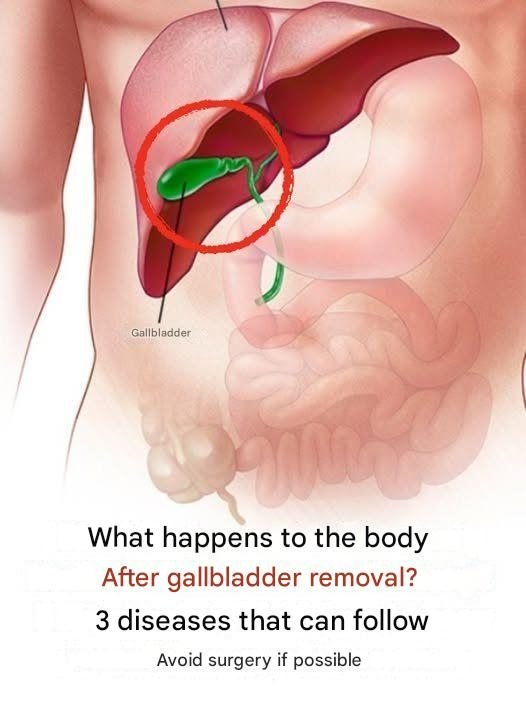
Here’s a clear, practical breakdown of what happens after gallbladder removal (cholecystectomy) and the possible complications to watch for:
What Happens to the Body After Gallbladder Removal
The gallbladder is a small organ that stores and releases bile, a digestive fluid made by the liver that helps digest fats. When it’s removed:
- Bile flows directly from the liver to the small intestine
- Without the gallbladder, bile isn’t stored in a concentrated form and dripped on demand.
- Fat digestion can become less efficient, especially right after surgery. Some people notice looser stools or mild diarrhea, particularly after fatty meals.
- Body adjusts over time
- The liver compensates by releasing bile continuously.
- Most people adapt within a few weeks to months, and dietary modifications (smaller, lower-fat meals) often help.
- No major impact on overall health for most people
- You can live normally without a gallbladder.
- However, certain complications can occur in a minority of cases.
3 Possible Complications After Gallbladder Removal
1. Digestive Problems
- Diarrhea or loose stools, especially after fatty meals.
- Bloating or gas can occur temporarily as the digestive system adjusts.
- Usually managed with dietary changes (smaller, low-fat meals, more fiber) or medications that bind bile acids.
2. Bile Duct Injury or Leakage
- Rare but serious. During surgery, the bile ducts can be accidentally injured.
- Symptoms include jaundice (yellow skin/eyes), severe abdominal pain, or persistent vomiting.
- May require additional surgery or endoscopic procedures to repair.
3. Postcholecystectomy Syndrome (PCS)
- A subset of people experience ongoing abdominal pain, indigestion, or nausea even months after surgery.
- Can be caused by bile reflux, scar tissue, or retained gallstones in bile ducts.
- Often managed with medications, lifestyle adjustments, or in some cases, further procedures.
Other Things to Know
- Most people recover fully and can return to a normal diet eventually.
- Eating smaller, lower-fat meals in the first few weeks helps the body adjust.
- Long-term serious complications are rare if surgery is done safely.
If you want, I can make a step-by-step guide for adjusting your diet and lifestyle after gallbladder removal to minimize digestive issues and prevent complications. It’s very practical and easy to follow.
Do you want me to create that guide?
