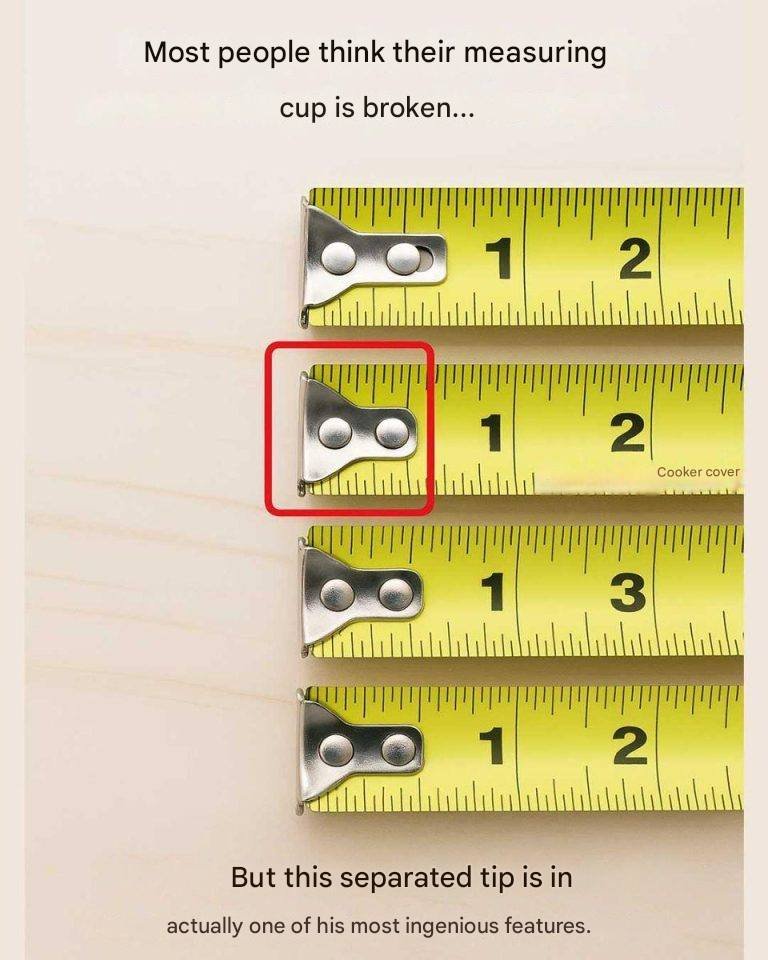
The metal piece at the end of a tape measure (called the hook or tang) serves several important purposes:
1. It Hooks Onto Edges
The small metal tab lets you:
- Hook it over the edge of a board, table, or wall when measuring the outside of something.
- Catch it inside a corner when measuring interior distances.
2. It Moves on Purpose (Not a Defect!)
If you’ve noticed the metal end slides back and forth slightly — that’s intentional.
It moves the exact thickness of the metal hook.
- When you hook it onto an outside edge, it pulls outward.
- When you push it against an inside surface, it shifts inward.
This movement compensates for the thickness of the hook so your measurement stays accurate.
3. The Small Hole
Many tape measure hooks have a small hole. That’s for:
- Grabbing onto a nail or screw for solo measuring.
- Anchoring the tape when measuring long distances.
4. The Serrated Edge (on some models)
Some hooks have tiny teeth so you can scratch a small marking into wood or drywall while measuring.
So in short: the end isn’t just a stopper — it’s a precision-designed feature that makes measuring more accurate and easier to do alone.
