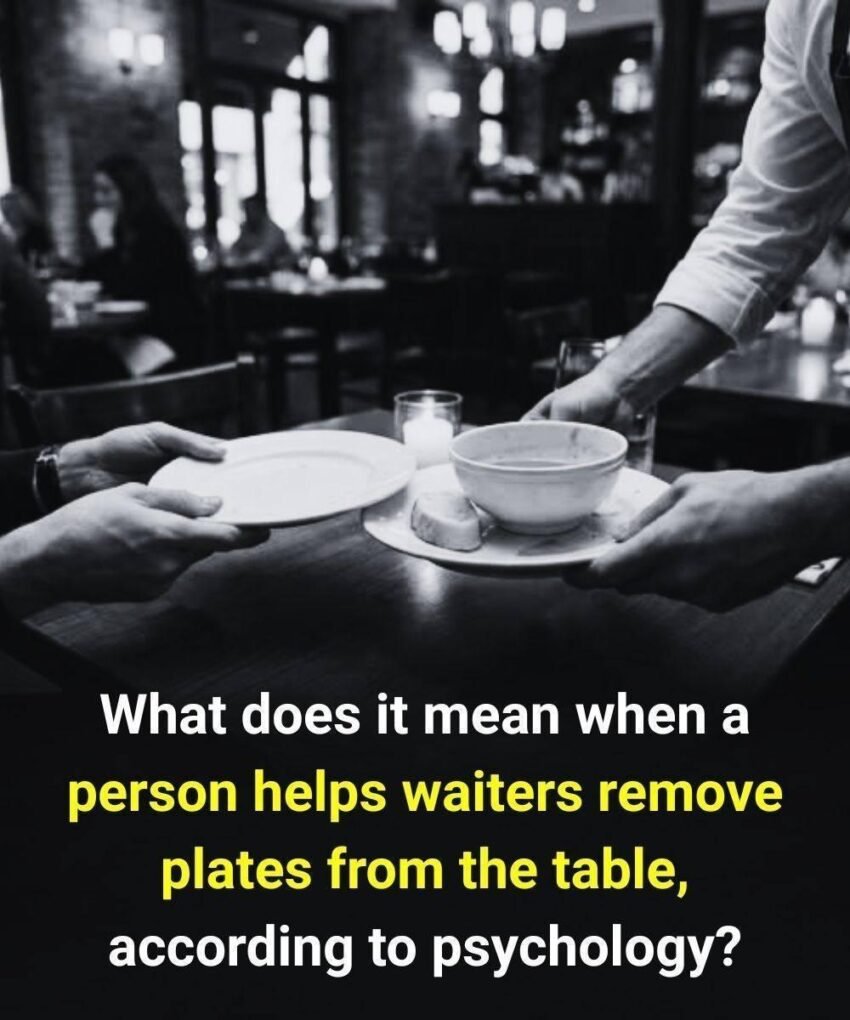
When someone helps a waiter clear the table, it might look like a small gesture—but psychology sees it as a cluster of traits, social awareness, and situational cues rather than one single meaning. Here’s a deeper, evidence-based breakdown.
🧠 1. Prosocial Behavior & Empathy
This action falls under Prosocial Behavior.
People who do this tend to:
- Notice others’ workload
- Feel a mild sense of responsibility
- Act without being asked
It’s often linked to empathy—the ability to understand another person’s effort and respond.
👉 Important: It doesn’t mean they’re “better,” just that they’re responding to the moment in a helpful way.
🧩 2. Personality Traits (Big Five)
In personality psychology (Big Five Personality Traits), this behavior is commonly associated with:
✔️ High Agreeableness
- Cooperative
- Considerate
- More likely to help strangers
✔️ High Conscientiousness
- Orderly
- Responsible
- Likes things “taken care of properly”
🏠 3. Upbringing & Learned Norms
Many people learn this from family habits:
- “Clean up after yourself” mindset
- Respect for service workers
- Cultural norms around shared responsibility
In some cultures, helping is expected; in others, it’s seen as unusual.
👀 4. Social Awareness & Emotional Intelligence
This behavior can reflect Emotional Intelligence:
- Reading the environment (“they’re busy”)
- Adjusting behavior accordingly
- Acting without needing recognition
⚖️ 5. Impression Management (Not always pure)
Sometimes it’s influenced by Impression Management:
- Wanting to appear polite or kind
- Especially on dates or in groups
- Subtle signaling of values
👉 This doesn’t make it fake—just socially aware.
🧪 6. The “Low-Cost Helping” Effect
Psychology distinguishes between easy vs. costly help.
Helping stack plates is:
- Low effort
- Low risk
- Immediate reward (feels good, socially approved)
So many people who don’t do this might still be generous in bigger ways.
🧍♂️ 7. Sense of Equality vs. Role Boundaries
There are two different mindsets:
A. Equality mindset
- “We’re all just people”
- More likely to help
B. Role-bound mindset
- “This is their job”
- Less likely to intervene
Neither is automatically wrong—it depends on perspective and context.
🌍 8. Cultural & Situational Factors
- In busy or casual restaurants → helping is more common
- In formal dining → it might be inappropriate
- In some countries → it’s expected politeness
- In others → it may confuse staff
⚠️ 9. What it DOESN’T necessarily mean
This behavior alone does NOT prove:
- Someone is deeply kind
- Someone has strong morals
- Someone will behave the same in high-stakes situations
It’s just one small data point.
🧠 Bottom line
Helping a waiter clear the table usually reflects:
- Mild empathy
- Social awareness
- Cooperative personality tendencies
…but it can also be influenced by:
- Context
- Habit
- Social signaling
So psychology would say:
👉 It’s a useful clue about someone’s tendencies, not a definitive measure of their character.
If you want, I can break down what small everyday behaviors reveal about personality (like how someone treats staff, handles delays, or shares food)—those patterns together are much more telling.
