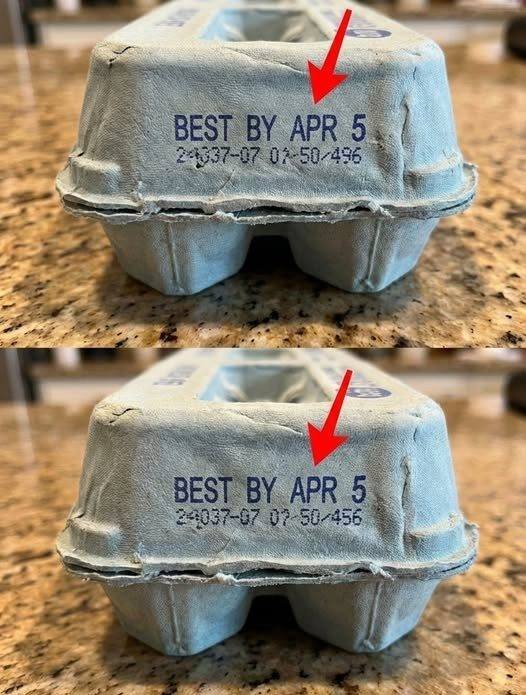
Here’s a full explanation of the numbers on egg cartons and why paying attention to them is important for your health. 🥚
🥚 Understanding Egg Carton Numbers
Egg cartons contain a variety of numbers and codes that indicate freshness, production method, and safety information. Ignoring them could increase your risk of foodborne illness, such as salmonella infection.
1️⃣ Expiration / “Best By” Date
- This is the most important date for safety.
- Eggs are usually safe to eat 3–5 weeks after purchase if refrigerated properly, but the best flavor and texture are before this date.
- Eating eggs past this date increases the risk of bacterial growth.
2️⃣ Julian Date
- Often printed as a three-digit code (001–365).
- Represents the day of the year the eggs were packed:
- Example: 032 = February 1st (32nd day of the year).
- Helps determine freshness even if the expiration date is farther out.
- Fresher eggs have firmer whites and yolks, and taste better.
3️⃣ Grade
- Eggs are graded AA, A, or B:
- AA = freshest, best quality, thick whites, firm yolks.
- A = good quality, slightly thinner whites.
- B = usually used for baking or processing.
- Grades indicate quality, not safety, but higher grade eggs are generally fresher and less likely to have defects.
4️⃣ Size
- Standard sizes: Small, Medium, Large, Extra Large, Jumbo.
- Size affects cooking measurements but does not affect safety.
5️⃣ Plant / Producer Code
- Usually a code with letters and numbers indicating farm or processing plant.
- In some countries (like the US), this is required for traceability in case of recalls.
- If there’s a salmonella outbreak, authorities can trace eggs back to the source using this code.
6️⃣ Organic / Cage-Free / Free-Range Labels
- Organic, cage-free, or pasture-raised labels indicate farming practices, not necessarily freshness.
- Eggs from large-scale facilities may still carry salmonella risk, so handling and cooking properly is crucial.
⚠️ Why Ignoring These Numbers Can Make You Sick
- Old eggs: Higher risk of bacterial contamination.
- Incorrect storage: Even fresh eggs can spoil if left at room temperature.
- Ignoring recall codes: Eggs from recalled plants may carry salmonella.
Tip: Always refrigerate eggs at 40°F (4°C) or below, and cook until yolks and whites are firm.
🧼 Quick Safety Tips
- Wash hands and surfaces after handling raw eggs.
- Avoid recipes with raw or undercooked eggs (like homemade mayonnaise or hollandaise) unless using pasteurized eggs.
- Check the carton for freshness (Julian date and expiration date) before cooking.
✅ Bottom Line
The numbers on your egg carton are more than just numbers — they tell you about freshness, quality, and safety. Ignoring them may lead to consuming spoiled or contaminated eggs, which can result in food poisoning.
If you want, I can make a simple chart showing exactly how to read any egg carton at a glance — very handy for avoiding unsafe eggs. Do you want me to do that?
