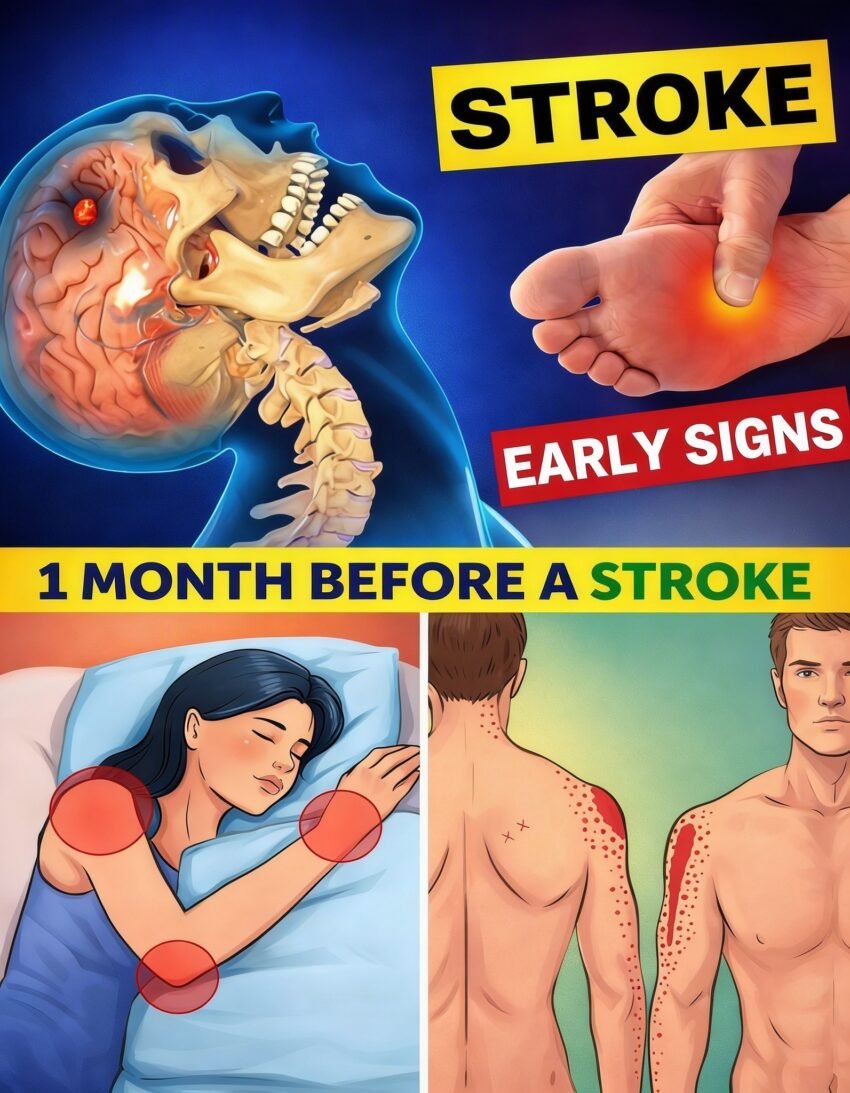
Stroke is a medical emergency, and most strokes happen suddenly. However, some people do experience warning signs (often called “mini-strokes” or TIAs) in the days or weeks before a major stroke.
Importantly: not everyone gets early warnings, and symptoms can be subtle or come and go.
🧠 Stroke (Cerebrovascular accident)
Stroke
A stroke happens when blood flow to part of the brain is interrupted, causing brain cells to die quickly.
⚠️ Possible warning signs that may appear days to weeks before
These are often linked to transient ischemic attacks (TIAs)—temporary mini-strokes:
1. Sudden weakness or numbness
- Face, arm, or leg (especially one side of the body)
- May come and go within minutes or hours
2. Temporary vision problems
- Blurred vision
- Loss of vision in one eye
- Double vision episodes
3. Sudden dizziness or loss of balance
- Trouble walking straight
- Feeling like the room is spinning (not always inner-ear related)
4. Brief speech difficulties
- Slurred speech
- Trouble finding words
- Confusion while talking
5. Sudden severe headaches
- Especially “worst headache of life” (more common in hemorrhagic stroke)
6. Tingling or “pins and needles”
- Especially on one side of the body
7. Short episodes of confusion
- Difficulty understanding simple instructions
8. Transient memory lapses or mental fog
- Sudden inability to focus or think clearly
⚠️ Key point: These symptoms may last minutes to hours and then disappear—but still require urgent attention.
🚨 FAST warning rule (important)
If symptoms happen suddenly, remember:
- F – Face drooping
- A – Arm weakness
- S – Speech difficulty
- T – Time to call emergency help
🛡️ 9 Tips to help prevent stroke
1. Control blood pressure
- Most important risk factor
- Keep it within normal range
2. Manage blood sugar (diabetes control)
- High sugar damages blood vessels over time
3. Reduce cholesterol
- Lowers artery blockage risk
4. Stop smoking
- One of the strongest preventable causes
5. Exercise regularly
- At least 30 minutes most days (walking is enough)
6. Maintain healthy weight
- Reduces strain on heart and vessels
7. Eat a heart-friendly diet
- More fruits, vegetables, whole grains
- Less fried and processed food
- Reduce salt intake
8. Limit alcohol
- Heavy drinking increases stroke risk
9. Treat underlying conditions early
- Atrial fibrillation (irregular heartbeat)
- Heart disease
- Sleep apnea
🧭 Important reality check
- There is no reliable “1-month warning sign checklist” for stroke.
- What people call early signs are often TIAs, which are medical emergencies on their own.
- A TIA is a strong warning that a major stroke may happen soon (sometimes within days).
🏥 When to seek immediate help
Go to emergency care immediately if:
- Symptoms appear suddenly even if they disappear
- One-sided weakness or numbness occurs
- Speech or vision changes happen
- Severe unusual headache occurs
If you want, I can also explain:
- How to tell stroke vs vertigo vs migraine
- Or early signs specifically in young people (which can be different)
