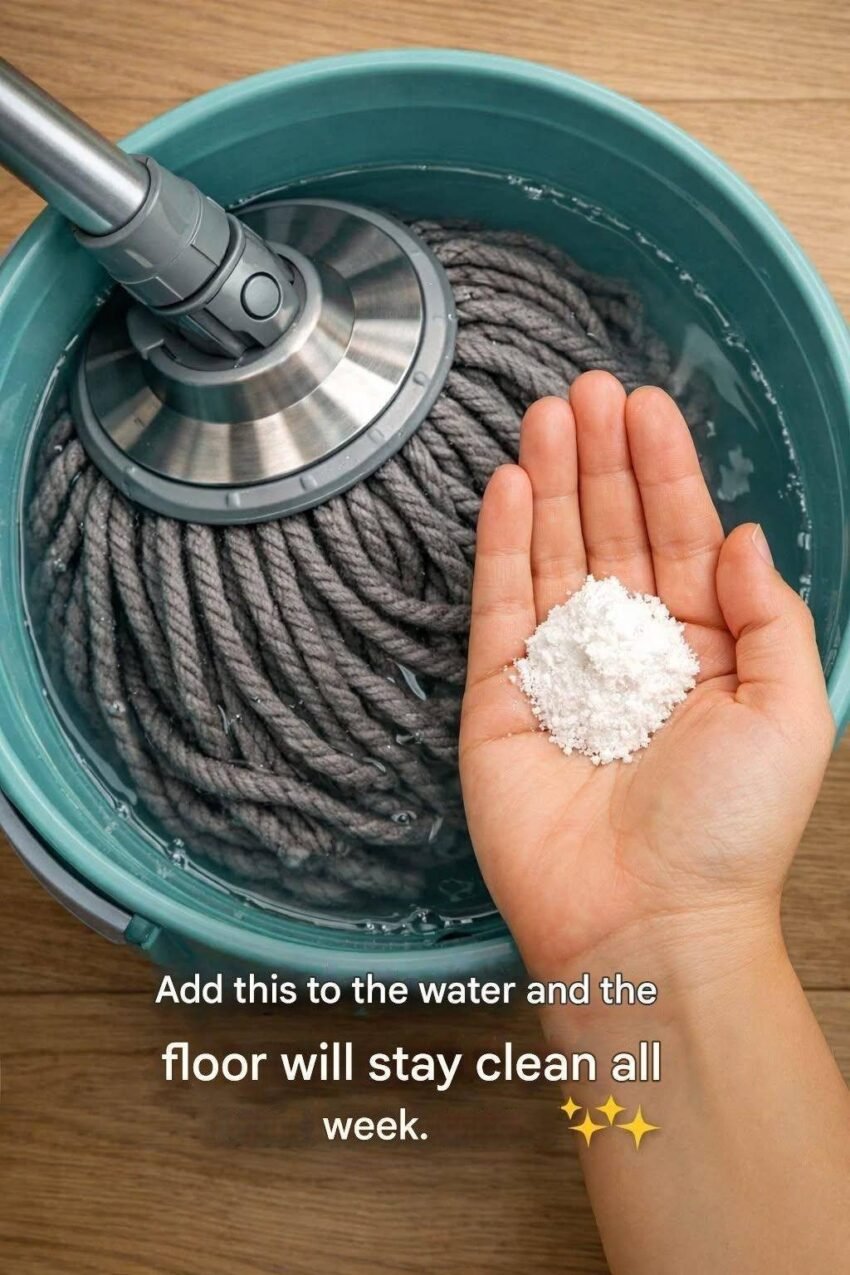
Here’s article‑style, expert‑informed information — not just a quick tip — on an ingredient you can add to your mop bucket that helps keep your floors cleaner for longer, and why it works:
🧼 The Trick: Add White Vinegar to Your Cleaning Water
One of the most widely recommended household hacks — used by professional cleaners and homeowners alike — is to add white vinegar to your mop bucket when cleaning hard floors.
📌 Why This Works
White vinegar (acetic acid solution) has several properties that make it an excellent floor‑cleaning additive:
💧 Degreasing action:
Vinegar helps break down oils, grime, and residues that regular water can’t remove fully.
🦠 Mild antimicrobial effect:
It doesn’t sterilize like bleach, but it reduces surface bacteria and germs, helping floors stay cleaner longer.
🫧 Removes dulling residue:
Many soaps or detergents leave a thin film that attracts dust; vinegar cuts through that film and leaves floors less likely to show smudges or footprints.
🪣 How to Use It — Step‑by‑Step
1. Prepare Your Bucket
- Fill mop bucket with warm water
- Add ½ to 1 cup of white vinegar per gallon of water
(For stronger cleaning on tile or tough grime, use up to 1 cup; for wood or laminate, stick closer to ½ cup.)
2. Mop Normally
- Dip and wring your mop, then clean the floor as usual
- Focus on high‑traffic areas where dirt collects
3. Let It Air Dry
- Because vinegar is water‑based and evaporates quickly, there’s no sticky residue left behind
🧠 Pro Tip: If you like a fresh scent, add a few drops of essential oil (like lemon or lavender) — vinegar’s smell dissipates as it dries.
🧪 What Vinegar Does — and Doesn’t — Do
✅ Good For:
- Removing dust and light soils
- Cutting grease on tile, vinyl, and sealed stone
- Helping floors look cleaner longer by eliminating residue
⚠️ Be Careful With:
- Unsealed wood floors: Strong acids can dull finish if used undiluted — always use a light mix and test a small area first.
- Natural stone (marble, granite): Vinegar’s acidity can etch stone surfaces — use a pH‑neutral cleaner instead.
🧠 How It Helps Your Floor Stay Clean All Week
Vinegar doesn’t magically block dirt — but:
- It dissolves the film that attracts dust.
Many detergents leave a micro‑film that dust sticks to; vinegar removes this film, so fewer particles cling to the floor. - It dries quickly without residue.
Sticky residue from soaps tends to collect grime faster. Vinegar leaves a clean finish, so the floor looks clean longer. - It reduces surface oils.
Greasy footprints and smudges are harder to remove and draw in dust — vinegar breaks these down more effectively than water alone.
🧽 Alternative Add‑Ins That Also Work
If you want additional cleaning power depending on your needs:
🌿 Baking Soda (for grout or stubborn spots)
Sprinkle a little on a damp sponge and scrub before mopping.
💧 Dish Soap Drop (for heavy grease)
Just a drop goes a long way — but rinse well to avoid residue.
🍋 Lemon Juice (for scent + mild degreasing)
Works similarly to vinegar, with a fresh citrus smell.
🧠 Safety Notes
✔ Always mop in well‑ventilated areas
✔ Don’t mix vinegar with bleach or ammonia — dangerous gases can form
✔ For pets or sensitive surfaces, dilute vinegar well and test first
📌 Summary: Best Ingredient to Add to Your Bucket
White vinegar — added to your mop water — is a simple, inexpensive ingredient that helps your floors:
✅ Remove dirt and grease
✅ Stay cleaner longer
✅ Look brighter without sticky residue
Used correctly, it’s one of the most effective household floor‑cleaning additives you can use.
If you tell me your floor type (e.g., tile, wood, laminate), I can tailor exact ratios and a weekly cleaning schedule for the best results!
