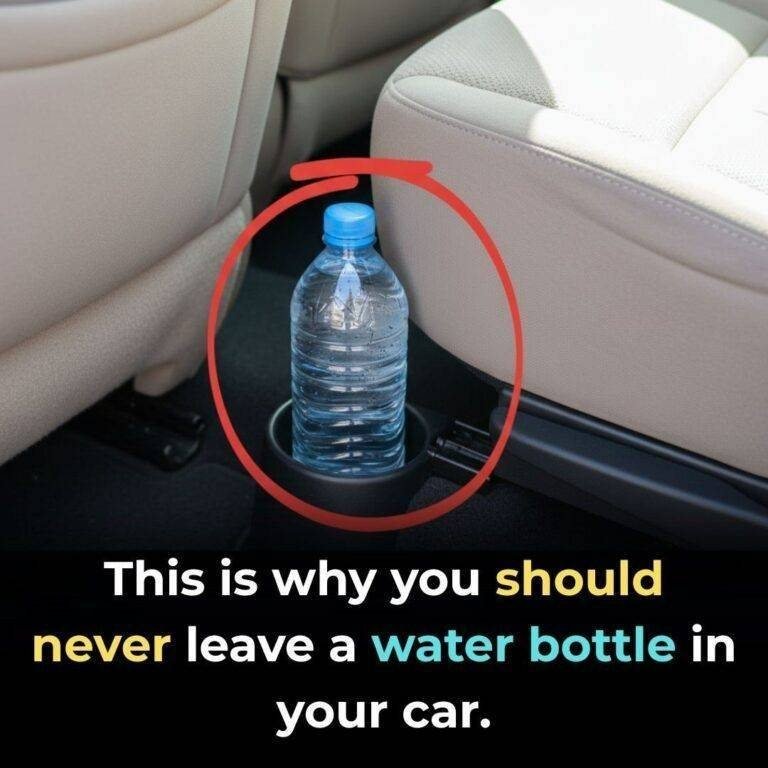
That warning gets shared a lot, but it mixes a small real risk with a lot of exaggeration. Here’s what actually matters.
🚗💧 What can happen if you leave a water bottle in your car?
1. Heat can affect the plastic
Most disposable bottles are made from polyethylene terephthalate (PET).
- In very high temperatures (like a closed car in summer), tiny amounts of chemicals can migrate into the water
- The main concern people mention is antimony
👉 But:
- The levels found in studies are typically well below safety limits
- Occasional exposure is unlikely to harm you
2. Bacteria growth (more practical concern)
If you’ve already drunk from the bottle:
- Bacteria from your mouth enter the water
- Warm conditions help them multiply
This is actually more relevant than the chemical issue.
3. Fire risk (rare but real)
A clear bottle can act like a lens (related to refraction):
- Sunlight can be focused onto a surface
- In very rare cases, it has caused smoldering or minor fires
This is unusual—but not impossible.
❌ Common myths you’ll see online
- “It releases deadly toxins instantly” → False
- “One sip will poison you” → False
- “Plastic turns into cancer-causing liquid in heat” → Misleading
There’s no solid evidence linking occasional use of a heated water bottle to diseases like cancer.
✅ Practical advice
- Don’t leave water bottles in a hot car for long periods
- Avoid drinking from bottles that:
- Taste or smell odd
- Have been sitting for days in heat
- Use reusable bottles (steel or BPA-free plastic) if possible
- Keep bottles out of direct sunlight (for both safety and taste)
🧠 Bottom line
- Not an emergency or major health threat
- But not ideal either—especially for hygiene and taste
- The biggest issue is bacteria and heat degradation, not instant toxicity
If you want, I can recommend the safest types of reusable bottles or explain which plastics to avoid.
