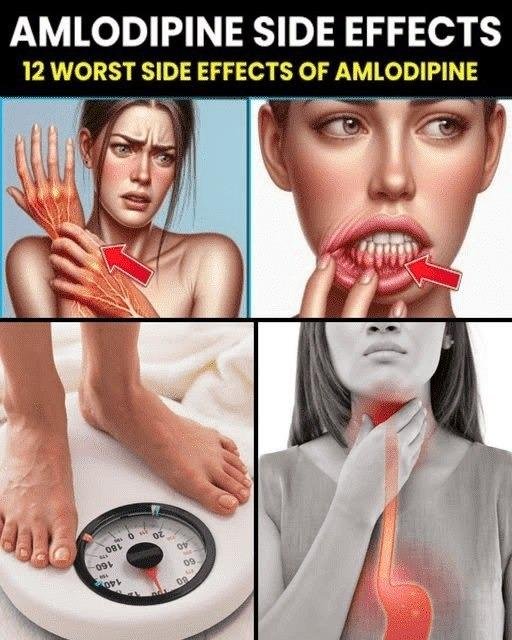
Headlines like that are designed to grab attention — but it’s more helpful to understand the real, medically recognized side effects of Amlodipine and which ones actually need urgent attention.
Amlodipine is widely used for high blood pressure and angina, and most people tolerate it well. Still, some side effects can occur.
⚠️ Side effects you should take seriously
1. Swelling of legs or ankles (edema)
- Very common
- Can become uncomfortable or severe
- Usually not dangerous, but should be reported if worsening
2. Chest pain or worsening angina
- Rare, but important
- Can happen when starting or increasing dose
👉 Seek medical help immediately
3. Irregular or fast heartbeat (palpitations)
- Feeling like your heart is racing or skipping beats
- Needs evaluation if persistent
4. Severe dizziness or fainting
- Could indicate low blood pressure
👉 Especially concerning if you pass out
5. Shortness of breath
- Could signal fluid buildup or heart issues
👉 Needs prompt medical attention
6. Severe fatigue or weakness
- Mild tiredness is common
- Extreme or sudden weakness should be checked
7. Nausea or abdominal pain
- Usually mild
- Persistent or severe symptoms should be discussed
8. Flushing (warmth, redness in face)
- Common and usually harmless
- But notable if intense or persistent
9. Gum swelling (gingival hyperplasia)
- Less common but well-known
- Good dental hygiene helps reduce risk
10. Skin rash or itching
- Could indicate an allergic reaction
👉 Stop and contact a doctor if severe
11. Liver-related symptoms (rare)
- Yellowing of skin/eyes (jaundice)
- Dark urine
👉 Seek immediate care
12. Severe allergic reaction (very rare)
- Swelling of face, lips, tongue
- Difficulty breathing
👉 Emergency situation
🧠 Important perspective
- Many people take amlodipine for years without major problems
- The most common issue is ankle swelling, not dangerous complications
- “NEVER ignore” lists online often exaggerate risk
🚫 Don’t do this
- Do not stop amlodipine suddenly without consulting your doctor
→ It can worsen blood pressure or chest pain
✅ When to call a doctor
Contact a healthcare provider if you notice:
- New or worsening swelling
- Chest pain
- Fainting or severe dizziness
- Breathing difficulty
- Signs of allergy
If you want, I can also tell you which side effects are common vs rare or help you figure out whether something you’re experiencing is likely related.
