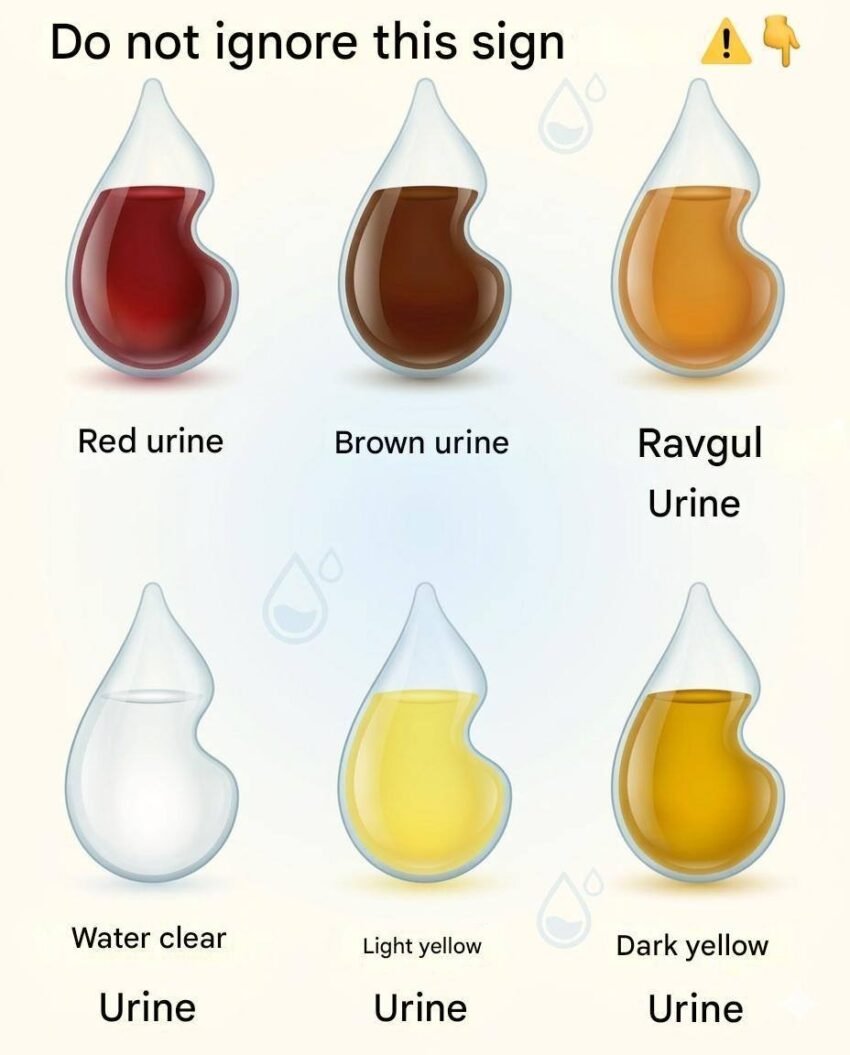
💧 What the Color of Your Urine Says About Your Health
Your urine color can be a surprisingly useful indicator of how your body is doing. While small changes are often harmless, certain colors can signal hydration levels, diet effects, or possible health conditions.
Below is a complete guide to what different urine colors may mean.
🟡 1. Clear urine
What it means:
You are very well hydrated—possibly even overhydrated.
Is it good or bad?
- Usually fine in short periods
- Consistently clear urine may mean you’re drinking more water than your body needs
Tip:
You don’t need to force excessive water intake. Pale yellow is often ideal.
🟡 2. Pale yellow (straw-colored)
What it means:
This is considered normal and healthy.
Why it happens:
Balanced hydration and normal waste processing.
Health sign:
✔ Ideal urine color most of the time
🟡 3. Dark yellow
What it means:
Mild dehydration.
Common causes:
- Not drinking enough water
- Sweating (heat or exercise)
- Morning urine (naturally darker)
What to do:
Drink more fluids and monitor if it lightens.
🟠 4. Amber or honey-colored
What it means:
More significant dehydration or concentrated urine.
Possible causes:
- Dehydration
- Vitamin supplements (especially B-complex)
- Liver-related issues (in rare cases)
When to worry:
If it persists despite good hydration, consult a doctor.
🟠 5. Orange urine
What it means:
Can be harmless or medical.
Common causes:
- Dehydration
- Certain medications (like some antibiotics or laxatives)
- High vitamin intake (especially beta-carotene)
Possible concern:
Liver or bile duct issues if combined with other symptoms like yellowing skin.
🔴 6. Pink or red urine
What it means:
May indicate blood in urine—or could be diet-related.
Harmless causes:
- Beets
- Berries
- Food coloring
Medical causes:
- Urinary tract infection (UTI)
- Kidney stones
- Kidney or bladder conditions
Important:
If you didn’t eat red foods recently, get it checked.
🟣 7. Blue or green urine (rare)
What it means:
Usually not dangerous.
Causes:
- Certain medications
- Food dyes
- Rare genetic conditions
When to worry:
If it continues without an obvious cause.
🟤 8. Brown or cola-colored urine
What it means:
Can indicate a more serious issue.
Possible causes:
- Severe dehydration
- Liver disease
- Muscle breakdown (rare but serious)
- Certain medications
Action:
Seek medical advice if not linked to food or dehydration.
🧬 9. Foamy urine
(Not a color, but important)
Possible meanings:
- Fast urination (harmless)
- Protein in urine (possible kidney issue if persistent)
💡 What’s “normal” overall?
Most doctors consider pale yellow urine the healthiest sign of good hydration and kidney function.
🚨 When you should see a doctor
Seek medical advice if you notice:
- Blood in urine (pink/red without food cause)
- Brown or cola color that doesn’t improve
- Persistent cloudy or foul-smelling urine
- Pain, burning, fever, or back pain
🥤 Simple hydration rule
A quick check used by many clinicians:
If your urine is the color of light lemonade, you’re usually well hydrated.
If you want, I can also give you a quick color chart image-style summary or help you interpret your own urine color specifically.
