How to Get a Deep Piriformis Stretch to Help Reduce Back, Hip, Glutes, and Leg Pain
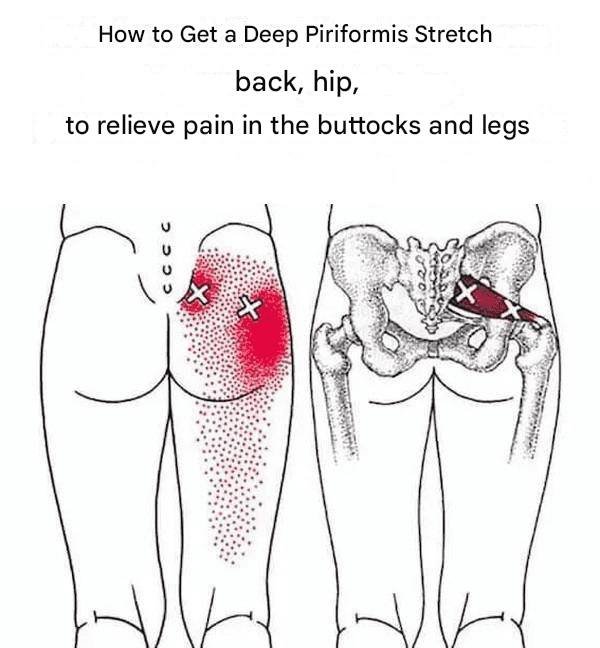
Pain in the lower back, hips, glutes, or even down the leg is often linked to tight muscles around the pelvis—especially the Piriformis Muscle. When this muscle becomes tight or irritated, it can put pressure on the nearby sciatic nerve and cause discomfort that radiates down the leg.
A gentle, consistent stretching routine can help relieve tension and improve mobility.
What Is the Piriformis Muscle?
The piriformis is a small but important muscle located deep in the buttock. It helps with:
- Hip rotation
- Walking and balance
- Stabilizing the pelvis
When tight, it may contribute to symptoms similar to sciatica, including pain, tingling, or numbness.
1. Basic Seated Piriformis Stretch
- Sit on a chair
- Cross one ankle over the opposite knee
- Keep your back straight
- Lean forward gently until you feel a stretch in your glutes
Hold for 20–30 seconds, repeat 2–3 times per side.
2. Figure-Four Stretch (Lying Down)
- Lie on your back
- Cross one ankle over the opposite knee
- Pull the uncrossed leg toward your chest
This is one of the most effective deep stretches for the piriformis.
Hold for 30 seconds, switch sides.
3. Supine Knee-to-Opposite-Shoulder Stretch
- Lie on your back
- Bring one knee across your body toward the opposite shoulder
- Keep shoulders flat on the ground
This helps release deep glute tension.
4. Pigeon Pose (Advanced Stretch)
- Start in a plank or hands-and-knees position
- Bring one leg forward, bent in front of you
- Extend the other leg straight behind
Hold gently—do not force the stretch.
5. Standing Piriformis Stretch
- Stand and place one ankle on a raised surface
- Keep your back straight
- Slowly lean forward
Good option if floor stretches are difficult.
How Often Should You Stretch?
- 1–2 times daily for tight muscles
- Hold each stretch 20–60 seconds
- Breathe slowly and avoid bouncing
Important Tips
- Never stretch into sharp pain
- Warm up slightly before stretching
- Combine with light walking for best results
- Stay consistent—results improve over time
When to Be Careful
If pain is severe, persistent, or includes numbness/weakness, it may not be just muscle tightness. Conditions like true nerve compression or spinal issues may need medical evaluation.
Final Thoughts
A tight piriformis muscle can contribute to discomfort in the back, hips, and legs, but gentle stretching can significantly improve flexibility and reduce symptoms over time. Consistency is more important than intensity.
If you want, I can also give you a simple 5-minute daily routine for sciatica-style pain relief that combines stretching and movement.
