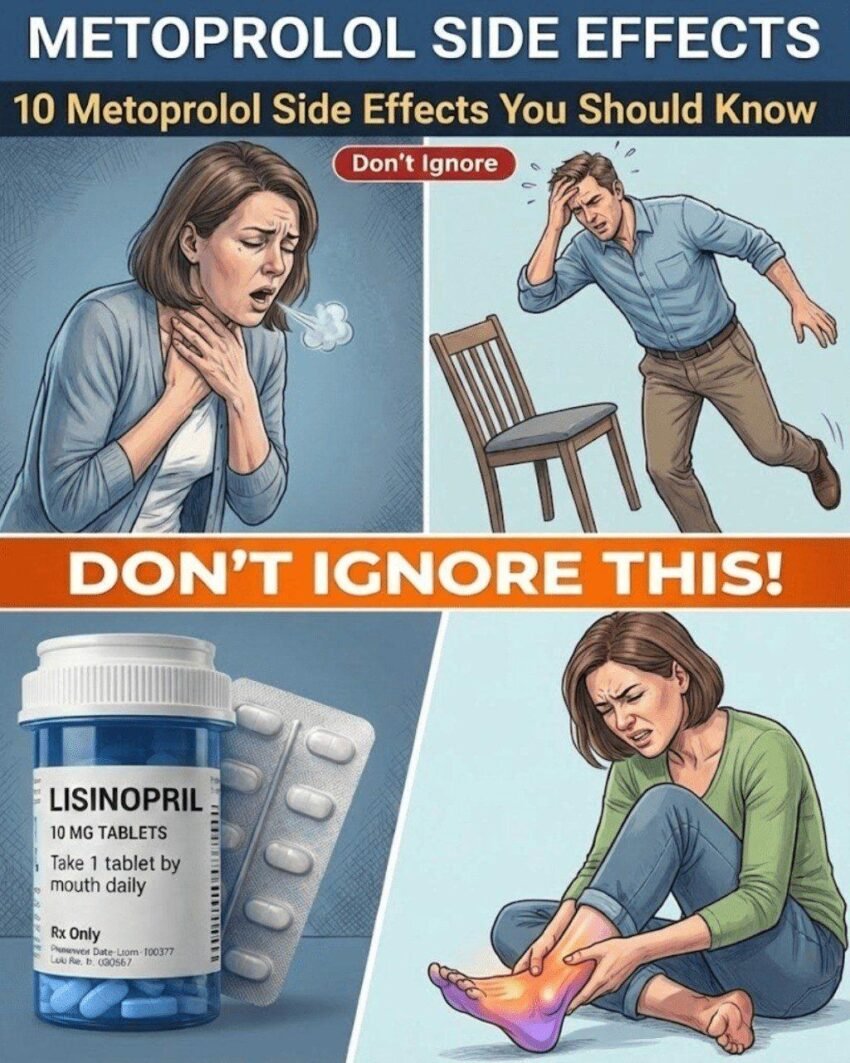
The 10 Metoprolol Side Effects You Should Know (Without the Fear-Mongering)
Metoprolol is a widely prescribed beta-blocker used to treat conditions like high blood pressure, chest pain (angina), heart rhythm problems, and to reduce risk after a heart attack.
Like all medications, it can cause side effects—but most are well-known, manageable, and not dangerous for the majority of patients when properly monitored.
Below are 10 possible side effects your doctor typically monitors for—not “hides,” but actively watches to keep you safe.
⚠️ 10 Possible Metoprolol Side Effects
1. Fatigue or tiredness
One of the most common effects.
- Happens because the heart rate slows down
- Often improves after a few weeks
2. Slow heart rate (bradycardia)
- Heart may beat slower than normal
- Doctors monitor this closely
3. Dizziness or lightheadedness
- More common when standing up quickly
- Related to lower blood pressure
4. Low blood pressure
- Can cause weakness or faint feeling
- Dose adjustment may be needed
5. Cold hands and feet
- Reduced circulation in extremities
- Usually mild
6. Shortness of breath (in sensitive individuals)
- Rare, but more likely in people with asthma or lung disease
- Needs medical attention if it occurs
7. Sleep disturbances
- Vivid dreams or insomnia in some people
- Often improves over time
8. Depression or mood changes
- Uncommon, but reported in some patients
- Important to discuss if persistent
9. Digestive issues
- Nausea
- Stomach discomfort
- Diarrhea or constipation (less common)
10. Sexual dysfunction
- Reduced libido or difficulty with performance in some people
- Often reversible after dose adjustment or switching medication
🧠 Important context doctors want you to understand
- These side effects do not happen to everyone
- Many people take metoprolol for years without serious issues
- Benefits (preventing heart attack, stroke, and controlling blood pressure) usually far outweigh risks
🛑 When to seek medical help
Contact a doctor urgently if you experience:
- Very slow heartbeat with fainting
- Severe dizziness or collapse
- Worsening shortness of breath
- Swelling of feet or sudden weight gain
- Chest pain that doesn’t improve
💡 Safety tips for taking metoprolol
- Take it at the same time every day
- Don’t stop suddenly (can cause rebound heart problems)
- Monitor blood pressure and pulse regularly
- Inform your doctor about asthma, diabetes, or other conditions
🧠 Final takeaway
Metoprolol is a well-studied, life-saving medication, not something to fear. Side effects can happen, but most are predictable, manageable, and monitored by doctors as part of routine care.
If you want, I can also create a simple guide on what foods, habits, and medicines interact with metoprolol or a patient-friendly Urdu explanation.
