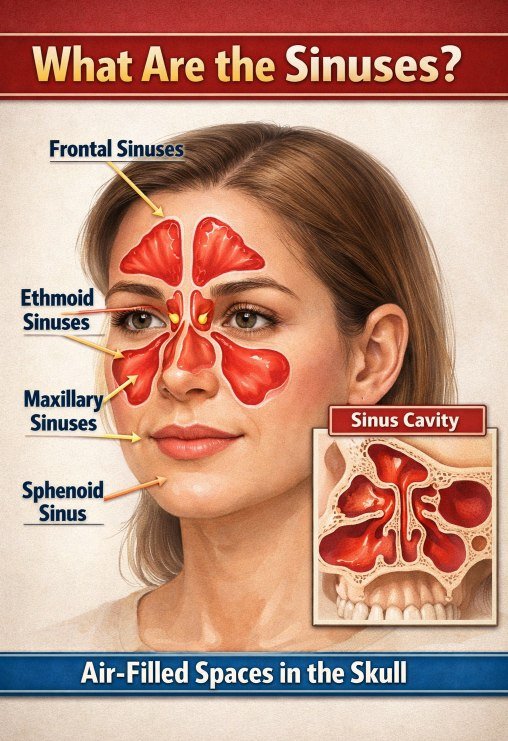
Sinuses are air-filled spaces located within the bones of your face and skull. They are connected to the nasal passages and play an important role in breathing, voice quality, and protecting your respiratory system.
What are sinuses?
The term “sinuses” usually refers to the paranasal sinuses, a group of four paired cavities:
- Frontal sinuses – located in the forehead
- Maxillary sinuses – found in the cheekbones
- Ethmoid sinuses – between the eyes
- Sphenoid sinuses – deeper behind the nose
These sinuses are lined with a thin layer of mucus-producing tissue.
Functions of sinuses
Sinuses may seem like empty spaces, but they serve several important purposes:
- Lighten the skull: Air-filled cavities reduce the weight of your head
- Humidify and filter air: They help moisten the air you breathe
- Enhance voice resonance: Sinuses affect how your voice sounds
- Protect against infection: Mucus traps dust, germs, and pollutants
How sinuses work
Sinuses produce mucus, which normally drains into the nose through small openings. This process helps keep the nasal passages clean and free of harmful particles. When everything is working properly, you don’t even notice your sinuses.
Common sinus problems
The most common issue is inflammation of the sinuses, known as Sinusitis. This can happen due to infections, allergies, or blockages.
Symptoms may include:
- Facial pain or pressure
- Stuffy or blocked nose
- Headache
- Thick nasal discharge
- Reduced sense of smell
Sinusitis can be:
- Acute (short-term, often from a cold)
- Chronic (lasting more than 12 weeks)
Causes of sinus issues
Several factors can interfere with normal sinus drainage:
- Viral infections (like the common cold)
- Allergies
- Nasal polyps (growths inside the nose)
- Deviated nasal septum
- Pollution or irritants
Basic care and prevention
To keep your sinuses healthy:
- Stay hydrated
- Use steam inhalation to relieve congestion
- Avoid allergens and pollutants
- Maintain good nasal hygiene (e.g., saline sprays)
When to see a doctor
If symptoms last more than 10 days, become severe, or keep returning, medical attention may be needed. Untreated sinus problems can sometimes lead to complications.
In simple terms, sinuses are a natural and essential part of your respiratory system, helping you breathe comfortably and stay protected from harmful particles.
