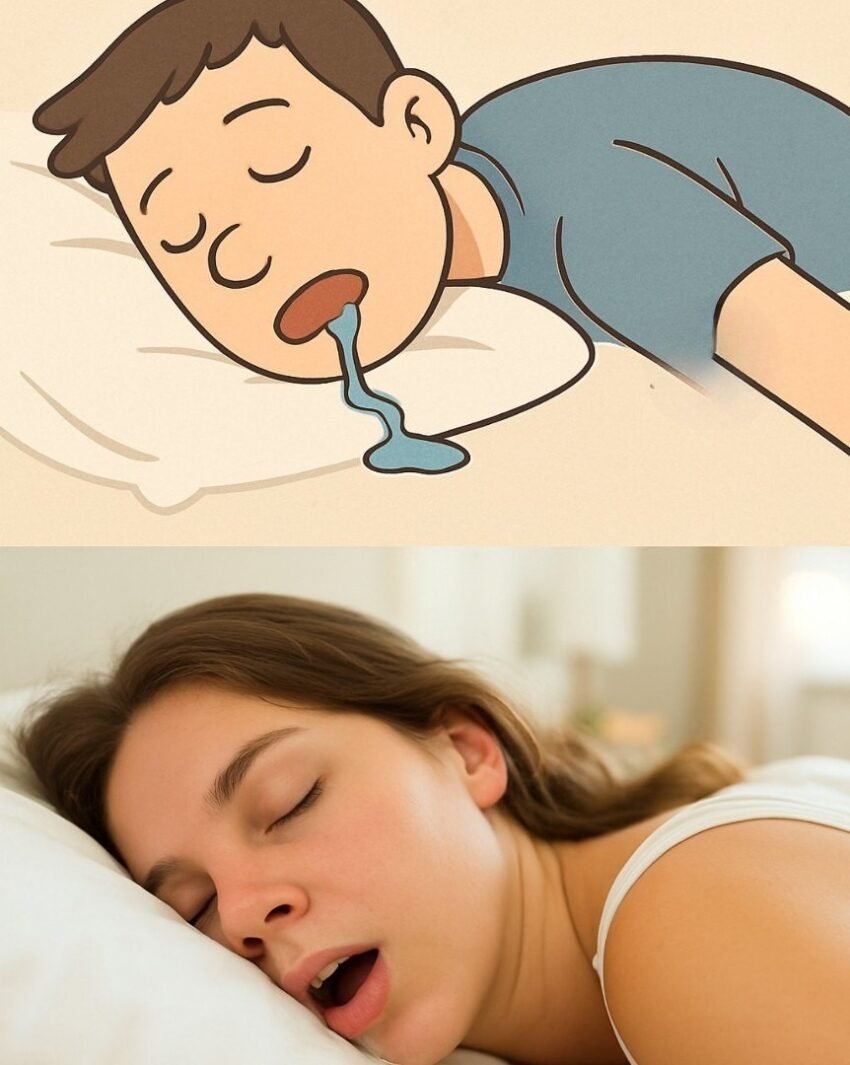
That kind of claim is another viral myth. Drooling during sleep is usually not a sign that something is wrong with your brain.
Here’s what’s actually going on 👇
🧠 Why people drool while sleeping
Drooling (called Sialorrhea) happens when saliva isn’t swallowed and instead escapes from the mouth. During sleep:
- Your swallowing reflex slows down
- Facial muscles relax
- If your mouth is open, saliva can leak out
👉 So it’s mostly mechanical, not neurological
😴 Common harmless causes
1. Sleeping position
- Side or stomach sleeping makes drooling more likely
2. Mouth breathing
- Often due to blocked nose or congestion
3. Deep sleep
- You swallow less frequently
4. Extra saliva production
- Can happen with certain foods or minor irritation
⚠️ When it might be worth checking
In some cases, drooling can be linked to medical conditions, such as:
- Sleep apnea
- Gastroesophageal reflux disease
- Sinus infections or allergies
- Neurological conditions (rare, and usually with other symptoms)
👉 The key point: it’s not about “your brain working better or worse”
🚫 Viral myth vs reality
❌ Myth: Drooling means your brain is “fully relaxed” or “highly active”
✅ Reality: It’s mainly about muscle relaxation and saliva control
🛠️ How to reduce drooling
- Try sleeping on your back
- Clear nasal congestion before bed
- Stay hydrated
- Avoid heavy meals right before sleep
🧾 Bottom line
Drooling in sleep is common and usually harmless.
It’s not a special sign about brain function—just how your body behaves when relaxed.
If you want, I can help you figure out why it’s happening specifically in your case and how to stop it.
