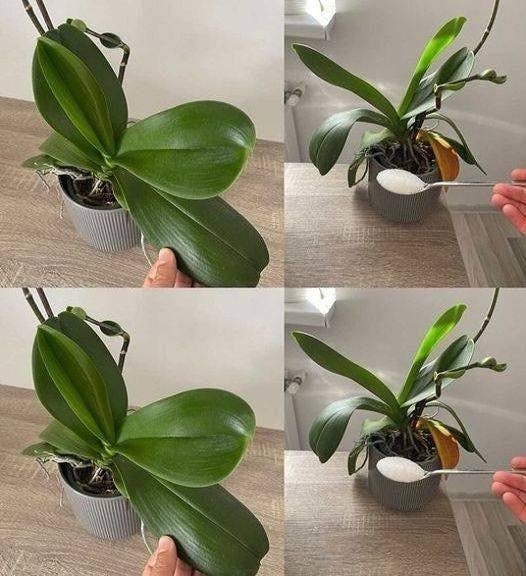
That headline is another classic plant-care myth. There isn’t any “1 tablespoon miracle” that makes orchids bloom nonstop—real orchid growth doesn’t work that way.
Here’s what’s actually going on:
🌸 How orchid blooming really works
Most common house orchids (like Phalaenopsis orchid) bloom in cycles:
- Flowering typically lasts 6–12 weeks
- Then the plant enters a rest phase
- It needs time to rebuild energy before blooming again
So “non-stop blooming” is biologically unrealistic. Any product claiming that is overselling.
🧪 What those “1 tablespoon fertilizer” tricks usually are
Viral posts often suggest things like:
- Rice water
- Banana peel water
- Coffee grounds
- Garlic water
These are not balanced fertilizers. At best, they provide tiny nutrients; at worst, they can:
- Cause root rot
- Attract mold or pests
- Disrupt the plant’s natural balance
✅ What actually helps orchids bloom more
1. Proper light (most important)
- Bright, indirect light
- Too little light = no blooms
2. Correct watering
- Water when roots turn silvery (not on a fixed schedule)
- Avoid constantly wet roots → prevents root rot
3. Balanced fertilizer
Use a proper orchid fertilizer (e.g. 20-20-20 mix):
- Dilute to ¼ strength
- Feed every 1–2 weeks during growth
4. Temperature difference (key trigger)
Orchids often rebloom when they experience:
- Slightly cooler nights (about 5–7°C drop)
5. Humidity & airflow
- Ideal humidity: 50–70%
- Good airflow prevents fungal issues
⚠️ Why “too much fertilizer” backfires
Overfeeding can:
- Burn roots
- Stop blooming
- Damage leaves
Ironically, more fertilizer often means fewer flowers.
🧠 Bottom line
There’s no shortcut:
- Orchids bloom based on light, care, and natural cycles
- Not a single magic ingredient
If you want, tell me your orchid type or share a photo—I can give you a precise care routine to get it to rebloom reliably.
