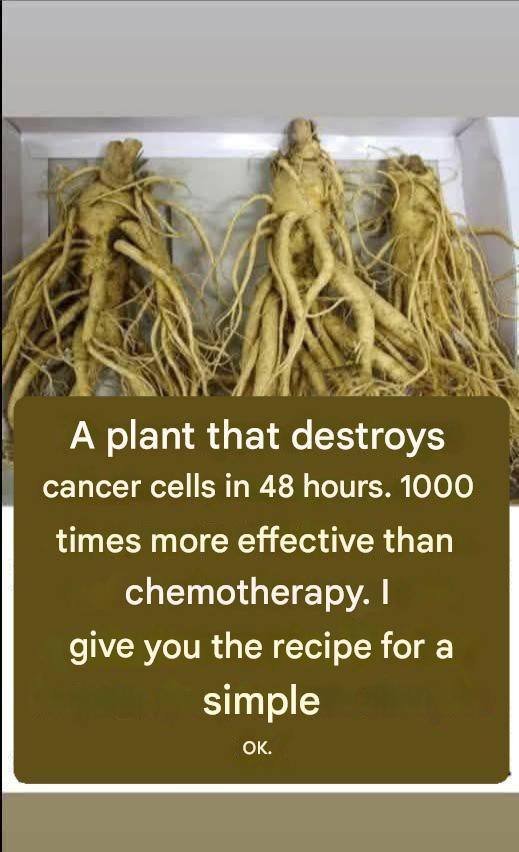
That claim is not true in the way it’s being presented. It’s a classic case of a lab finding being exaggerated into a “cancer cure” headline.
🌼 What plant are we talking about?
Dandelion (especially its root) has been studied for potential medicinal properties.
🧪 Where the “kills 98% of cancer” claim comes from
Some early lab studies (in test tubes, not humans) looked at dandelion root extract and found it could:
- Trigger cancer cell death (apoptosis)
- Affect certain cancer cell lines
These experiments involved cancers like:
- colorectal cancer
- pancreatic cancer
👉 But this happened in isolated cells in a lab, not in actual patients.
⚠️ Why this does not mean it cures cancer
1. Lab ≠ human body
Results in petri dishes often don’t translate to real treatment because:
- The human body is far more complex
- Doses used in labs are often much higher than what’s safe or possible
2. No clinical proof
There is currently no strong clinical evidence that dandelion root:
- Cures cancer
- Replaces chemotherapy or radiation
- Works reliably in humans
3. Cancer is not one disease
“98% of cancers” is a huge red flag. Conditions like:
- stomach cancer
- pancreatic cancer
are biologically very different. No single plant treats all of them.
🧠 What legitimate research says
Dandelion root is being explored as a complementary area of research, not a cure. Institutions like Canadian Cancer Society emphasize:
- More studies are needed
- It should not replace medical treatment
⚠️ Risks of believing this claim
- Delaying proven treatments (which can be life-threatening)
- Wasting money on ineffective remedies
- False hope from exaggerated statistics
✅ Can you still use dandelion?
Yes, but realistically:
- It may have mild antioxidant or digestive benefits
- It can be used as tea or food
- It is not a cancer treatment
🧠 Bottom line
- The “kills 98% of cancer” claim is misleading
- Based on early lab research—not real-world cures
- No plant, including dandelion, has been proven to cure multiple major cancers
If you want, I can show you:
- Which natural compounds actually have solid clinical evidence in cancer support
- And how to spot fake medical claims quickly (these headlines follow patterns)
