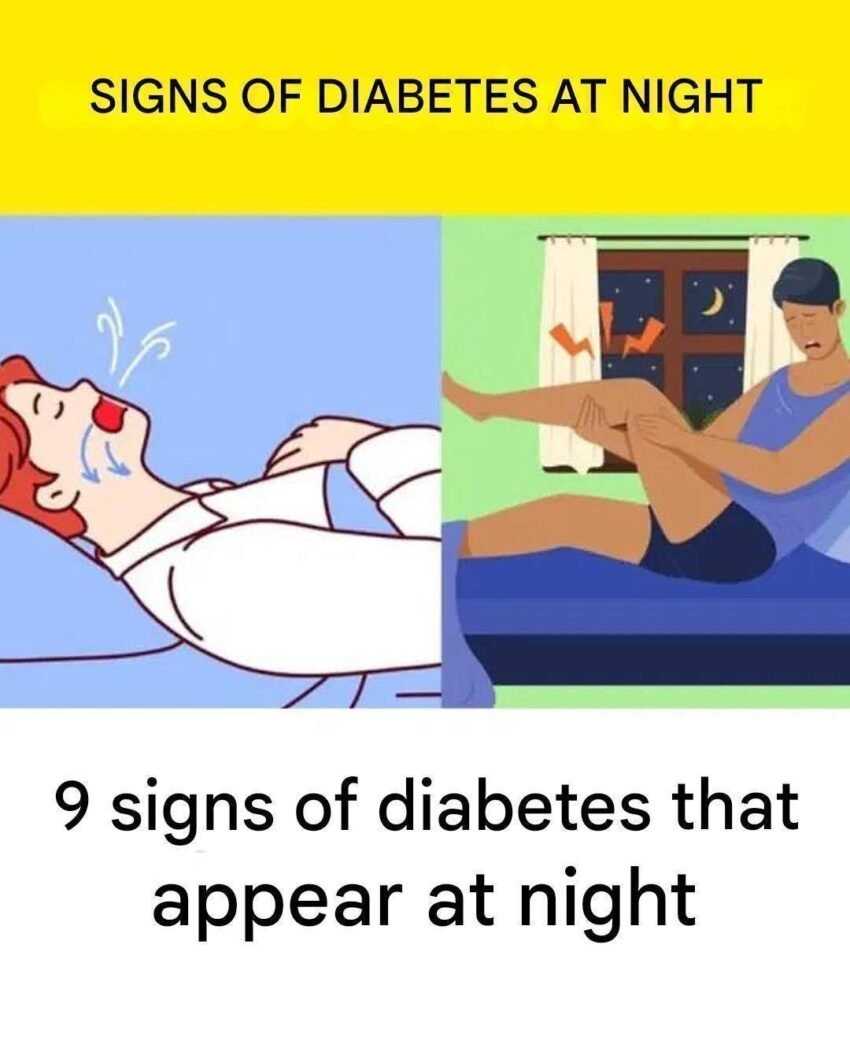
Nighttime symptoms can sometimes be early clues of diabetes, especially Type 2 Diabetes and Type 1 Diabetes. But no list of “9 signs” is definitive—these signs overlap with other conditions too. What matters is recognizing patterns and getting tested.
Here’s a clear, full explanation of commonly reported nighttime signs and what they may mean.
🌙 9 Possible Signs of Diabetes That Appear at Night
1. Frequent Urination (Nocturia)
If you wake up multiple times to urinate:
- High blood sugar pulls water into urine
- Your body tries to flush out excess glucose
👉 This is one of the most common early signs.
2. Excessive Thirst at Night
You may:
- Wake up with a dry mouth
- Feel the need to drink water repeatedly
This often follows frequent urination and dehydration.
3. Night Sweats
Waking up drenched in sweat can be linked to:
- Blood sugar drops during sleep (hypoglycemia)
- Especially in people already diagnosed and on medication
4. Restless Sleep or Insomnia
Fluctuating blood sugar levels can:
- Disrupt sleep cycles
- Cause frequent awakenings
People may not feel well-rested even after a full night.
5. Tingling or Burning in Feet (Neuropathy)
Diabetic Neuropathy can cause:
- Burning sensation
- Pins and needles
- Worse at night when lying still
6. Leg Cramps
Painful cramps in calves or feet may occur due to:
- Nerve damage
- Poor circulation
- Electrolyte imbalance
7. Snoring or Breathing Issues During Sleep
There’s a strong link between diabetes and:
- Sleep Apnea
Symptoms include:
- Loud snoring
- Gasping for air
- Daytime fatigue
8. Hunger at Night
You may:
- Wake up feeling unusually hungry
- Crave sugar or carbs
This can happen if blood sugar drops too low during sleep.
9. Headaches or Confusion Upon Waking
Morning symptoms can reflect nighttime blood sugar imbalance:
- Headaches
- Brain fog
- Irritability
⚠️ Important Context
These signs:
- Don’t always mean diabetes
- Can be caused by stress, dehydration, medications, or other conditions
But if several occur together—especially with daytime symptoms like:
- Fatigue
- Blurred vision
- Unexplained weight changes
👉 It’s worth getting checked.
🧪 When to Get Tested
You should consider screening if:
- You have multiple symptoms above
- You’re overweight or inactive
- There’s a family history of diabetes
Tests include:
- Fasting blood sugar
- HbA1c (average blood sugar over 2–3 months)
✔️ Bottom Line
- Nighttime symptoms can be early warning signs—but not proof
- The most telling pattern is frequent urination + thirst + fatigue
- Early detection of Diabetes Mellitus can prevent serious complications
If you want, tell me what symptoms you’re experiencing—I can help you assess how likely they are to be diabetes and what to do next.
