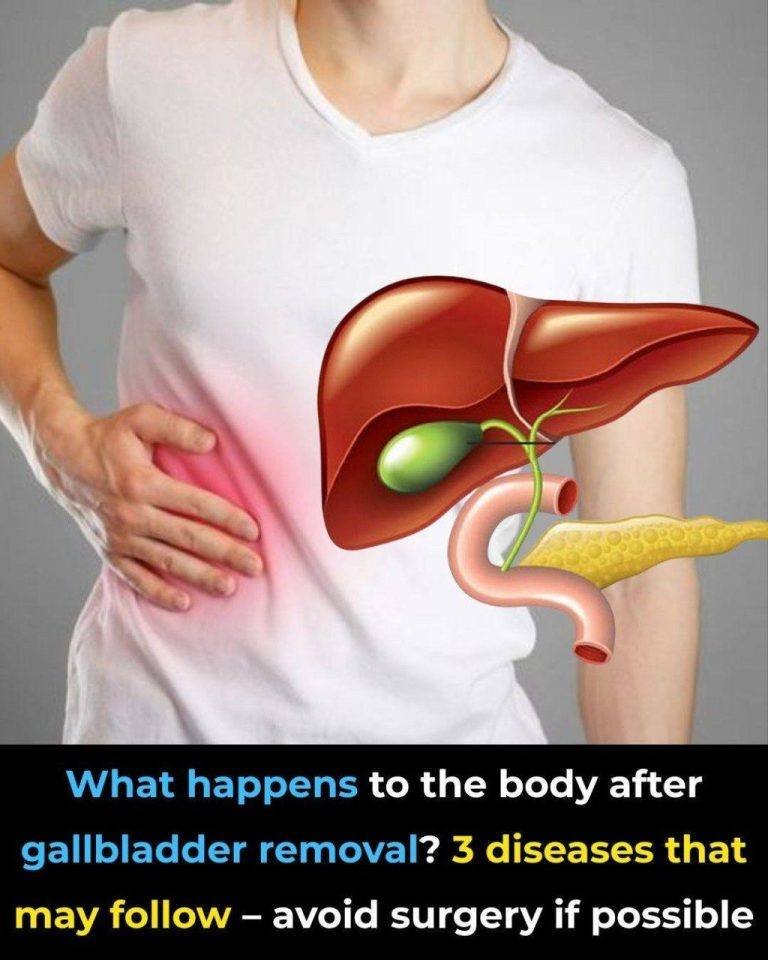
Gallbladder removal (cholecystectomy) is a very common surgery, and many people do well afterward. But the claim that “3 diseases will follow” is an oversimplification. What actually happens is more nuanced: your body adapts, but digestion changes—and some people develop issues.
Let’s break it down clearly and realistically.
🧠 What the Gallbladder Actually Does


The gallbladder stores and concentrates bile made by the liver. When you eat fatty food, it releases a burst of bile into the small intestine to help digest fats.
After removal:
- Your liver still makes bile
- But bile flows continuously, not in bursts
🔄 What Changes After Removal
Without the gallbladder:
- Bile trickles constantly into the intestine
- Fat digestion becomes less efficient (especially for large, fatty meals)
- The gut may become more sensitive
Most people adjust within weeks to months, but some don’t fully adapt.
⚠️ Common Problems That May Develop
These are not guaranteed “diseases,” but recognized risks:
1. Chronic Diarrhea (Bile Acid Diarrhea)


- Occurs in ~5–15% of patients
- Caused by excess bile reaching the colon
- Symptoms:
- Frequent loose stools
- Urgency after meals
👉 Often manageable with diet or medications.
2. Digestive Issues (Fat Intolerance / Bloating)


Some people experience:
- Bloating
- Gas
- Nausea after fatty meals
Why?
- Bile isn’t released in a concentrated dose anymore
- Large fatty meals become harder to process
3. Postcholecystectomy Syndrome (PCS)


A small percentage develop ongoing symptoms:
- Abdominal pain
- Indigestion
- Nausea
Causes may include:
- Bile duct dysfunction
- Residual stones
- Gut sensitivity changes
❗ Important Reality Check
The phrase “3 diseases will follow” is misleading.
- These are possible complications, not inevitable outcomes
- Many people live completely normal lives after surgery
- For some, surgery actually relieves severe pain and prevents dangerous complications (like infection or pancreatitis)
🛑 Should You Avoid Surgery?
That depends on your situation.
Surgery is usually recommended if you have:
- Repeated gallbladder attacks
- Gallstones causing pain or blockage
- Inflammation (cholecystitis)
- Pancreatitis from gallstones
Avoiding surgery in those cases can be riskier than the surgery itself.
🌿 When Non-Surgical Management Might Be Tried
If symptoms are mild or early:
- Low-fat diet
- Weight management
- Smaller meals
- Monitoring
But:
👉 These don’t remove gallstones—they only manage symptoms.
✔️ Bottom Line
- Your body can function without a gallbladder
- Some people develop digestive issues, but many don’t
- Surgery is often the safest option when complications are present
- “Avoid surgery if possible” is not always good advice—sometimes it’s the wrong move
If you want, tell me your symptoms or what you’ve been diagnosed with—I can help you weigh whether surgery makes sense in your specific case.
