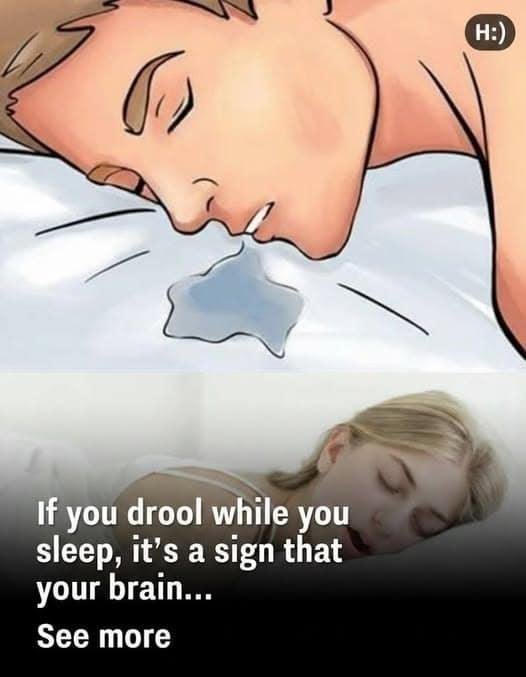
That sentence is another clickbait-style myth — it hints at something dramatic about your brain, but the real explanation is much simpler (and usually harmless).
🧠 What Drooling During Sleep Actually Means
Most of the time, drooling while you sleep has nothing to do with brain damage or a “special brain state.”
Here are the real reasons:
😴 1. Deep Sleep & Muscle Relaxation
When you’re in deep sleep, your facial muscles relax, including those controlling swallowing — so saliva can escape.
🤧 2. Blocked Nose or Mouth Breathing
If your nose is congested (cold, allergies), you breathe through your mouth, making drooling more likely.
😪 3. Sleep Position
Sleeping on your side or stomach lets gravity pull saliva out of your mouth.
🦷 4. Excess Saliva Production
This can happen due to:
- Acid reflux (Gastroesophageal Reflux Disease)
- Certain medications
- Oral infections or irritation
😵 5. Sleep Disorders
Conditions like Sleep Apnea can increase drooling due to disrupted breathing and mouth opening.
⚠️ When It Could Be a Concern
Drooling might need attention if it’s:
- Sudden and severe
- Happening during the day too
- Paired with slurred speech or weakness
In rare cases, it can be linked to neurological conditions like:
- Parkinson’s Disease
- Stroke
…but this is not the common reason for typical nighttime drooling.
🧠 Bottom Line
Drooling in your sleep is usually a sign of:
✔️ Deep, relaxed sleep
✔️ Mouth breathing
✔️ Normal body function
❌ It is not a secret signal that something is wrong with your brain.
If you want, I can help you figure out why you might be drooling at night and how to reduce it.
