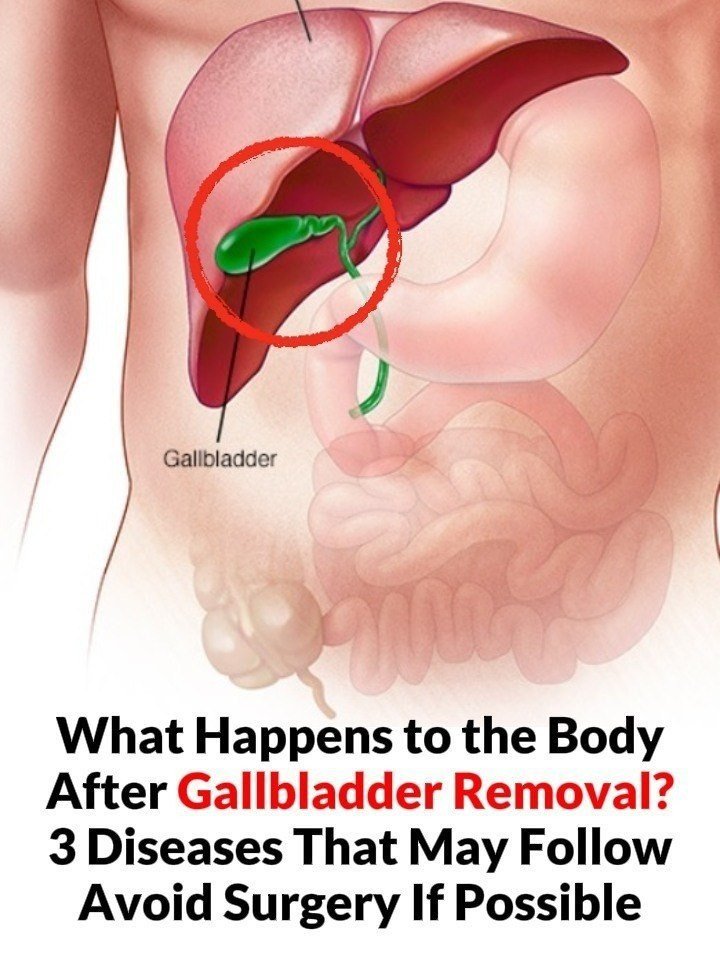
That headline is a bit alarmist. Gallbladder removal surgery (cholecystectomy) is actually a very common and generally safe procedure—and in many cases (like severe gallstones), it’s the right and necessary treatment.
That said, like any surgery, it can have side effects or longer-term changes. Here’s the real, balanced explanation.
🏥 After Gallbladder Removal: What Can Happen?
When your gallbladder is removed, bile from your liver flows directly into the intestine instead of being stored. Most people adapt fine—but some notice changes.
1. Digestive Issues (Postcholecystectomy Syndrome)
Some people develop ongoing symptoms after surgery, sometimes grouped under
Postcholecystectomy Syndrome
Symptoms:
- Bloating
- Gas
- Diarrhea
- Occasional abdominal discomfort
👉 Why it happens:
Without the gallbladder, bile isn’t released in a controlled way, which can affect fat digestion.
2. Chronic Diarrhea
A subset of patients experience persistent loose stools.
- Often linked to excess bile entering the intestines
- Sometimes called bile acid diarrhea
👉 The good news:
This is usually manageable with diet or medication.
3. Higher Risk of Certain Digestive Conditions
There’s some evidence of increased risk (though still relatively low) of:
- Gastroesophageal Reflux Disease (acid reflux)
- Irritable Bowel Syndrome–like symptoms
- Rarely, bile duct issues or retained stones
These don’t happen to most people—but they’re possible.
⚖️ Should You Avoid Gallbladder Surgery?
👉 Not necessarily—and often, no.
You should not avoid it if you have:
- Painful gallstones
- Recurrent attacks
- Infection or inflammation
- Blocked bile ducts
In these cases, delaying surgery can lead to serious complications like:
- Pancreatitis
- Gallbladder rupture
- Severe infection
🧠 Why headlines like this are misleading
They:
- Focus only on risks, not benefits
- Ignore that most people recover without major issues
- Suggest surgery is optional when it’s often medically necessary
✅ Bottom line
- Gallbladder removal is safe and widely performed
- Some people develop mild digestive changes—but many don’t
- If your doctor recommends it, it’s usually because the risks of keeping the gallbladder are higher
If you want, I can explain when gallbladder surgery is avoidable vs absolutely necessary—that’s where the real decision-making matters.
