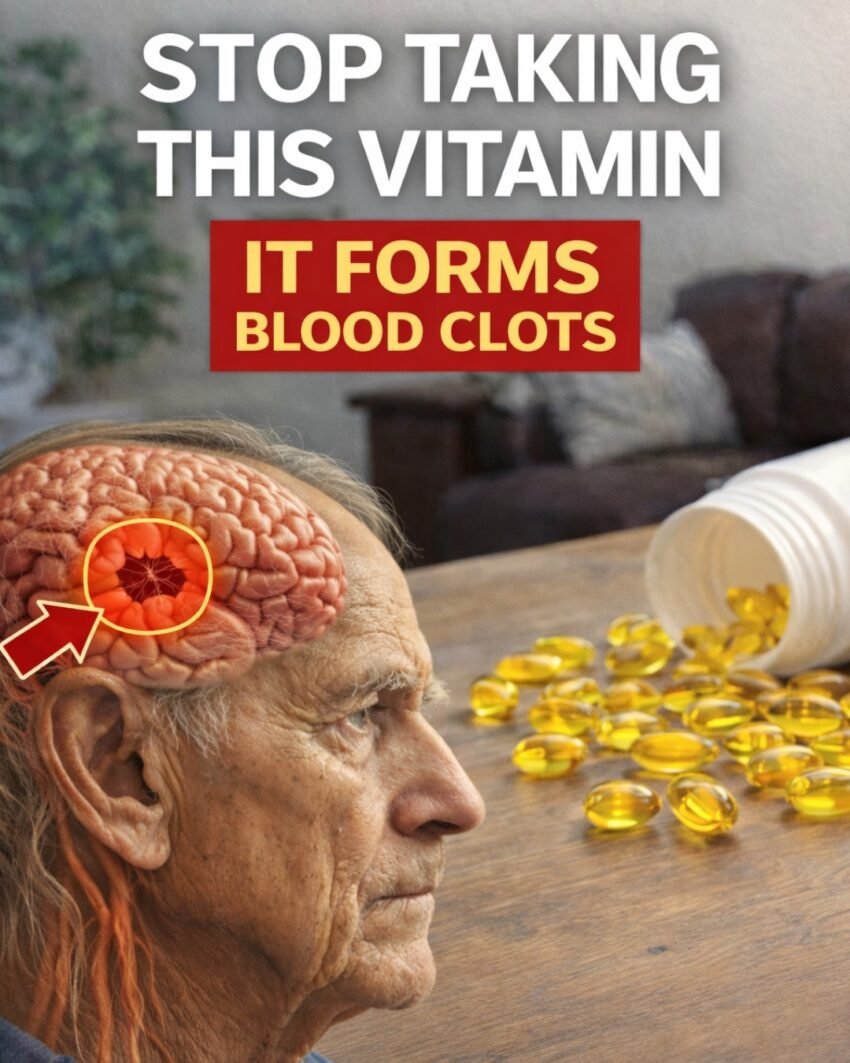
That headline — “As a Brain Doctor, I’m Concerned: Could This Common Vitamin Supplement Affect Stroke Risk in Seniors?” — is designed to sound alarming, but the actual science is more nuanced.
Here’s a clear, evidence-based article-style breakdown:
Could a Common Vitamin Supplement Affect Stroke Risk in Seniors?
Many viral posts suggest that everyday vitamins might suddenly increase stroke risk in older adults. However, medical research does not support the idea that normal vitamin use directly causes stroke. What studies do show is more complicated: both deficiency and excessive dosing can influence vascular health depending on the vitamin, dose, and individual health condition.
1. Vitamins and Stroke Risk: What Research Actually Shows
Vitamin D
- Large analyses show no clear reduction in stroke risk from supplementation alone in the general population (PubMed)
- However, vitamin D deficiency is associated with poorer overall cardiovascular health in some observational studies
- Taking normal doses is considered safe, but mega-doses offer no proven stroke protection
B Vitamins (B12, folate, B6)
- These help regulate homocysteine, a chemical linked to blood vessel damage
- Some studies suggest correcting deficiencies may support brain and vascular health
- But supplementation in people without deficiency has not consistently reduced stroke risk
Vitamin E (important caution)
- High-dose vitamin E has been linked in some research to an increased risk of hemorrhagic stroke (bleeding type) in certain groups
- This risk is mainly associated with high-dose supplements, not food sources or normal intake
2. The Real Risk: Not “Vitamins,” but Misuse
Doctors are generally more concerned about:
- Taking very high doses without medical advice
- Combining multiple supplements unknowingly (overlapping nutrients)
- Using supplements instead of prescribed medications
- Existing conditions (kidney disease, blood thinners, heart disease)
3. Why Seniors Are Mentioned Often
Older adults are more likely to:
- Take multiple medications (drug interactions matter more)
- Have reduced kidney or liver clearance
- Have existing cardiovascular risk factors
So the concern is not the vitamin itself—it’s the context of use in older bodies with other health conditions.
4. What Doctors Actually Recommend
Most neurologists and geriatric physicians agree:
- Vitamins are helpful only when correcting a deficiency
- Food sources are safer than high-dose pills
- “More” does not equal “better” for brain or stroke prevention
Final Takeaway
There is no strong evidence that a common vitamin supplement automatically increases stroke risk in seniors. The real issue is:
- High-dose misuse
- Specific supplements (like vitamin E in excess)
- Individual medical conditions
In normal recommended doses, most vitamins are safe and not linked to stroke risk.
If you want, I can break down which specific supplements do and don’t raise stroke risk in a simple “safe vs risky” list.
