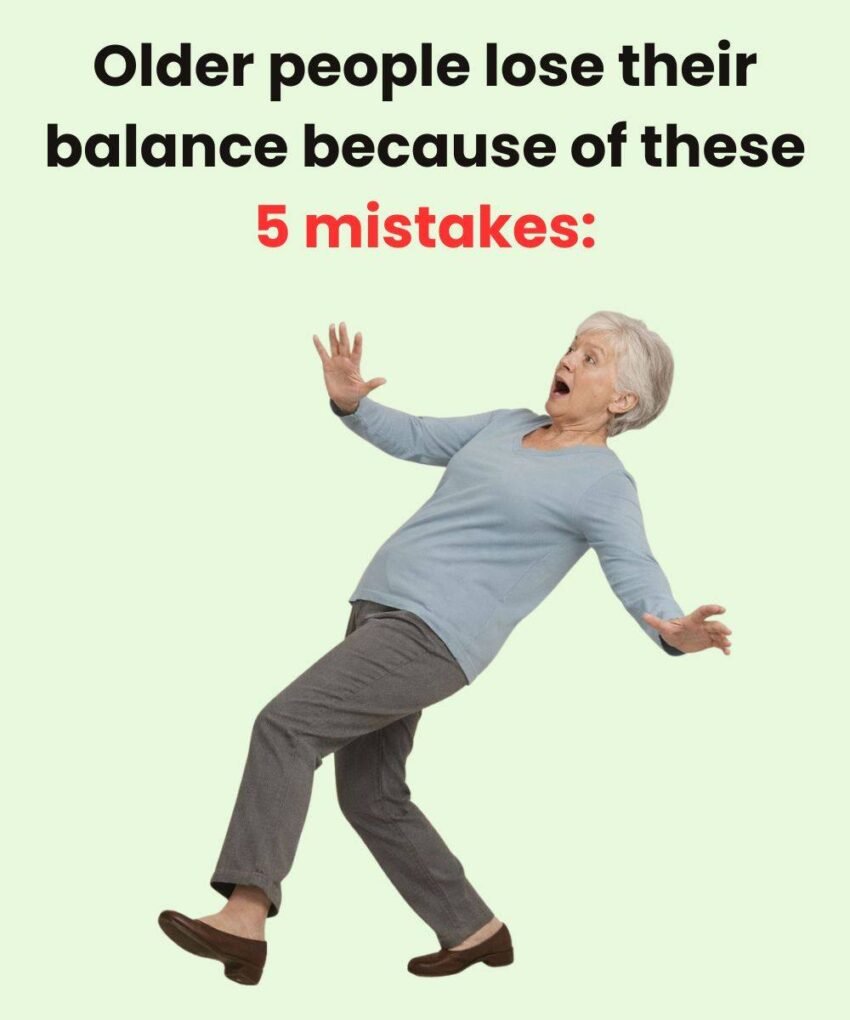
Balance problems in older adults rarely come from just “getting old.” They’re usually the result of specific, often fixable mistakes involving strength, vision, medications, or daily habits. Here’s a clear, medically grounded breakdown of the most common ones—and why they matter.
🧠 1. Ignoring strength and balance training
Many seniors stay active but don’t train balance directly.
- Muscles that stabilize posture (core, hips, ankles) weaken with age
- This affects coordination and reaction time
What helps:
Exercises like Tai Chi and Yoga are proven to improve stability and reduce falls.
👓 2. Not updating vision correction
Vision plays a huge role in balance.
Common mistake:
- Wearing outdated glasses or switching frequently between lenses
Why it matters:
- Depth perception errors → misjudging steps or obstacles
- Increased fall risk, especially on stairs
💊 3. Overlooking medication side effects
This is one of the biggest hidden causes of imbalance.
High-risk medications include:
- Benzodiazepines
- Antidepressants
- Blood pressure drugs (can cause dizziness when standing)
What happens:
- Drowsiness
- Slower reflexes
- Sudden drops in blood pressure
🩺 4. Ignoring inner ear issues
The inner ear controls balance through the vestibular system.
A common condition:
- Benign Paroxysmal Positional Vertigo
Mistake:
- Dismissing dizziness as “normal aging”
Reality:
- Many vestibular issues are treatable with simple maneuvers or therapy
🧍 5. Standing up too quickly
This can cause orthostatic hypotension.
- Blood pressure drops suddenly
- Leads to dizziness or fainting
Common in:
- Dehydration
- People on BP medications
👣 6. Wearing unsafe footwear
Shoes directly affect stability.
Mistakes:
- Slippers without grip
- High heels
- Loose sandals
Better choice:
- Flat, well-fitted shoes with non-slip soles
🧂 7. Poor nutrition and dehydration
Balance depends on muscle function and nerve signaling.
Deficiencies linked to imbalance:
- Vitamin B12 Deficiency
- Low vitamin D
- Dehydration → dizziness and weakness
🏠 8. Unsafe home environment
Many falls happen at home.
Common hazards:
- Loose rugs
- Poor lighting
- Cluttered walkways
- Lack of grab bars in bathrooms
🧠 9. Ignoring neurological conditions
Balance issues can be early signs of brain-related disorders.
Examples:
- Parkinson’s Disease
- Peripheral Neuropathy
Mistake:
- Assuming instability is “just aging” instead of getting evaluated
🚶 10. Avoiding movement due to fear of falling
This creates a dangerous cycle:
- Fear → less movement
- Less movement → weaker muscles
- Weaker muscles → higher fall risk
⚠️ When to take balance problems seriously
Seek medical evaluation if there is:
- Frequent dizziness
- Recent falls
- Sudden imbalance
- Weakness or numbness
- Vision changes
✔️ Bottom line
Most balance problems in older adults are not inevitable—they’re often the result of modifiable factors:
👉 Weak muscles + medications + vision + environment = fall risk
Addressing even a few of these can dramatically improve stability and independence.
If you want, I can put together a simple daily routine to improve balance in 10–15 minutes tailored for older adults.
