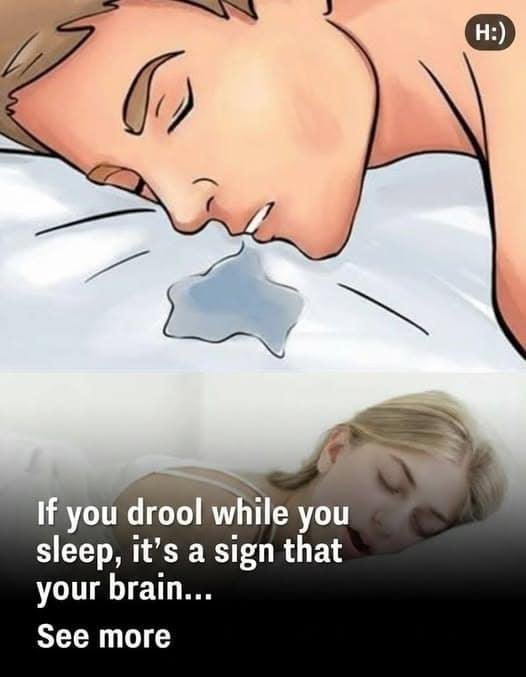
Here’s article‑style, evidence‑based information on why people drool while they sleep — including what it actually says about the brain and body and when it might be a sign of something more. (Sleep Foundation)
🧠 Why You Drool During Sleep — What Research Says
1. Drooling Is Often Normal
Saliva is produced constantly — even during sleep. Normally, your brain and swallowing reflex keep saliva in the mouth or direct it down the throat. But during sleep, especially deep sleep, the swallowing reflex and muscle tone in your mouth and throat slow down. This allows saliva to pool and escape if your mouth is open. (Sleep Foundation)
➡️ In medical terms, excess drooling is called sialorrhea or ptyalism. Occasional nighttime drooling is considered common and usually harmless. (Cleveland Clinic)
😴 What Happens in Your Brain and Body During Sleep
2. Muscles Relax and Swallowing Slows
During sleep, especially REM and deep non‑REM sleep, the central nervous system decreases activity in many muscle groups. This includes the muscles that help keep your lips sealed and that normally trigger swallowing when excess saliva builds up. (Sleep Foundation)
Because the brain deprioritizes swallowing at night, saliva can accumulate — and if your mouth is open and your head is positioned so gravity helps it flow out, you drool. (Sleep Foundation)
🛏️ Other Common Factors That Promote Drooling
3. Sleep Position
- Sleeping on your side or stomach makes it easier for saliva to escape because gravity pulls it out of the mouth.
- Sleeping on your back usually helps keep saliva inside your mouth. (Sleep Foundation)
4. Mouth Breathing & Nasal Blockage
If you can’t breathe easily through your nose due to allergies, a cold, or sinus problems, you’ll breathe through your mouth. Mouth breathing relaxes the lips and jaw and increases drooling risk. (Sleep Foundation)
5. Medical Conditions & Medications
In some people, drooling can be related to underlying issues such as:
- Sleep apnea, which makes mouth breathing more likely
- Gastroesophageal reflux disease (GERD)
- Neurological conditions that affect muscle control (e.g., Parkinson’s, stroke)
- Side effects of certain drugs that increase saliva production or relax muscles
These conditions can make drooling more frequent or excessive. (Sleep Foundation)
🧠 What Drooling Doesn’t Automatically Mean
There’s a misconception floating around that drooling means “good, deep sleep” — but that’s not backed by scientific articles. While deep sleep does reduce muscle tone (which can make drooling more likely), drooling depends more on mouth position, swallowing reflex, and airway dynamics than being a sign of restorative sleep. (Sleep Foundation)
🩺 When You Should Be Concerned
Most drooling during sleep isn’t serious, but talk to a healthcare provider if:
- It’s sudden or severe
- It’s accompanied by daytime symptoms (like excessive sleepiness or trouble breathing)
- You have neurological symptoms
- It interferes with sleep quality or oral health (Sleep Foundation)
📌 Summary — What Drooling Says About Your Brain
| What Drooling Reflects | Why it Happens |
|---|---|
| Reduced muscle control | Sleep reduces swallowing reflex & facial muscle tone under brain regulation. (Sleep Foundation) |
| Mouth breathing | Nasal congestion or sleep apnea leads to open mouth breathing, making drooling easier. (Sleep Foundation) |
| Gravity + sleep posture | Side/stomach positions allow saliva to escape. (Sleep Foundation) |
Bottom line: Drooling while sleeping is mostly a mechanical result of how your nervous system relaxes muscles and adjusts reflexes during sleep — not a direct sign of anything abnormal in the brain in most cases. (Sleep Foundation)
If you want, I can also provide tips to reduce drooling or explain how sleep stages affect swallowing reflexes — just let me know!
