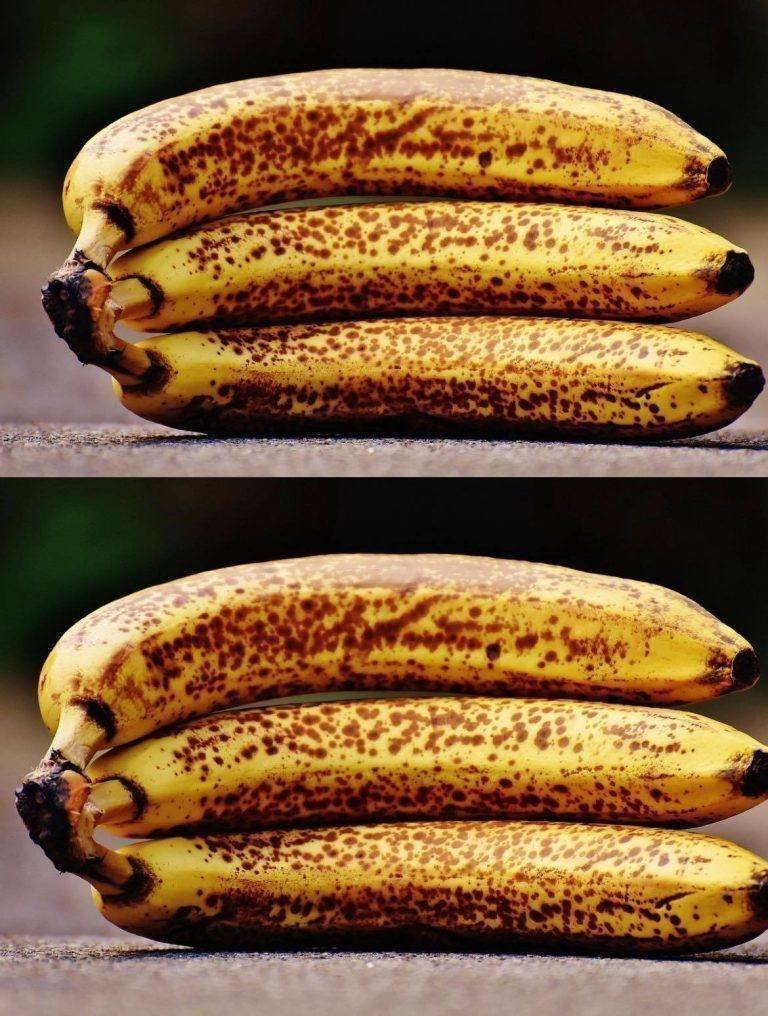
Bananas with black or brown spots might not look appealing—but they’re usually safe and sometimes even more beneficial to eat. Here’s the full truth behind those spotted bananas:
🍌 What Do Black Spots on Bananas Mean?
Those spots are a sign the banana is ripening:
- Starches are turning into natural sugars
- The fruit becomes softer, sweeter, and easier to digest
✅ Benefits of Spotted (Ripe) Bananas
1. Easier to Digest
Ripe bananas are gentler on the stomach because complex starches have broken down.
2. Higher Antioxidants
As bananas ripen, their antioxidant levels increase, helping fight cell damage.
3. Quick Energy Boost
More natural sugars = faster energy (great before or after activity).
4. May Support Gut Health
Ripe bananas can be easier for people with sensitive digestion.
⚠️ Common Claims Online (What’s True vs False)
❌ “They cure cancer”
No—there’s no scientific evidence that spotted bananas prevent or cure cancer.
❌ “They become toxic”
Also false. Spotted bananas are not harmful unless they are rotten.
🚫 When NOT to Eat Them
Avoid bananas if they have:
- A strong fermented or alcohol-like smell
- Mold (white/green fuzzy patches)
- Leaking or overly mushy texture
That means they’ve gone bad, not just ripe.
🟡 Ripe vs Unripe: Which Is Better?
| Type | Best For |
|---|---|
| Slightly green | Slower sugar release, better for blood sugar control |
| Yellow with spots | Easy digestion, quick energy |
| Very brown | Baking (banana bread, smoothies) |
🧠 Bottom Line
👉 Black spots = ripeness, not danger
👉 They’re safe, nutritious, and often easier to digest
👉 Just avoid them if they show signs of actual spoilage
If you want, I can explain which stage of banana is best for diabetes, weight loss, or digestion—it actually makes a big difference.
