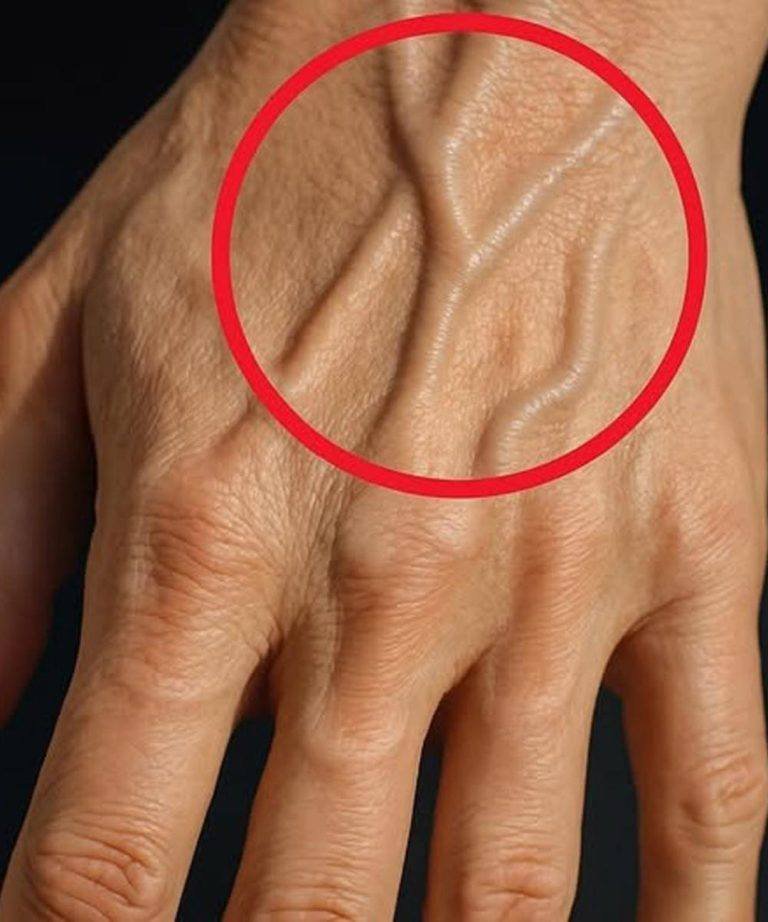
That headline makes it sound mysterious, but visible veins are usually normal—not a hidden warning sign by themselves.
Here’s what’s actually going on.
Why veins become visible
Veins carry blood back to the heart, and how visible they are depends on a few simple factors:
1. Body fat level
Less fat under the skin makes veins easier to see.
- Common in lean people
- Also noticeable after weight loss
2. Skin tone and thickness
- Lighter or thinner skin → veins show more
- Aging skin becomes thinner, so veins stand out more
3. Exercise and muscle pump
During or after workouts:
- Blood flow increases
- Veins expand
This temporary effect is called
Vascularity
4. Heat and hydration
- Warm weather dilates veins
- Dehydration can make them appear more prominent
5. Genetics
Some people naturally have more visible veins—completely normal.
When visible veins might mean something else
Most of the time, nothing is wrong. But in some cases:
1. Bulging, twisted veins
Could indicate
Varicose Veins
Symptoms may include:
- Aching
- Heaviness
- Swelling
2. Sudden change in one area
If a vein becomes:
- Painful
- Red
- Hard
It could be inflammation or clot-related and should be checked.
3. Swelling + vein visibility
May relate to circulation issues like
Chronic Venous Insufficiency
What visible veins do NOT mean
They are not a reliable sign of:
- Heart disease
- High blood pressure
- “Toxins” in the body
Bottom line
- Visible veins are usually normal and harmless
- They often reflect body composition, temperature, or activity
- Only painful, swollen, or rapidly changing veins need medical attention
If you want, describe what your veins look like (location, color, any pain), and I’ll help you figure out if it’s normal or worth checking.
