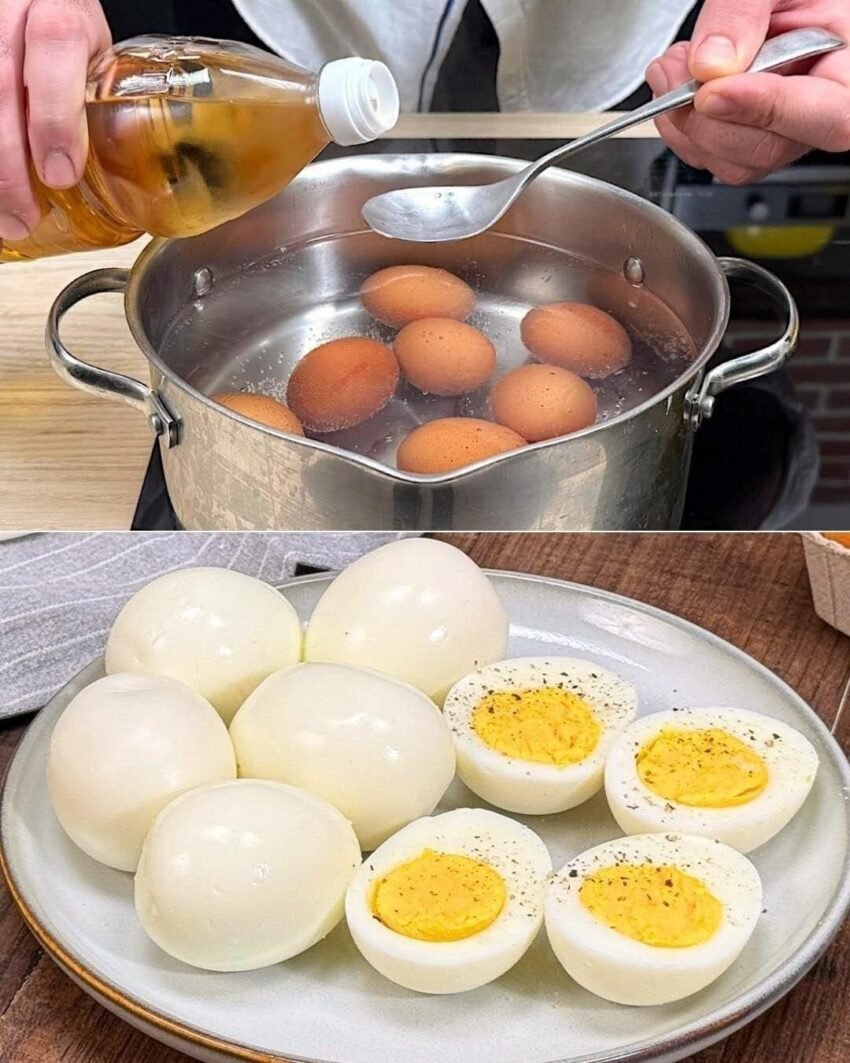
Here’s what actually matters for perfect boiled eggs.
The 5 most common mistakes (and what to do instead)
1. Using very fresh eggs
Fresh eggs taste great—but they are harder to peel.
Why:
- Fresh eggs have a lower pH
- The inner membrane sticks more tightly to the shell
👉 Fix:
Use eggs that are 5–10 days old for easier peeling.
2. Starting in cold water every time
Starting eggs in cold water isn’t “wrong,” but it often leads to overcooking or uneven texture if timing isn’t precise.
👉 Better method:
- Bring water to a gentle boil first
- Then lower eggs in carefully
This helps control cooking more accurately.
3. Overboiling
Boiling too long causes:
- Rubbery whites
- Greenish yolk (iron + sulfur reaction)
👉 Ideal timing:
- Soft boil: 6–7 minutes
- Medium: 8–9 minutes
- Hard boil: 10–11 minutes
4. Skipping the ice bath
This is one of the biggest peeling mistakes.
Without cooling:
- Eggs continue cooking
- Membrane sticks to shell
👉 Fix:
Immediately place eggs in ice water for 5–10 minutes
This:
- Stops cooking
- Contracts the egg slightly → easier peeling
5. Peeling at the wrong time
Peeling too soon or too carefully can ruin the egg.
👉 Best method:
- Tap and roll gently to crack shell
- Peel under running water or in a bowl of water
- Start from the wider end (air pocket)
Extra “pro” tips that actually help
- Add a pinch of salt or a splash of vinegar to boiling water (can slightly help separation)
- Gently stir eggs in the first minute to center yolks
- Don’t overcrowd the pot
The real science behind easy peeling
The ease of peeling depends on:
Egg albumen pH
As eggs age, the pH rises, which weakens the bond between membrane and shell—making peeling easier.
Bottom line
Perfect boiled eggs are not about one secret trick—they’re about avoiding:
- overly fresh eggs
- overcooking
- skipping cooling
- inconsistent timing
Do these right, and “hard-to-peel eggs” mostly disappear.
If you want, I can give you a fail-proof step-by-step method (timer included) for soft, medium, or hard boiled eggs.
