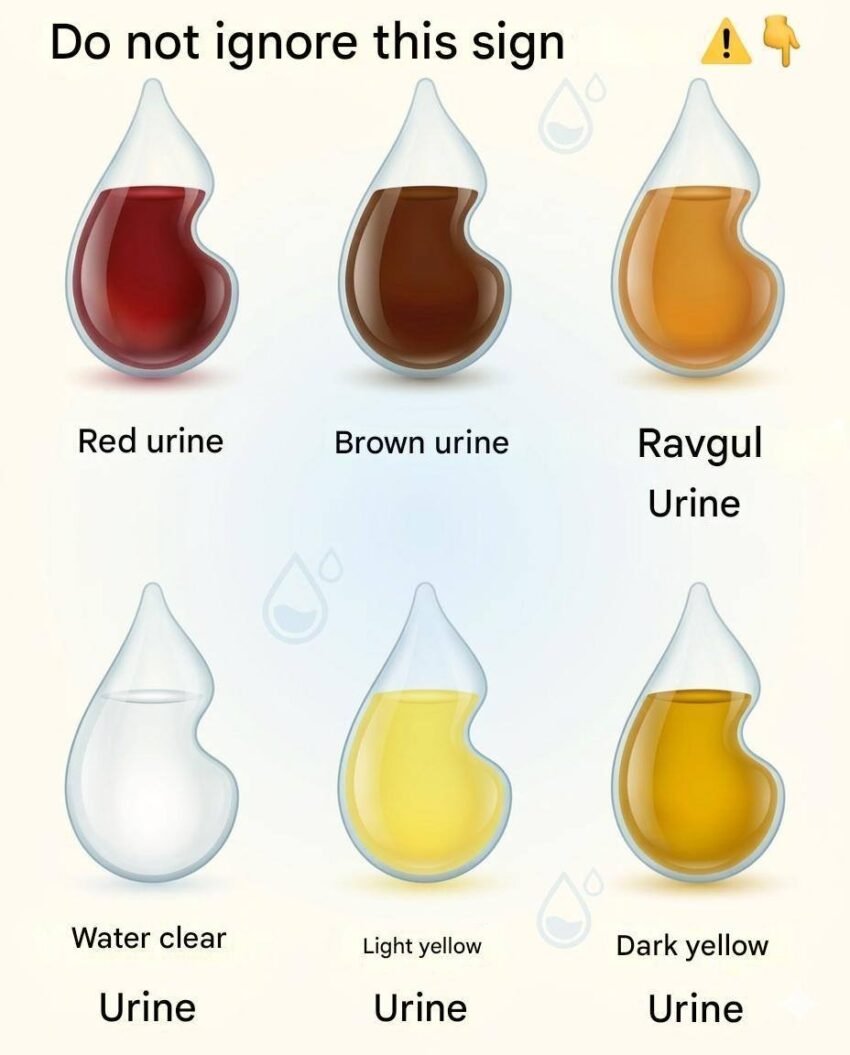
The color of your urine can reveal quite a bit about your hydration level, diet, and sometimes your health. Here’s a detailed guide:
1. Pale Yellow to Straw
- What it means: This is considered normal and healthy.
- Why: The pigment urochrome, a byproduct of hemoglobin breakdown, gives urine this color. Pale yellow indicates you’re well-hydrated.
2. Dark Yellow or Amber
- What it means: Mild dehydration.
- Why: Concentrated urine has more urochrome due to less water intake.
- Tip: Drink more fluids, especially water.
3. Orange
- Possible causes:
- Dehydration
- Certain medications (like rifampin or phenazopyridine)
- Foods like carrots or beetroot
- Liver or bile duct issues (if accompanied by pale stools or jaundice)
- Action: If persistent and unexplained, see a doctor.
4. Red or Pink
- Possible causes:
- Blood in urine (hematuria) – could indicate infection, kidney stones, or other issues
- Foods (beets, blackberries)
- Certain medications (rifampin, laxatives)
- Action: Seek medical attention if not clearly related to food or medication.
5. Blue or Green
- Possible causes:
- Rare genetic disorders
- Certain medications (propofol, amitriptyline)
- Dyes in foods or medical tests
- Action: Usually harmless if linked to diet; otherwise, check with a doctor.
6. Brown or Cola-colored
- Possible causes:
- Severe dehydration
- Liver disease (hepatitis, cirrhosis)
- Muscle injury (rhabdomyolysis)
- Certain medications (metronidazole, chloroquine)
- Action: Medical evaluation recommended.
7. Cloudy or Foamy
- Possible causes:
- Urinary tract infection (UTI)
- Kidney issues (protein in urine)
- Dehydration
- Action: Check with a healthcare provider, especially if persistent.
8. Other Factors to Consider
- Odor: Strong or unusual smells can also indicate infections or dietary causes.
- Frequency & Volume: Changes in how often or how much you urinate matter, too.
Bottom line: Most urine color changes are harmless and related to hydration or diet, but persistent unusual colors—especially red, brown, or very dark—should be evaluated by a healthcare professional.
If you want, I can make a quick visual chart of urine colors and what they usually indicate, which is super handy for reference. Do you want me to do that?
