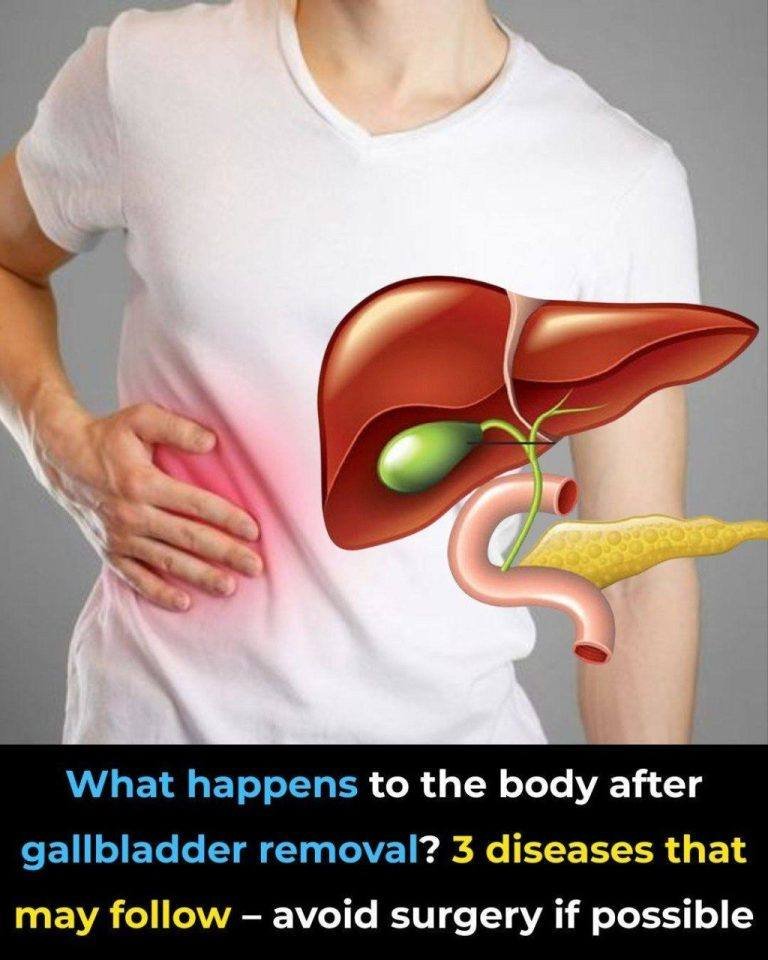
That headline is misleading. It pushes fear (“avoid surgery if possible”) without context. Cholecystectomy (gallbladder removal) is one of the most common and generally safe surgeries—and for many people with painful gallstones or complications, it’s the right and necessary treatment.
Here’s what actually happens, and what risks are real vs exaggerated.
🧬 What changes after gallbladder removal?
The gallbladder stores bile and releases it in bursts when you eat fatty food. After surgery:
- The liver still makes bile
- Bile flows continuously into the intestine instead of being stored
👉 Most people digest food normally after a short adjustment period.
⚠️ Common (usually temporary) effects
1. Digestive changes
- Mild bloating
- Loose stools, especially after fatty meals
- Occasional urgency after eating
These typically improve within weeks to months as the body adapts.
2. Sensitivity to fatty foods
Some people notice:
- Greasy or spicy meals trigger discomfort
👉 This is manageable with diet adjustments, not a disease.
🩺 “3 diseases that may follow” — what’s actually true?
Some risks are real but often overstated in viral posts:
1. Bile reflux
- Bile may flow into the stomach instead of the intestine
- Can cause irritation or burning sensation
👉 Less common than claimed and treatable.
2. Chronic diarrhea (bile acid diarrhea)
- Occurs in a small percentage of people
- Caused by continuous bile flow
👉 Usually manageable with diet or medication.
3. Changes in gut microbiome
- Small shifts in digestion and bacteria balance
👉 This is still being studied and is not a clear “disease” in most cases.
❗ What the viral claim gets wrong
- It exaggerates risks to scare people
- It ignores that untreated gallbladder problems can be dangerous
- It presents surgery as avoidable in all cases (not true)
⚠️ When surgery is actually necessary
Doctors recommend gallbladder removal when there are:
- Painful Gallstones causing repeated attacks
- Inflammation (Cholecystitis)
- Risk of infection or blockage
- Pancreatitis triggered by gallstones
👉 In these cases, delaying surgery can be more dangerous than the surgery itself.
❤️ Life after surgery (real outlook)
- Most people live completely normal lives
- No special long-term medication is usually required
- Diet can return to normal gradually
🧭 Bottom line
Gallbladder removal does change digestion slightly, but serious long-term problems are uncommon. The surgery is often the safest solution when medically indicated.
The viral message “avoid surgery if possible” is too simplistic and potentially harmful—because sometimes surgery prevents serious complications.
If you want, I can tell you:
- when gallstones can be managed without surgery
- or what diet helps most after gallbladder removal
