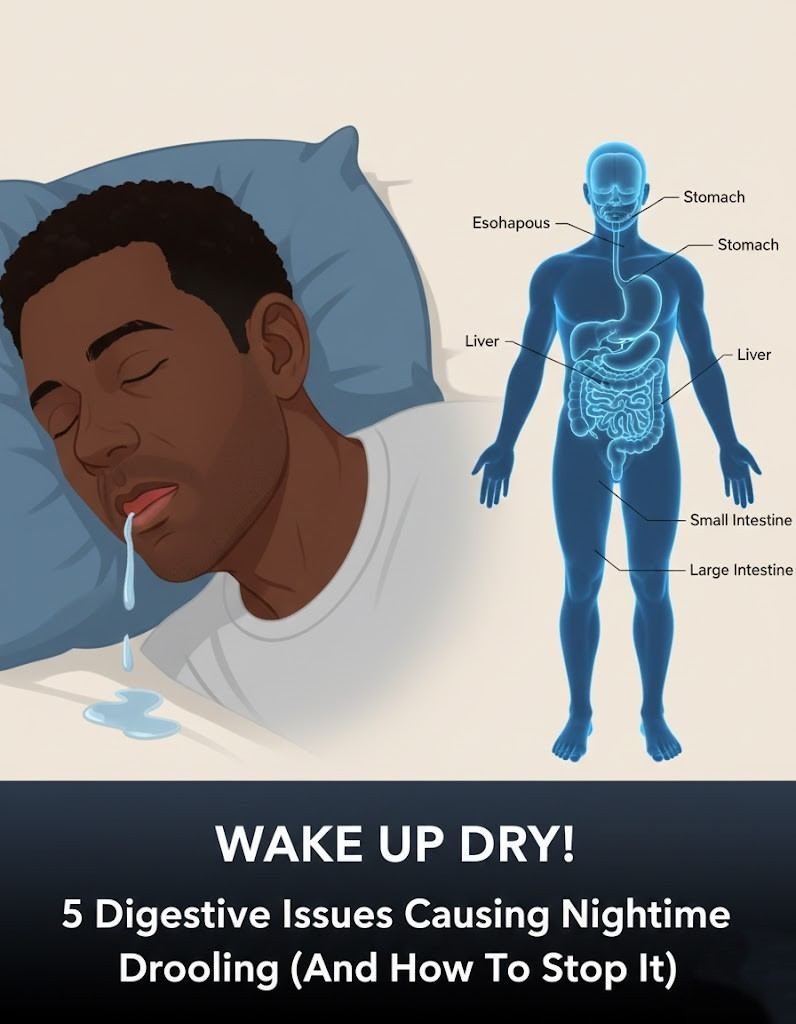
That headline is classic clickbait—designed to scare more than inform.
Drooling (especially during sleep) is usually harmless, and in most cases it’s linked to simple, non-dangerous reasons like sleeping position or nasal congestion. It is not generally considered a “warning sign” of multiple terrifying diseases.”
That said, in some specific situations, excessive or unusual drooling can be associated with certain medical conditions. Here’s the realistic breakdown:
Common, harmless causes
- Sleeping on your side or stomach
- Nasal blockage (allergies, cold, sinus issues)
- Deep sleep or fatigue
- Mouth breathing
Less common medical causes
These are not the norm, but worth knowing:
- Gastroesophageal Reflux Disease (GERD)
Acid reflux can increase saliva production, especially at night. - Sleep Apnea
Breathing interruptions during sleep can lead to mouth breathing and drooling. - Parkinson’s Disease
Affects muscle control and swallowing (typically with other obvious symptoms). - Stroke
Sudden drooling with facial weakness or slurred speech is an emergency sign. - Bell’s Palsy
Temporary facial weakness can cause saliva leakage. - Amyotrophic Lateral Sclerosis
Rare; affects muscle control including swallowing.
When to actually worry
You should consider seeing a doctor if drooling is:
- New and persistent
- Happening during the day (not just sleep)
- Paired with symptoms like:
- Trouble swallowing
- Slurred speech
- Facial drooping
- Weakness or stiffness
Bottom line
That viral claim is overblown. Drooling during sleep is very common and usually harmless. Only in specific contexts with other symptoms does it point to something serious.
If you want, tell me what you’re experiencing (e.g., only at night, how often, any other symptoms), and I can help you narrow it down more accurately.
