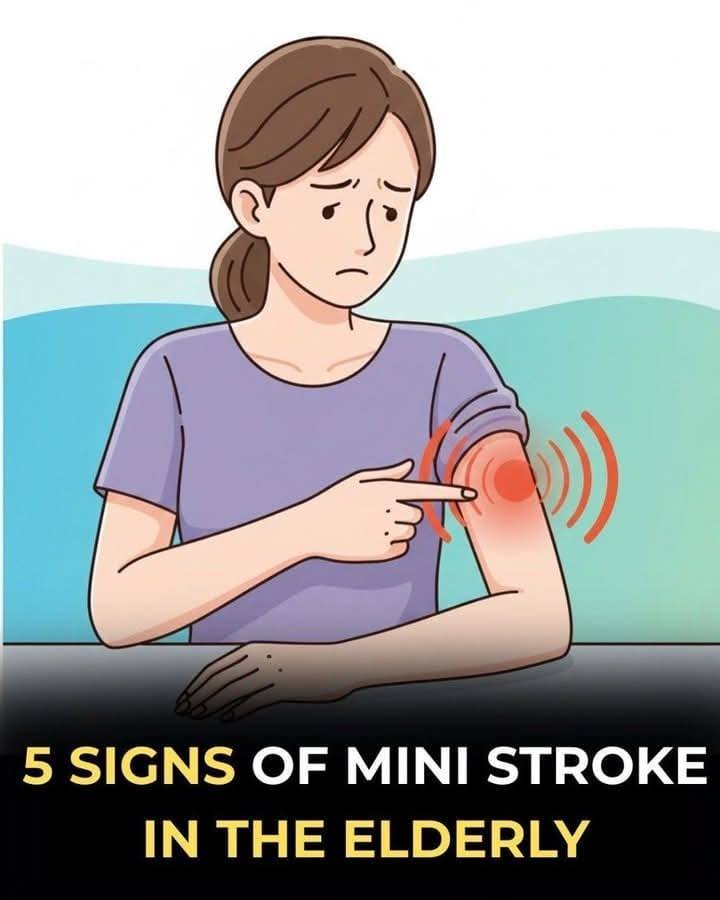
Here’s a clear, practical full guide to understanding the 5 key signs of a mini stroke (TIA)—especially important in older adults.
What is a Mini Stroke?
A mini stroke is medically called a Transient Ischemic Attack.
It happens when:
- Blood flow to part of the brain is temporarily blocked
- Symptoms resolve within minutes to hours
⚠️ Important: Even though symptoms go away, it is a serious warning sign of a future full stroke.
5 Major Signs of a Mini Stroke in the Elderly
1. Sudden Weakness or Numbness (Especially One Side)
You may notice:
- One arm or leg feels weak
- Face drooping on one side
- Difficulty lifting one arm
Simple test: Try raising both arms—does one drift downward?
2. Trouble Speaking or Understanding
- Slurred speech
- Saying incorrect or confused words
- Difficulty understanding others
This can appear suddenly and be very noticeable.
3. Vision Problems
- Blurred or double vision
- Sudden loss of vision in one eye
- “Dark curtain” effect over vision
Even brief vision loss is a warning sign.
4. Dizziness or Loss of Balance
- Trouble walking straight
- Sudden unsteadiness
- Feeling like the room is spinning
This is especially risky because it can lead to falls.
5. Sudden Severe Headache (Less Common but Serious)
- Intense headache with no clear cause
- May come with nausea or confusion
Why This Is Dangerous
A mini stroke is often a warning event:
- Up to 1 in 3 people may have a full stroke later
- Risk is highest in the first few days
Symptoms Often Last Only Minutes
This is what makes it dangerous:
- People ignore it because it “goes away”
- By the time they seek help, symptoms are gone
⚠️ Do NOT ignore temporary symptoms
What To Do Immediately
Even if symptoms disappear:
- Seek emergency medical care right away
- Do not wait or “see if it happens again”
Doctors may:
- Check blood pressure
- Order brain scans
- Adjust medications
Who Is at Higher Risk?
Especially common in older adults who have:
- High blood pressure
- Diabetes
- Heart disease
- Smoking history
Medications like Amlodipine or Metoprolol are often used to reduce risk—but they don’t eliminate it completely.
Easy Way to Remember: FAST
A quick checklist used worldwide:
- F – Face drooping
- A – Arm weakness
- S – Speech difficulty
- T – Time to act immediately
Final Thought
A mini stroke is not “minor”—it’s a warning you cannot afford to ignore.
Acting quickly can prevent a life-changing or fatal stroke later.
If you want, I can also explain:
- How to tell the difference between a mini stroke and low blood pressure
- A simple daily checklist to reduce stroke risk at your age
