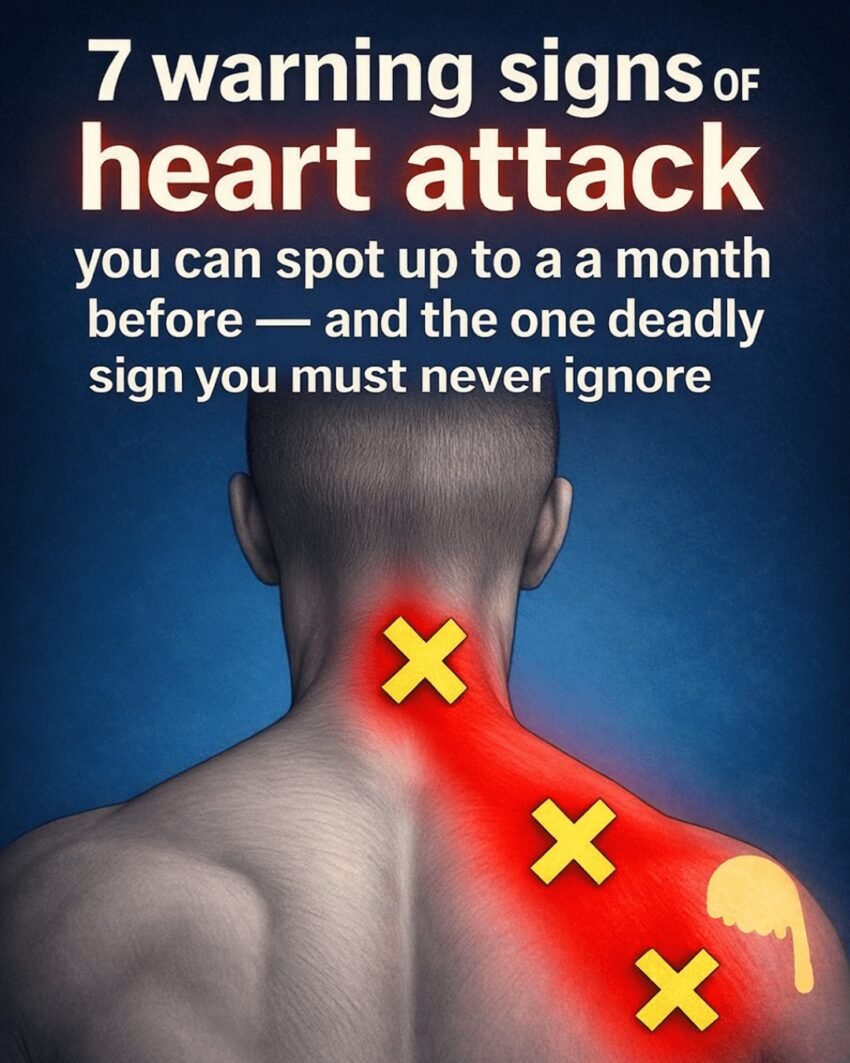
Here’s an article-style, evidence-informed guide to early warning signs of a heart attack — including symptoms that can appear weeks in advance and one critical sign you should never ignore.
7 Warning Signs of a Heart Attack You Can Notice Weeks Before — and the One You Must Never Ignore
A heart attack (medically called Myocardial infarction) often seems sudden, but many people experience subtle symptoms days or even weeks beforehand. Recognizing these early signals can be life-saving.
1. Unusual Fatigue
Feeling extremely tired without a clear reason — especially during routine activities — can be an early sign.
Why it happens:
Reduced blood flow to the heart forces your body to work harder, leading to exhaustion.
2. Chest Discomfort (Not Always Severe)
This may feel like pressure, tightness, or mild pain — not necessarily sharp.
Important:
It can come and go and may be mistaken for indigestion.
3. Shortness of Breath
Breathlessness during light activity or even at rest can signal reduced heart efficiency.
Often appears with: Fatigue or chest discomfort.
4. Pain in Other Areas
Pain can radiate beyond the chest to:
- Arms (especially left)
- Back
- Neck
- Jaw
Why: The heart shares nerve pathways with these areas.
5. Sleep Disturbances
People sometimes report:
- Trouble falling asleep
- Waking up frequently
- Feeling anxious at night
This is more commonly reported in women before a heart event.
6. Digestive Issues (Nausea or Indigestion)
Symptoms like nausea, bloating, or stomach discomfort may mimic digestive problems.
Tip: If unusual and persistent, don’t ignore them.
7. Anxiety or a Sense of Doom
Some people experience a sudden, unexplained feeling that something is seriously wrong.
This is real: It can be linked to physiological stress responses before a cardiac event.
⚠️ The ONE Deadly Sign You Must Never Ignore
Severe or Persistent Chest Pain
- Pressure, squeezing, or heaviness in the chest
- Lasts more than a few minutes or comes and goes
- May spread to arm, jaw, or back
👉 This is the classic and most dangerous warning sign of a heart attack.
What To Do Immediately
If you or someone else experiences this:
- Call emergency services right away
- Sit down and stay calm
- Chew an aspirin (if not allergic and medically appropriate)
Important Context
Conditions like Coronary artery disease often develop silently over time and lead to heart attacks. Early symptoms are your body’s warning system.
Final Thought
Not everyone experiences the same symptoms — and some heart attacks occur without obvious warning. But recognizing these early signs can dramatically improve survival and recovery.
If you want, I can break down how to tell the difference between heartburn and a heart attack — it’s one of the most commonly confused situations.
