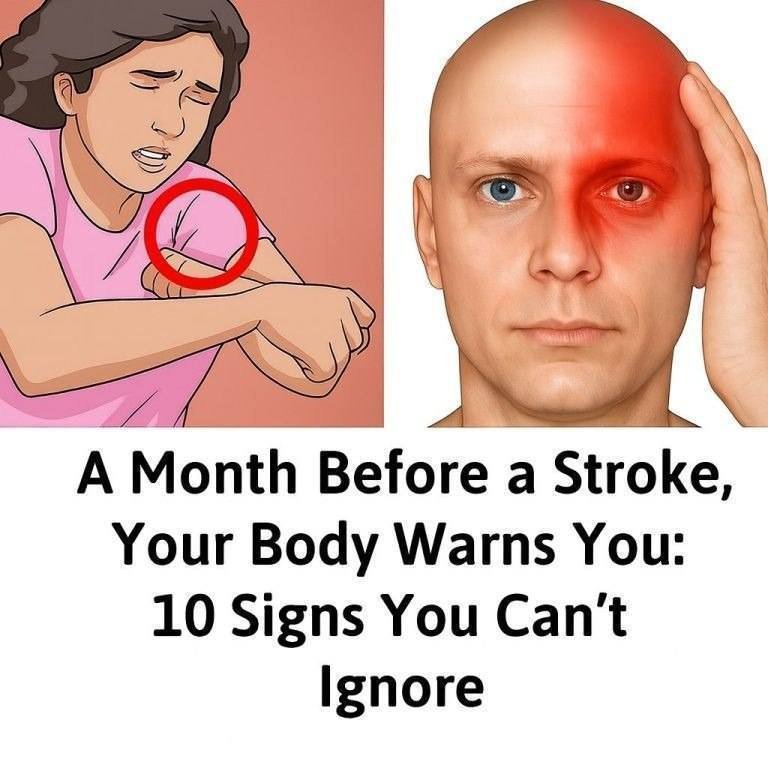
That idea—that your body gives a clear “1-month warning” with a fixed list of signs—is a bit misleading. A stroke can sometimes be preceded by warning events, but many strokes happen suddenly without obvious early symptoms. Still, there are important warning signs and risk clues you shouldn’t ignore.
Here’s a more accurate breakdown:
🚨 Most important early warning: “mini-strokes”
These are called transient ischemic attack (TIAs). They can happen days or weeks before a major stroke.
Symptoms (often temporary, lasting minutes to hours):
- Sudden weakness or numbness (face, arm, or leg—especially one side)
- Trouble speaking or understanding speech
- Vision problems in one or both eyes
- Dizziness or loss of balance
- Sudden severe headache
👉 Even if symptoms go away, this is an emergency warning.
⚠️ Other possible warning signs (not always a full month before)
These aren’t guaranteed predictors, but they can signal increased risk:
1. Frequent severe headaches
Especially new or unusual headaches.
2. Sudden vision issues
Blurred, double, or partial loss of vision.
3. Numbness or tingling
Particularly on one side of the body.
4. Difficulty speaking
Slurred speech or trouble finding words.
5. Sudden dizziness or imbalance
Feeling like the room is spinning or losing coordination.
6. Extreme fatigue or confusion
Unusual mental fog or disorientation.
7. Short episodes of paralysis
Temporary inability to move part of the body.
8. Trouble swallowing
Can occur in neurological issues.
9. Sudden personality or behavior changes
Confusion, irritability, or memory problems.
10. Brief loss of consciousness or fainting
Less common, but serious if it happens.
🧠 Major risk factors (often more important than symptoms)
Sometimes the “warnings” are actually underlying conditions:
- High blood pressure
- Diabetes
- Smoking
- High cholesterol
- Heart disease (like atrial fibrillation)
- Obesity and inactivity
⏱️ When to act immediately
Use the FAST rule:
- Face drooping
- Arm weakness
- Speech difficulty
- Time to get emergency help
Bottom line
There isn’t a reliable “10 signs exactly one month before” checklist. But:
- TIAs are the closest thing to an early warning
- Sudden neurological symptoms should never be ignored
- Quick action can prevent permanent damage—or save a life
If you want, I can help you assess your personal stroke risk or explain how to prevent one step by step.
