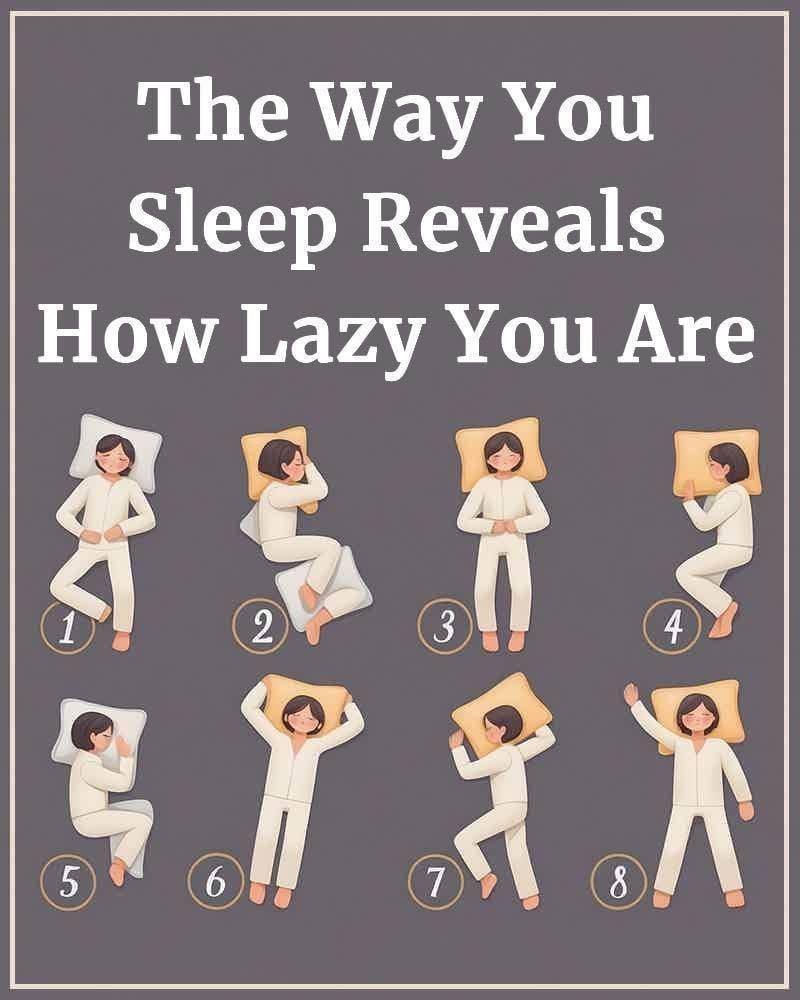
Sure—here’s a deeper, more realistic breakdown of where this idea comes from and what sleep positions actually mean.
🧠 First: the “sleep position = lazy personality” idea
This comes from pop psychology quizzes and social media content—not medical science. People like simple “personality decoding” systems, so sleep positions got turned into stereotypes.
But in real sleep research, there is no evidence that sleeping posture reflects laziness, discipline, or work ethic.
“Laziness” itself isn’t a clinical trait anyway—it’s usually influenced by:
- Energy levels (sleep quality, diet, anemia, etc.)
- Mental health (stress, depression, burnout)
- Motivation systems in the brain (dopamine regulation)
- Lifestyle habits
Sleep position is not part of that system.
😴 What actually determines sleep position
You don’t consciously choose a position all night. Your body shifts based on:
1. Comfort & pain avoidance
- Back pain → side sleeping
- Acid reflux → left side sleeping
- Shoulder pain → switching sides
2. Breathing efficiency
People unconsciously avoid positions that restrict airflow (like lying flat on the stomach for some individuals).
3. Temperature regulation
- Curling up conserves heat
- Sprawling out cools the body
4. Habit & nervous system patterns
Your brain repeats positions it associates with:
- Safety
- Relaxation
- Familiarity from childhood
🛌 Common sleep positions (real effects vs myths)
🟡 1. Fetal position
Reality:
- Most common globally
- Helps reduce stress and improves comfort
- Often used by people with anxiety or sensitivity to environment
Myth: “Shy or lazy personality” → ❌ no scientific basis
🟢 2. Back sleeping (supine / starfish)
Reality:
- Good for spine alignment
- Can worsen snoring or sleep apnea in some people
Myth: “Relaxed = lazy” → ❌ incorrect
🔵 3. Side sleeping (log position)
Reality:
- Best for digestion and heart health (especially left side)
- Reduces snoring
Myth: “Too rigid personality” → ❌ not supported
🔴 4. Stomach sleeping (freefall)
Reality:
- Can reduce snoring
- Often strains neck and spine
Myth: “Energetic or outgoing personality” → ❌ just guesswork
🧬 What science does link to sleep behavior
If you want actual science-based connections, researchers look at:
- REM sleep cycles (dreaming)
- Sleep duration consistency
- Sleep disorders (insomnia, apnea)
- Circadian rhythm (night owl vs early bird)
These affect:
- Energy levels
- Focus
- Mood
- Productivity
But again—not sleep position.
⚠️ Why the “lazy sleep position” myth sticks around
- People enjoy personality “tests”
- Social media oversimplifies psychology
- We naturally try to find meaning in body language—even when it’s random during sleep
✔️ Bottom line
Your sleeping position:
- Reflects comfort and physiology
- Not character traits like laziness
- Cannot diagnose personality or work ethic
If you want, I can tell you what your sleep position might say about your health (not personality) or how to improve sleep quality for more energy during the day.
