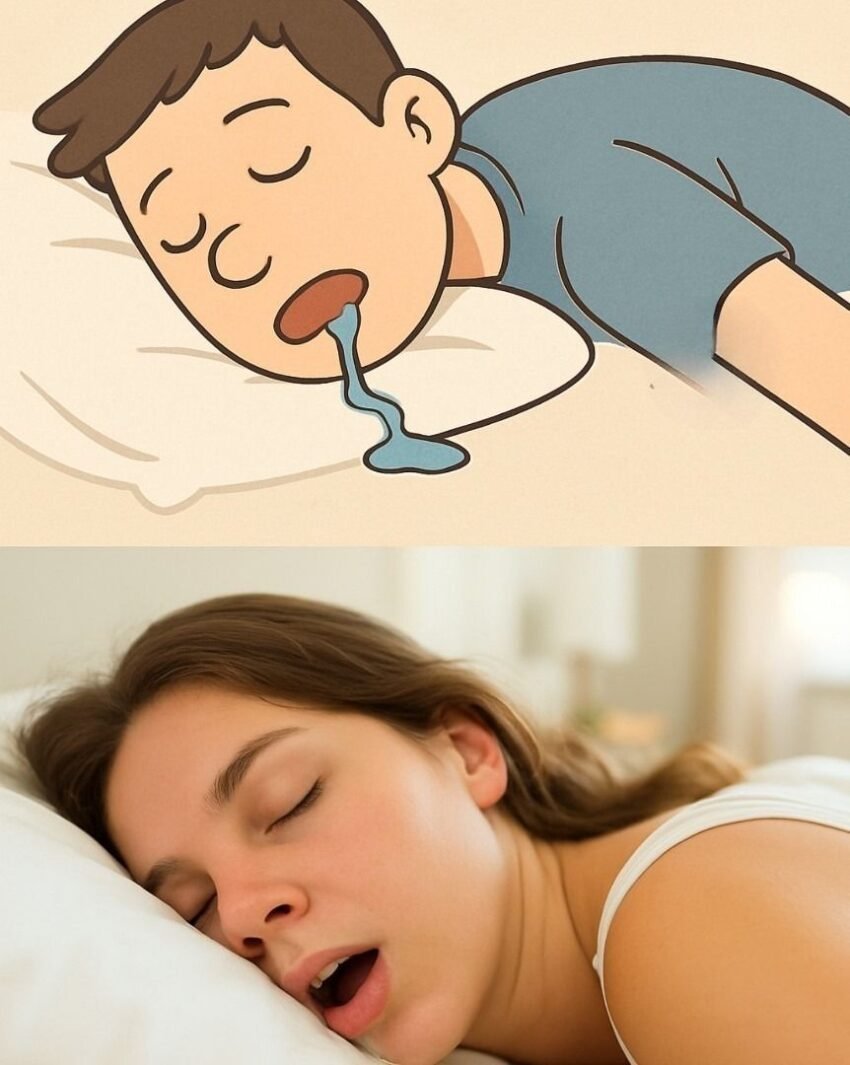
Here’s a clear, article-style explanation you can use:
Is Drooling During Sleep a Sign of Brain Problems?
Drooling during sleep is a common occurrence that many people experience at some point in their lives. While social media often spreads alarming claims suggesting it reflects brain dysfunction, medical evidence shows that this is usually not the case.
What Causes Drooling During Sleep?
Drooling, also known as sleep-related hypersalivation, typically happens due to simple physical and physiological factors rather than neurological issues.
1. Muscle Relaxation
During sleep—especially in deeper stages—the muscles of the face and mouth relax. This can cause the mouth to open slightly, allowing saliva to escape.
2. Sleep Position
People who sleep on their side or stomach are more likely to drool because gravity makes it easier for saliva to flow out of the mouth.
3. Mouth Breathing
If your nose is blocked due to allergies, a cold, or sinus issues, you may breathe through your mouth, increasing the chances of drooling.
4. Increased Saliva Production
Certain conditions or habits—such as acid reflux, some medications, or oral infections—can lead to excess saliva.
Does Drooling Mean You’re in Deep Sleep?
In some cases, drooling may occur during deeper stages of sleep when the body is fully relaxed. However, it is not a reliable or scientific indicator of sleep quality or brain activity.
When Should You Be Concerned?
Although drooling is usually harmless, frequent or excessive drooling could indicate an underlying issue if accompanied by other symptoms. These may include:
- Difficulty swallowing
- Loud snoring or breathing interruptions
- Daytime fatigue
- Facial muscle weakness
In rare cases, persistent drooling may be linked to neurological conditions such as Parkinson’s disease or cerebral palsy, but these are typically associated with multiple other noticeable symptoms—not drooling alone.
Common Myths About Drooling
A widely shared myth claims that drooling during sleep is a sign that the brain is “not functioning properly.” This is false. There is no scientific evidence supporting a direct link between normal sleep drooling and brain damage.
How to Reduce Drooling
If drooling is bothersome, you can try:
- Sleeping on your back
- Using pillows to support proper head position
- Treating nasal congestion or allergies
- Maintaining good oral hygiene
- Staying hydrated
Conclusion
Drooling during sleep is usually a normal and harmless phenomenon caused by relaxed muscles, sleep position, or breathing patterns. While persistent drooling combined with other symptoms may require medical attention, on its own it is not a sign of brain problems.
If you want, I can convert this into a shorter social media post or a more scientific version with references.
