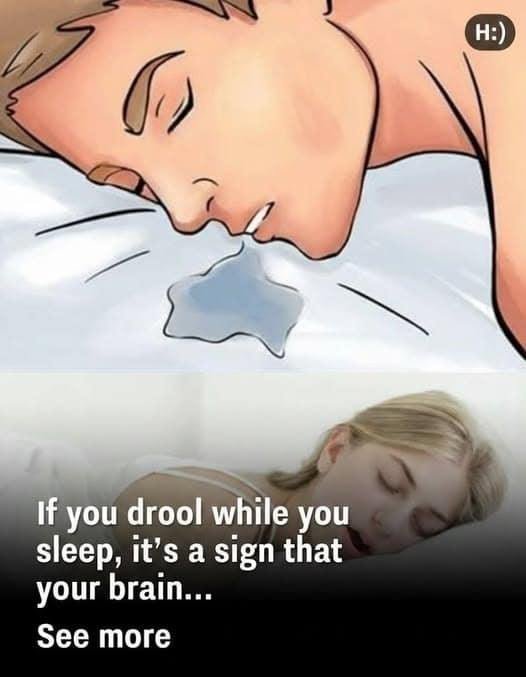
Here’s a clear, well‑structured article you can use about drooling during sleep — what it really means, why it happens, and when to be concerned:
Why You Drool While You Sleep — And What It Really Means
Many people wake up with a wet pillow and wonder if it means something unusual is happening in the brain. Social media posts often exaggerate this, claiming that drooling is a sign your brain is malfunctioning or “offline.” The truth is much simpler — and mostly harmless.
🧠 What Drooling During Sleep Really Is
Saliva production is constant throughout the day. When you’re awake, you swallow automatically to keep it under control. But during sleep:
- Swallowing becomes less frequent
- The muscles that keep your mouth closed relax
- Saliva can escape more easily
This combination can lead to drooling, especially if you sleep on your side or stomach.
📌 Common Causes of Sleep Drooling
Here are the main reasons people drool while they sleep:
✔ Deep Sleep and Muscle Relaxation
During deep sleep stages, the jaw and facial muscles relax more than usual, making it easier for saliva to escape.
✔ Sleeping Position
Side and stomach sleepers are more likely to drool than those who sleep on their back.
✔ Nasal Congestion or Blocked Airways
Allergies, colds, or sinus problems can make breathing through the nose difficult, forcing you to breathe through the mouth. This increases saliva pooling and drooling.
✔ Excess Saliva Production
Some people simply produce more saliva due to:
- Acid reflux
- Certain foods
- Medications (e.g., some antidepressants or antipsychotics)
🤔 Is it Related to the Brain?
Drooling itself is not a sign of brain damage, dysfunction, or anything neurological in healthy people. The brain is still fully in control; it’s just that reflexes like swallowing and jaw tension decrease naturally during sleep.
However, in rare medical cases, drooling can be associated with neurological conditions — but only when accompanied by other symptoms, such as:
- Slurred speech
- Weakness or numbness
- Trouble swallowing while awake
- Sudden changes in movement or coordination
If you only drool while sleeping and feel fine otherwise, there’s no reason to think there’s something seriously wrong with your brain.
🛏 When Should You Be Concerned?
You might want to talk to a doctor if:
✔ The drooling is very excessive
✔ You have trouble swallowing or breathing
✔ You experience daytime sleepiness, choking, or snoring
✔ Other neurological symptoms appear
Otherwise, it’s usually just a normal sleep quirk.
💡 Tips to Reduce Sleep Drooling
If it bothers you, try:
- Sleeping on your back
- Treating allergies or congestion
- Avoiding heavy meals right before bedtime
- Staying hydrated (ironically, dehydration can make saliva thicker and harder to swallow)
In Short
❌ Drooling while you sleep is not a sign your brain is broken
✅ It’s usually due to normal changes in swallowing and muscle relaxation
⚠ Only worry if drooling comes with other health symptoms
If you want, I can add references, shorten this into a social‑media post, or turn it into a blog or newsletter style article too 👍
