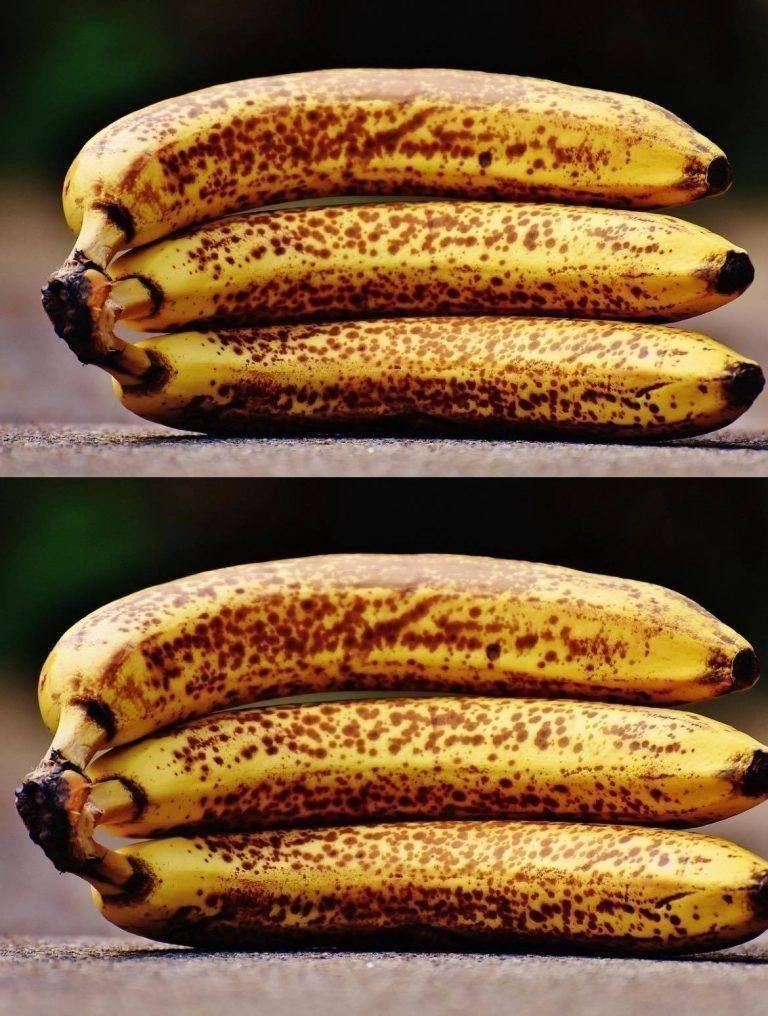
Here’s a well‑researched, article‑style explanation of what happens if you eat bananas with black spots — and why many people say “you should know this.”
🍌 If You Eat Bananas With Black Spots, You Should Know That…
Many people are unsure whether bananas with black‑spotted peels are still safe and healthy to eat. The good news is: in most cases, these bananas are perfectly edible and may even be better for you in certain ways — but there are important nuances. Let’s break it down.
🟡 1. What Those Black Spots Actually Mean
Black spots on a banana peel are a sign that the fruit is ripening further.
- Bananas start green (high starch, less sweet).
- As they ripen, starch turns into simple sugars.
- Black or brown spots indicate advanced ripeness and increased sugar content.
🍌 A banana with black spots isn’t rotten just because the peel is dark — it’s typically riper and sweeter.
🍭 2. Nutritional Changes: Sweeter, Softer, and Easier to Digest
🔹 More Sugar, Less Starch
As a banana ripens, complex carbohydrates break down into glucose, fructose, and sucrose. That’s why brown‑spotted bananas taste sweeter.
🔹 Antioxidants Increase
Some studies show that ripe bananas may have higher levels of antioxidant compounds than under‑ripe ones. These compounds help neutralize free radicals in the body.
🔹 Easier Digestion
Ripe bananas are gentler on the digestive system because the sugars are already broken down — which can be helpful for people with sensitive stomachs.
🍽️ 3. Health Benefits Still Intact
Even with black spots, bananas still provide:
- Potassium — supports heart health and muscle function
- Vitamin B6 — aids brain and metabolic function
- Fiber (especially pectin) — supports digestion and gut health
- Magnesium — supports nerve and muscle function
These nutrients don’t disappear just because the peel darkened.
❗ 4. When You Shouldn’t Eat a Black‑Spotted Banana
Black spots on the peel aren’t always harmless. Avoid eating it if:
🦠 It’s Moldy or Fermented
If the banana has:
- A fermented smell
- Visible mold on the fruit inside
- A mushy, leaking texture
…then it may have spoiled and could cause digestive upset.
🤢 You Have Blood Sugar Concerns
Very ripe bananas have higher sugar content, so if you’re managing diabetes or strict carb goals, you might want to eat slightly less ripe ones.
🔬 5. Banana Ripeness & Health: What Research Shows
Here’s what science tells us about ripeness levels:
🟢 Green Bananas (Less Ripe)
- Higher resistant starch (acts like fiber)
- May improve blood sugar control and gut health by feeding beneficial gut bacteria
🟡 Yellow With Brown Spots
- Higher simple sugars
- Easier to digest
- Rich in antioxidants
⚫ Mostly Black
- Very sweet, softer
- Best for smoothies or baking
- Still nutritious unless spoiled
So, each ripeness stage has different benefits — and none are inherently “bad.”
🍌 6. Culinary Uses Matter
Black‑spotted bananas are often preferred in:
✔ Smoothies (natural sweetness)
✔ Baking (banana bread, muffins)
✔ Freezing for desserts or shakes
✔ Baby food (easy to mash)
They add flavor without extra sweetener.
📊 Quick Ripeness Guide
| Ripeness | Taste | Best Use | Nutrition Notes |
|---|---|---|---|
| Green | Less sweet | Grilled, chips | More resistant starch |
| Yellow | Mildly sweet | Eating fresh | Good balance of nutrients |
| Yellow + brown spots | Sweet | Snacks / smoothies | Higher antioxidants |
| Mostly black | Very sweet | Baking | Soft texture, still safe if no mold |
🧠 Bottom Line
Eating bananas with black spots is usually safe and often signals a sweeter, more antioxidant‑rich fruit. The exceptions are when the banana shows signs of spoilage such as mold, off smell, or persistent mushiness.
So next time you see a banana with black spots — don’t toss it! It’s likely ready to eat and still good for you.
If you want, I can also explain how ripeness affects blood sugar or gut health in more detail — especially if you’re watching your diet or managing diabetes. Just let me know!
