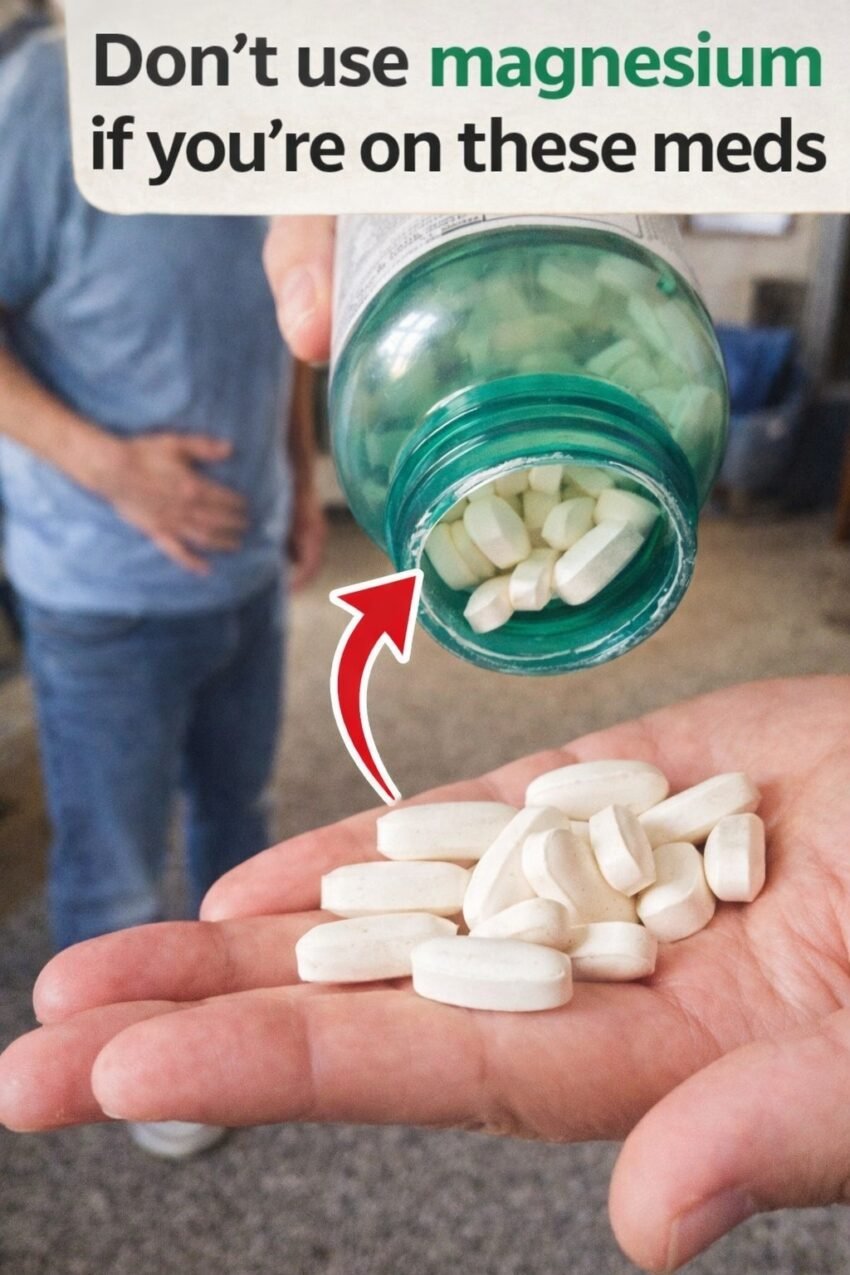
Magnesium is essential for muscle function, nerve signaling, heart rhythm, and bone health—but it can interact with certain medications, sometimes reducing effectiveness or causing side effects. Here’s a clear, practical guide to help you stay safe before supplementing:
⚠️ Medications That May Interact With Magnesium
1. Antibiotics
- Examples: Ciprofloxacin, Doxycycline
- What happens: Magnesium can bind to these drugs in your gut, reducing absorption.
- Tip: Take magnesium 2–4 hours apart from these meds.
2. Osteoporosis Medications
- Example: Alendronate
- What happens: Magnesium interferes with absorption.
- Tip: Take osteoporosis meds on an empty stomach, separate from supplements.
3. Diuretics (Water Pills)
- Examples: Furosemide, Hydrochlorothiazide
- What happens: Some diuretics lower magnesium levels, others may increase them.
- Tip: You may need monitoring or dosage adjustment.
4. Heart Medications
- Examples: Digoxin, Amiodarone
- What happens: Magnesium can alter heart rhythm effects or drug levels.
- Tip: Only supplement under medical supervision.
5. Proton Pump Inhibitors (PPIs)
- Examples: Omeprazole, Esomeprazole
- What happens: Long-term use can lower magnesium levels, sometimes severely.
- Tip: Your doctor may recommend monitoring or supplementation.
6. Diabetes Medications
- Example: Metformin
- What happens: Magnesium may affect blood sugar control.
- Tip: Monitor glucose levels if adding supplements.
7. Muscle Relaxants & Sedatives
- Magnesium has natural muscle-relaxing effects.
- What happens: It may enhance sedation or weakness when combined with similar drugs.
🧠 General Safety Tips
- Don’t self-prescribe high doses (especially >350 mg/day from supplements).
- Space out doses if you’re on medications (common rule: 2–4 hours apart).
- Check kidney function—people with kidney disease can accumulate magnesium.
- Watch for side effects: diarrhea, nausea, low blood pressure, irregular heartbeat (rare but serious).
✅ When Magnesium May Help
- Muscle cramps or spasms
- Migraines
- Sleep issues
- Documented deficiency
✔️ Bottom Line
Magnesium can be very beneficial—but timing, dosage, and your current medications matter a lot. A quick check with a healthcare provider can prevent reduced drug effectiveness or unwanted side effects.
If you want, tell me which medications you’re taking, and I can check for specific interactions tailored to you.
