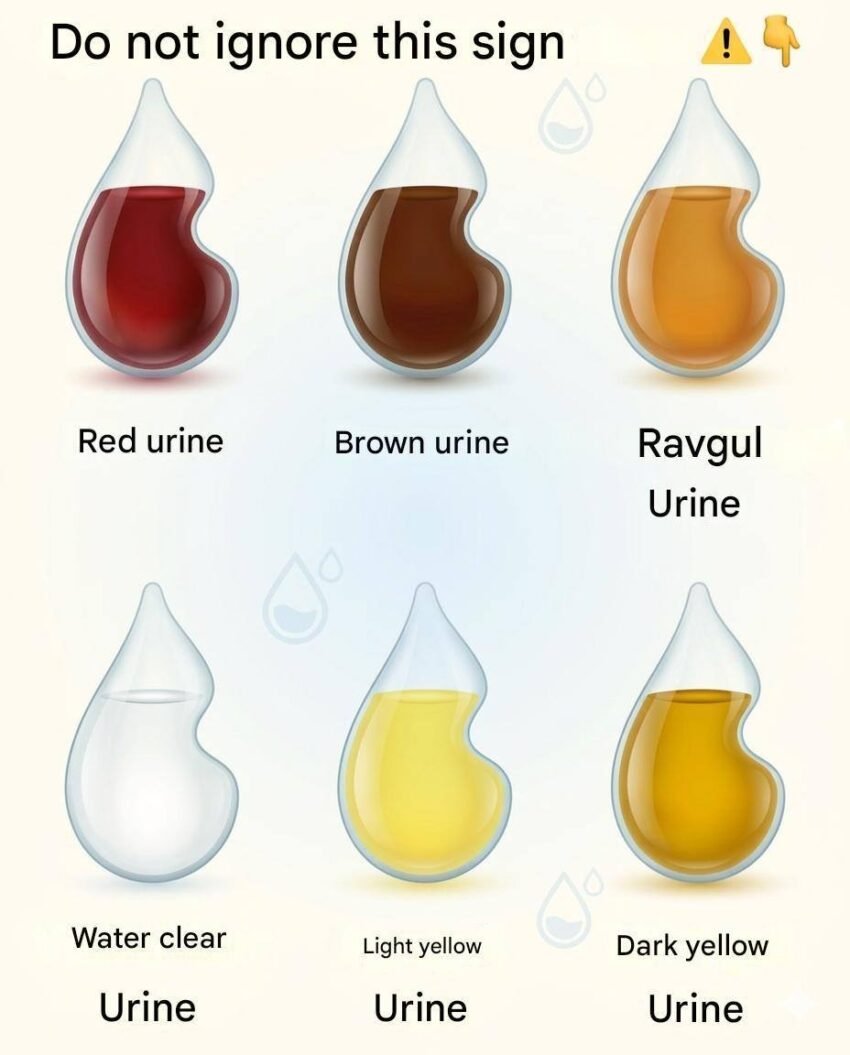
What Does the Color of Your Urine Say About Your Health?
The color of your urine can reveal a lot about your hydration level, diet, and even possible health conditions. While occasional changes are usually harmless, persistent or unusual colors may signal something worth paying attention to.
🟡 Pale Yellow to Light Straw
This is considered normal and healthy.
- Indicates proper hydration
- Your body is maintaining a good fluid balance
💛 Dark Yellow
A deeper yellow shade usually means mild dehydration.
- You may need to drink more water
- Common in the morning or after sweating
🟠 Orange
Orange urine can be caused by:
- Dehydration
- Certain medications or supplements
- High intake of vitamin B or carotene-rich foods
In rare cases, it may be linked to liver or bile duct issues.
🔴 Red or Pink
This can look alarming, but not always serious.
Possible causes:
- Foods like beets or berries
- Blood in urine (a condition called Hematuria)
- Urinary tract infections or kidney stones
If there’s no food-related reason, it’s important to seek medical advice.
🟤 Brown or Tea-Colored
Dark brown urine may indicate:
- Severe dehydration
- Liver problems
- Muscle breakdown
Sometimes it’s associated with conditions like Liver Disease.
🔵 Blue or Green
This is rare but can occur due to:
- Certain medications
- Artificial food coloring
- Rare infections
Though unusual, it’s often harmless if temporary.
⚪ Cloudy or Milky
Cloudy urine may suggest:
- Infection (especially urinary tract infections)
- Kidney stones
- Excess minerals
Persistent cloudiness should be checked.
⚫ Foamy or Fizzy
Occasional foam is normal, but frequent foamy urine may indicate:
- Protein in urine (possible kidney issues)
When Should You Be Concerned?
Seek medical advice if you notice:
- Red or brown urine without a clear cause
- Persistent dark or cloudy urine
- Pain, burning, or strong odor
- Changes lasting more than a few days
Final Thoughts
Urine color is a simple but useful indicator of your body’s internal state. Most changes are harmless and related to hydration or diet—but consistent or unusual colors can be early warning signs of underlying issues.
Staying hydrated and paying attention to changes can go a long way in maintaining your health.
