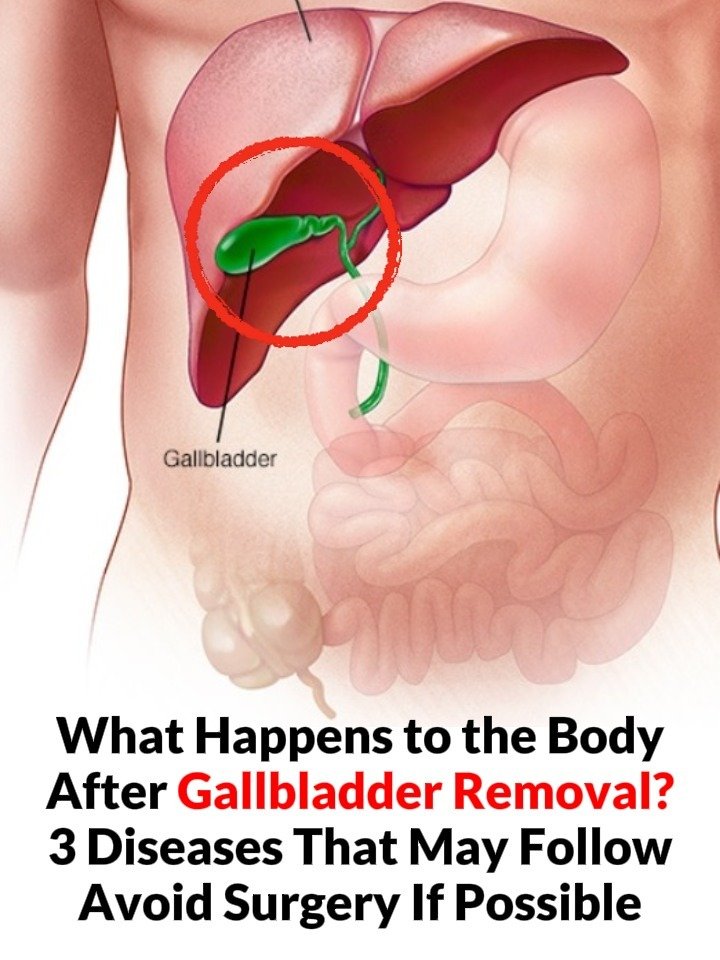
Gallbladder removal (called Cholecystectomy) is a very common and generally safe procedure—but it does change how your digestive system works. It’s important to understand what actually happens afterward, and also to separate facts from exaggerated claims.
🧠 What changes in your body?
The gallbladder stores bile (a digestive fluid made by the liver) and releases it when you eat fatty foods. After removal:
- Your liver still produces bile ✅
- But bile flows continuously into your intestines instead of being stored
👉 This can affect digestion, especially of fats.
⚠️ Common effects after gallbladder removal
These are real and medically recognized:
1. Digestive issues
- Bloating, gas, or diarrhea
- Trouble digesting fatty meals
Some people develop Postcholecystectomy syndrome, which includes persistent discomfort.
2. Bile acid diarrhea
- Excess bile entering the intestines can irritate them
- Leads to frequent loose stools
This is sometimes linked to Bile acid malabsorption.
3. Increased risk of certain conditions (but not guaranteed)
Research suggests a slight increased risk of:
- Gastroesophageal reflux disease (GERD)
- Irritation of the intestines
- Changes in gut microbiome
⚠️ Important: These risks are usually small, and many people have no long-term problems.
❗ About “3 diseases after surgery” claims
Some online sources exaggerate this.
There is no strong medical evidence that gallbladder removal directly causes serious diseases in most people. The majority live normal, healthy lives afterward.
🛑 Should you avoid surgery?
It depends on your condition.
Surgery is usually recommended when you have:
- Painful Gallstones
- Infection or inflammation (Cholecystitis)
- Blocked bile ducts
👉 In these cases, avoiding surgery can actually be dangerous.
🌿 When you might try non-surgical management
If symptoms are mild:
- Low-fat diet
- Weight management
- Medications (in select cases)
But these don’t remove gallstones, they only manage symptoms.
🧾 Bottom line
- Gallbladder removal changes bile flow but is generally safe
- Some people experience digestive issues, usually manageable
- Claims of severe diseases after surgery are often overstated
- Avoiding surgery is not always safe—depends on your condition
If you want, tell me your symptoms or diagnosis—I can help you decide whether surgery is likely necessary or if conservative treatment could work in your case.
